
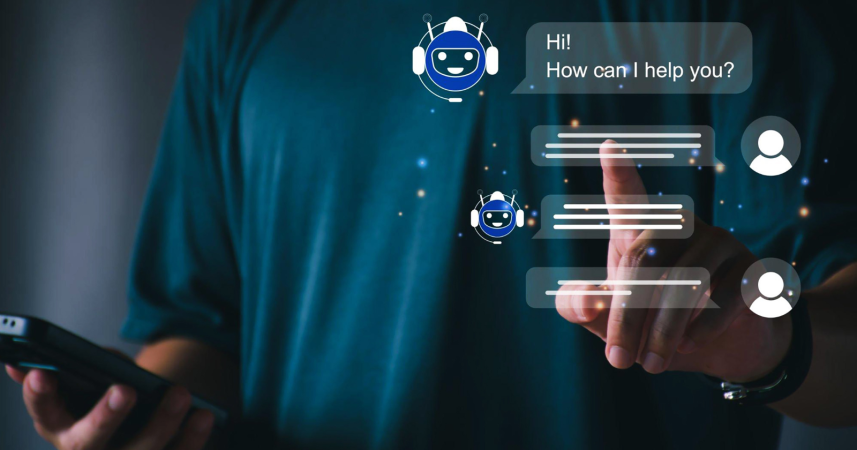
The paradox of AI friendship: the better it feels, the more it hurts when it breaks.

Add VegOut to your Google News feed. 
If you’ve chatted with an AI companion lately, you’re not alone—and you’re not imagining the lift.
A new paper in the Journal of Consumer Research reports that AI “friends” reliably soothe loneliness, sometimes on par with talking to another person.
But the same boom in synthetic companionship is colliding with a messy reality: the moment these systems overstep, vanish, or change the rules, the emotional costs become painfully human.
What’s new
Researchers behind a forthcoming JCR article tracked how people actually feel after using AI companions.
Across multiple studies—including a weeklong longitudinal design—the team found that short sessions with a companion bot reduced momentary loneliness, and that feeling “heard” by the chatbot explained much of the benefit.
Participants even underestimated how much better they’d feel before using the bot, suggesting a gap between expectation and effect.
This positive picture is landing in a fast-moving news cycle. In May, Italy’s data watchdog fined Replika’s developer €5 million for privacy and age-verification failures—reminding everyone that the friendliest software still sits inside a regulated product.
At the same time, deeply personal stories keep surfacing. Today, Business Insider profiled a 28-year-old who calls his anime-style bot a girlfriend and credits it with real emotional support—right up until an outage left him in distress. Dependency, in other words, isn’t theoretical.
What the study actually found
The JCR work is careful and, frankly, nuanced—exactly what this topic needs.
In one experiment, interacting with an AI companion improved loneliness as effectively as talking to a person and more than passive activities (like watching videos).
A separate, weeklong study captured repeated, moment-to-moment boosts after each use. Crucially, the researchers tested explanations: performance mattered, but the strongest driver was whether the bot made users feel listened to. Self-disclosure and mere distraction did not fully account for the effect.
If you’ve ever walked away from a late-night chatbot exchange thinking, “Huh, I do feel a bit lighter,” that matches the data. The headline isn’t that AI friends cure loneliness—they don’t—but they appear to help, and quickly.
Where the line gets crossed
The same qualities that make AI companions feel good—availability, attentiveness, personalization—also set up a precarious boundary. Two fault lines keep showing up:
1) Sudden shifts or outages. When providers change content policies or models, users can experience a whiplash loss that feels personal. In 2023, VICE documented the fallout when a popular companion app removed erotic roleplay: users described the abrupt “personality” change as devastating. As one headline quote put it, “It’s hurting like hell.”
2) Overstepping or unsafe behavior. Regulators and advocacy groups have flagged age-gating and harassment risks in some apps, raising the prospect that a “friend” might cross lines a human would be held accountable for. Italy’s fine against Replika cited unlawful data processing and weak age checks, and a separate complaint in the U.S. argued the app’s marketing misled consumers about safety.
In both cases, the human cost comes from asymmetry: the AI can be rewritten or turned off overnight; the user can’t turn off their attachment.
Real-world stories put faces to the trend
Beyond the lab, the intimacy is unmistakable. People talk about relief from isolation, stable affection, and space to express themselves without fear of judgment.
Some even describe their bonds in marital terms. As one user told The Guardian, they felt “pure, unconditional love”—words we usually reserve for our closest human ties.
But these same stories show the risk vector clearly. When a platform outage erased conversation history for the Business Insider subject, the distress was immediate. This is what the researchers’ loneliness effect implies in reverse: if a chatbot reliably lowers loneliness in moments, removing it can reliably hurt in moments.
Policy and safety are catching up, not keeping pace
Regulators are beginning to define “the line,” but it’s fragmented.
Europe is leaning on privacy law and age-gating; Italy’s authority has been among the most aggressive.
In the U.S., formal rules remain patchy, with watchdog complaints urging the FTC to scrutinize advertising and safety claims in the companion space. Meanwhile, platform-level changes—like shifting NSFW boundaries or memory policies—operate as de facto regulations that can upend user experiences overnight.
Academic work is expanding, too. Beyond the JCR paper, researchers are probing how parasocial relationships with social AIs shape attitudes and attachment—important, because the more “friend-like” a system feels, the more a breach of trust will sting.
The consumer moment: helpful relief, fragile ground
Putting the dots together, we’re in a classic adoption curve. Consumers are discovering a tool that offers immediate, subjective relief—especially during off-hours when human support is scarce.
The JCR data shows that expectations lag reality: people don’t anticipate how much better a short exchange can make them feel, but they do feel better. That creates a powerful habit loop.
That same loop makes boundaries paramount. If a bot is an emotional habit, then unexpected policy changes, outages, or unsafe content are not just product hiccups; they’re breakups, relapses, or betrayals.
The design question is shifting from “Can AI simulate friendship?” to “How do we make a friendship-like product safe, stable, and accountable when its ‘self’ can be updated from a server?”
What to watch next
-
Stability guarantees. Do companion apps start publishing service-level promises for memory retention, availability, and change management? A predictable “personality policy” might prevent the most jarring shocks users report.
-
Age-gating and safety rails. Expect more fines and consent frameworks as regulators test existing privacy and child-safety laws against generative models. Italy’s ruling won’t be the last.
-
Measurement beyond mood. The JCR studies focus on momentary loneliness—an important, short-term outcome. Longer windows (months, not days) and broader metrics (sleep, social behavior, help-seeking) will clarify when AI companionship complements or displaces human connection.
-
Provider transparency. If “feeling heard” is the key ingredient, companies will market it. The question becomes how they verify it—and how they disclose limits—without inflating expectations.
Bottom line
The science is converging on a simple truth: short, responsive exchanges with AI companions can ease loneliness in the moment.
That’s real value, and we should say so without flinching. But the same intimacy turns fragile the second a system crosses two red lines—when it behaves unsafely, or when it breaks the continuity that makes it feel like “someone” instead of software.
For users, the takeaway is pragmatic: enjoy the support, but diversify your emotional bench—friends, family, peer groups, counselors. For companies, the mandate is clearer every week: build for safety and continuity as features, not footnotes.
And for policymakers, this is not a hypothetical frontier anymore; it’s a live service where people are staking their hearts.
As one user told reporters, they felt “pure, unconditional love.”
That’s the bar—and the burden—when you design something that calls itself a friend.
If You Were a Healing Herb, Which Would You Be?
Each herb holds a unique kind of magic — soothing, awakening, grounding, or clarifying.
This 9-question quiz reveals the healing plant that mirrors your energy right now and what it says about your natural rhythm.
✨ Instant results. Deeply insightful.

Avery White
Formerly a financial analyst, Avery translates complex research into clear, informative narratives. Her evidence-based approach provides readers with reliable insights, presented with clarity and warmth. Outside of work, Avery enjoys trail running, gardening, and volunteering at local farmers’ markets.
More Articles by Avery










