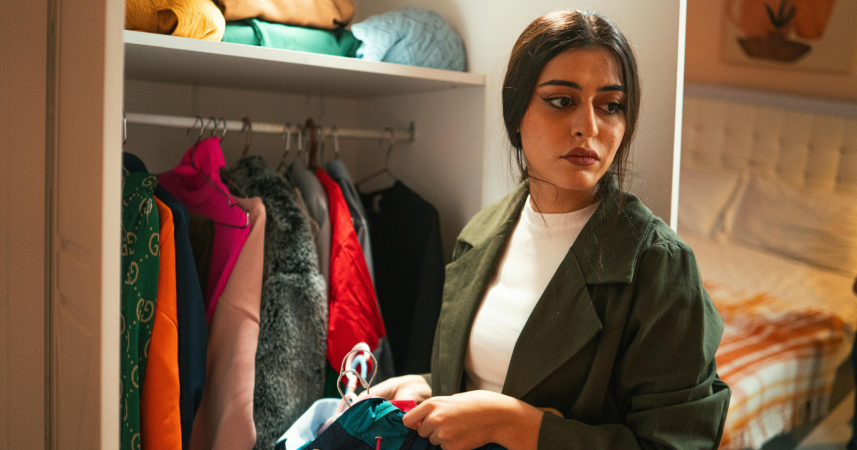
Psychologists have identified 9 specific wardrobe items that reveal whether you're buying clothes to fill emotional voids rather than actual style needs—and the number you own might shock you into reconsidering that online cart.

Add VegOut to your Google News feed. 
Ever opened your closet and felt that familiar pang of "I have nothing to wear" despite staring at rows of clothes? Here's a quick experiment for you: Go to your closet right now and count how many items you own that fall into the categories I'm about to share.
If you hit more than five, we need to talk about what's really driving your shopping habits.
Working as a financial analyst during the 2008 crisis taught me something crucial about human behavior: when emotions run high, logic goes out the window. I watched brilliant people make terrible financial decisions driven purely by fear and anxiety.
Years later, I realized I was doing the same thing with my wardrobe, just in a different way.
1) Clothes with tags still on them
We've all been there. You buy something because it was on sale, or you were having a rough day, or you imagined some future version of yourself wearing it. Months later, there it sits, tags intact, silently judging you from the back of your closet.
According to research from the Journal of Economic Psychology, this behavior often stems from what psychologists call "acquisition therapy." The act of buying gives us a temporary emotional boost, but once that high wears off, we don't actually need or want the item.
I once found seven blouses with tags still on them during a closet cleanout. Seven!
Each one represented a moment when I thought buying something would make me feel better about a work presentation that didn't go well, a fight with a friend, or just general life stress. The clothes weren't the solution; they were just expensive band-aids.
2) Multiple versions of essentially the same item
How many white t-shirts does one person need? Or black leggings? Or blue jeans that are basically identical?
When I finally confronted my achievement addiction and realized external validation would never be enough, I also discovered something interesting about my shopping patterns. I had been buying the same types of clothes over and over, as if having more versions of something that made me feel good once would multiply that feeling.
This repetitive buying pattern often signals that we're trying to recreate a specific emotional state rather than building a functional wardrobe. We're chasing the feeling we had when we first wore that perfect outfit, thinking more of the same will bring it back.
3) Impulse buys from late-night online shopping
Those 11 PM shopping sprees while scrolling through your phone in bed? They're rarely about style. They're about filling an emotional void when we're tired, lonely, or anxious.
The American Psychological Association found that stress-related shopping increases significantly during evening hours when our cognitive defenses are down. We're more vulnerable to emotional triggers and less likely to make rational purchasing decisions.
4) "Fantasy self" clothing
You know these items: the cocktail dress for parties you never attend, the hiking boots for trails you never hike, the business suits for a job you don't have. These purchases represent who we wish we were rather than who we actually are.
During my financial analyst days, I owned an embarrassing number of power suits. Not because I needed them (our office was business casual), but because they represented the successful, put-together person I desperately wanted to be.
It took me years to realize that buying the costume doesn't make you the character.
5) Emotional milestone purchases
Did you buy that expensive jacket after a breakup? That designer bag after a promotion? Those shoes after a particularly bad day? These items carry emotional weight that has nothing to do with their actual function in your wardrobe.
I had to confront the fact that I'd been using money as a measure of self-worth. Every expensive purchase was me trying to prove something to myself or others. The clothes became symbols of my value rather than simply things to wear.
6) Sale items you didn't actually need
"But it was 70% off!" Sound familiar? If you're buying things primarily because they're discounted, not because they fit your style or needs, you're shopping emotionally.
The thrill of getting a deal triggers the same reward centers in our brain as other pleasurable activities. We're not really saving money; we're buying a feeling. And that feeling is temporary, while the clutter in our closet is permanent.
7) Clothes that don't fit your current body
Whether they're too big or too small, keeping clothes that don't fit your current body is often about avoiding difficult emotions. These items represent past versions of ourselves or future aspirations, but they're not serving us in the present.
Research from the Journal of Behavioral and Experimental Economics shows that holding onto "aspirational" clothing can actually increase negative feelings about our bodies and decrease motivation for healthy behaviors.
We're literally filling our closets with shame and disappointment.
8) Trendy items that don't match your lifestyle
That neon blazer everyone was wearing last spring? Those chunky sneakers that look great on Instagram but hurt your feet? When we buy trends that don't align with our actual lifestyle, we're usually trying to buy our way into feeling relevant or included.
For years, I thought intellect could be my defense mechanism against feeling emotions. I'd research fashion trends extensively, buying pieces that fashion blogs recommended. But knowing what's trendy and wearing what actually works for your life are two different things.
9) Comfort purchases in multiples
This might be the same cozy sweater in three colors or multiple pairs of identical sweatpants.
While there's nothing wrong with knowing what you like, excessive multiples often indicate we're using clothing as emotional security blankets.
These items represent safety and comfort in a world that feels chaotic. We stock up on them like we're preparing for an emotional winter that never ends.
The real cost of emotional shopping
Here's what I learned after years of using shopping as therapy: those temporary highs from buying never addressed the real issues. The stress, the inadequacy, the need for control – they were all still there, just hidden behind a closet full of clothes I didn't really want.
If you counted more than five of these categories in your closet, you're not alone. Most of us use shopping as an emotional outlet sometimes. The key is recognizing when it's become a pattern that's not serving us.
Start by picking one category that resonated most with you. Maybe clear out those items with tags still on them, or finally donate the clothes that don't fit. Notice what emotions come up as you do this. That discomfort you feel? That's where the real work begins.
Remember, a closet full of emotional purchases isn't really about fashion at all. It's about all the feelings we're trying to avoid. And the sooner we face those feelings directly, the sooner we can build a wardrobe (and a life) that actually fits who we are, not who we're trying to convince ourselves to be.