Boomers often mean well, but their idea of “good manners” at restaurants can feel painfully uncomfortable to Millennials. What was once polite now reads as awkward, extra, or even rude. Here are eight behaviors that spark the biggest cringe.
We’ve all had that moment at a restaurant where you’re not sure whether to smile, nod, or pretend you didn’t notice what just happened.
Maybe it’s the person at the next table giving the server a full-on lecture about “proper service.” Or someone loudly correcting a waiter’s wording like they’re hosting a manners workshop.
And look, I’m not here to bash Boomers. A lot of these habits come from a genuinely good place. Many people grew up believing that this is what polite looks like: formal, direct, and very “customer-first.”
But social norms have shifted. Millennials tend to value ease, equality, and low-drama interactions.
We’re more aware of service industry stress, power dynamics, and the fact that most people working a restaurant shift are doing about ten things at once.
When older-school etiquette shows up at the table, it can feel oddly tense, performative, or just… awkward.
Let’s talk about it. Here are eight restaurant behaviors Boomers often see as polite, but Millennials usually find uncomfortable.
1) Overly formal greetings and titles for servers
Have you ever heard someone say “sir” or “ma’am” so many times it starts to sound like a job interview?
- “Ma’am, could you bring us more water?”
- “Ma’am, excuse me.”
- “Thank you, ma’am.”
It’s meant to show respect, and sometimes it does. But often, it comes with a stiff tone that creates distance instead of warmth. To a lot of Millennials, it feels less like kindness and more like a performance.
Most of us prefer a normal human vibe. A friendly “Hi” and a genuine “Thank you” usually feel more respectful than a script.
If you want to come across as considerate, aim for warmth over formality. It makes the whole interaction easier for everyone.
2) Snapping, waving, or exaggerated signals to get attention
This is one of those behaviors that makes Millennials cringe in real time.
Snapping fingers. Waving dramatically. Saying “psst!” or doing that little “come here” motion with the hand. Some people do it without thinking and truly mean nothing by it.
But to a lot of younger diners, it reads as dehumanizing. It signals, “You exist to respond to me.” Even if that’s not the intention, that’s how it often lands.
Here’s the thing: Restaurant staff are trained to scan the room. If you need something, a quick moment of eye contact and a small nod is usually enough.
If it’s urgent, a calm “Excuse me when you have a second” is polite and clear without being intense.
When you treat a server like a person, they almost always respond with more warmth anyway.
3) Using compliments that feel like a speech
Some Boomers are big on compliments. That’s not a bad thing. But there’s a style of compliment that feels like it belongs at a ceremony.
- “You’re doing SUCH an amazing job.”
- “You are so hardworking, young lady.”
- “We need more people like you these days.”
The intention is kind, but the delivery can feel awkward, especially when it’s loud enough for other tables to hear. It puts the server in a weird position.
Now they have to react with the exact right level of gratitude while still working and staying professional.
Millennials tend to prefer quick, sincere appreciation: “Thanks, you’ve been great.” No speech, no spotlight.
If you want your compliment to land well, keep it real and keep it short. Let the tip do the rest of the talking.
4) Asking personal questions like the server is there to chat
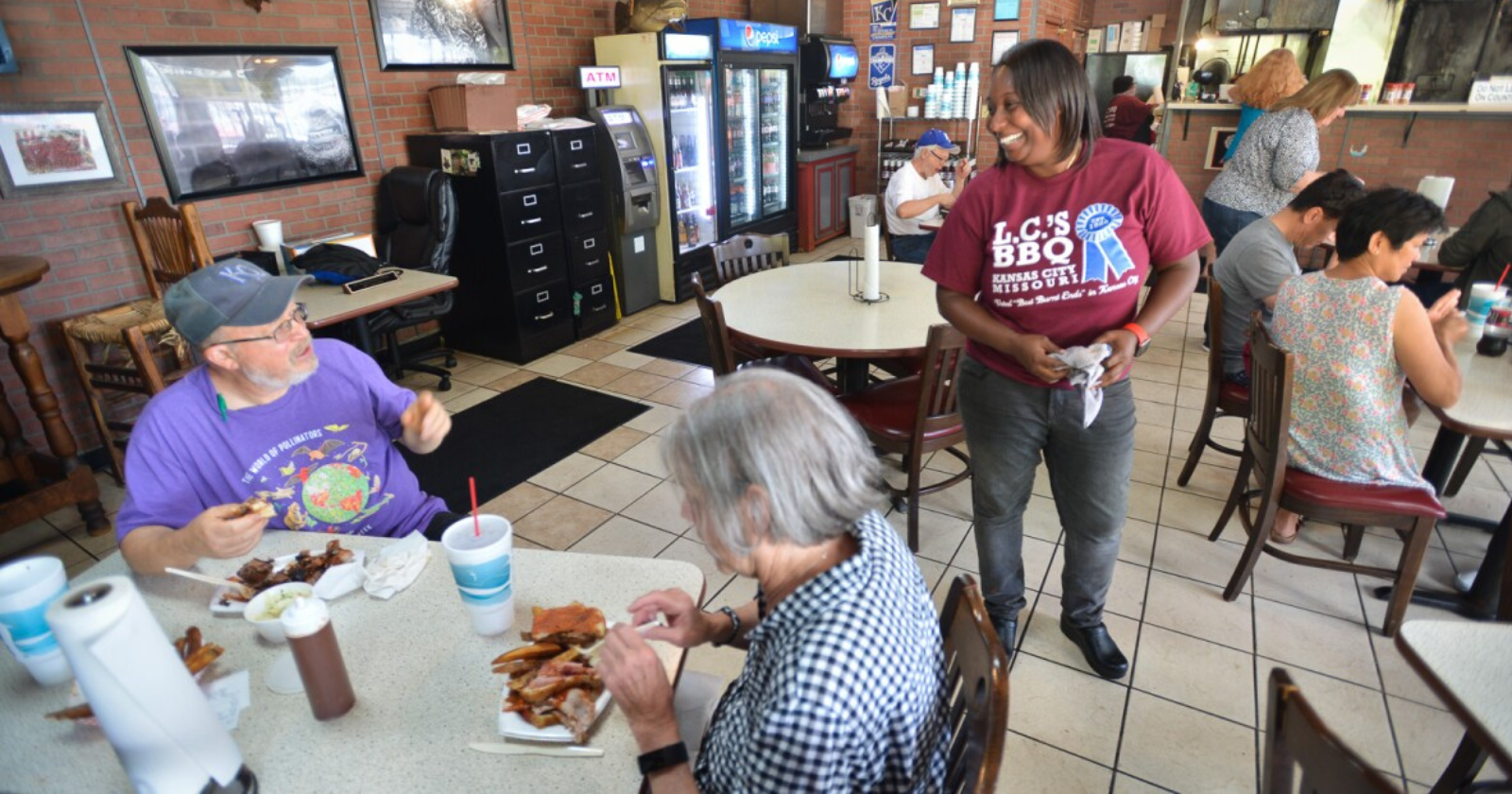
Some Boomers are naturally conversational with strangers, and restaurants can feel like a social event. They’ll ask questions meant to build connection:
- “What’s your name?”
- “Where are you from?”
- “Are you in school?”
- “Do you like working here?”
- “Do you have kids?”
Sometimes this is fine. Sometimes it turns into a full interview, and the server is trapped in it because they can’t walk away.
Millennials tend to be more protective of boundaries. We’re also more aware that servers are already doing emotional labor.
They’re smiling, staying upbeat, and managing multiple tables. Adding personal conversation can feel like extra work.
If the server starts the chatting, great. Follow their lead. But if they seem busy, stick to kindness without taking up more of their mental space.
Friendly is great. But friendly does not have to mean personal.
5) Sending food back for small imperfections
Boomers were often taught: if something isn’t right, send it back. You paid for it, so it should be correct.
That makes sense in theory. Restaurants should fix mistakes.
But Millennials often feel intense discomfort when food gets sent back for minor things: Fries that are a bit salty, soup that isn’t piping hot, steak cooked slightly off.
A lot of us think, “It’s fine. I’ll live.” Not because we don’t care, but because we’re very aware that sending food back can stress the server and kitchen. It can also feel like an unnecessary conflict.
That said, if something is truly wrong, speak up. The key is tone.
A calm approach changes everything: “Hey, I’m so sorry, but I think this isn’t what I ordered. Could you help me fix it?”
That’s respectful, clear, and doesn’t turn the moment into a power struggle.
6) Asking to speak to the manager, even for “good feedback”
This is another one that can make Millennials tense.
Boomers may ask to speak to the manager to share thoughts, offer a compliment, or report an issue. They often see it as responsible and direct.
But for Millennials, it can feel like an unnecessary escalation. Even positive manager interactions can stress staff out. The server might assume they’re in trouble the moment they hear “manager.”
And if the feedback is negative, it can feel like a big dramatic move over something that could have been handled quietly.
Most Millennials would rather do one of these instead:
- Tip well
- Leave a short review
- Mention the issue gently at the table
- Write a note on the receipt
Those options give feedback without turning the experience into an official complaint session.
If you truly need a manager, of course ask. But if it’s minor, there are softer ways to handle it.
7) Overexplaining the order to “make it easier”
This one is so common, and I know it comes from a good place. Some Boomers think detailed instructions show clarity and help the server avoid mistakes.
But the result can feel like a monologue.
“I’ll take the chicken, but not grilled, I want it baked. And I want the dressing on the side, but not ranch, and no tomatoes, but extra cucumbers, and can you make sure it’s fresh because last time it wasn’t…”
Millennials often get secondhand anxiety listening to this because we assume the server is overwhelmed. We worry we’re becoming “that table,” the one the kitchen dreads.
Special requests are okay. But it helps to simplify and prioritize. Ask for what truly matters, and let the rest go if you can.
A useful question to ask yourself is: “Am I being clear, or am I trying to control everything because I’m anxious?”
No shame if it’s the second one. It happens. But awareness helps.
8) Turning tipping into a moral lesson
Some Boomers tip generously, which is great. But they sometimes attach commentary to it that feels uncomfortable.
- “I’m leaving you this because you earned it.”
- “You’ll get a good tip if you keep smiling.”
- “This is how you learn.”
- “You don’t get a tip if you mess up.”
Sometimes they’ll even announce the tip amount at the table like it’s a public reward.
Millennials tend to see tipping as a quiet form of support. We know the system is imperfect, and we don’t want to make the server feel like they’re being graded in real time.
When tipping becomes conditional or performative, it shifts from appreciation to control. It can feel like the customer is using money to enforce behavior.
If you want to tip well, tip well. If service was truly bad, tip fairly and move on. No speech needed.
Kindness should not come with a lecture.
Final thoughts
If any of these behaviors sound familiar, you’re not alone. Most of them come from good intentions, and many were considered “proper manners” for a long time.
But politeness evolves.
Millennials tend to define politeness less by formality and more by emotional awareness. It’s not about being demanding and “correct.” It’s about making the interaction smooth, respectful, and human.
Next time you’re at a restaurant, you might ask yourself: Am I being courteous, or am I trying to assert control?
Because the most timeless restaurant etiquette is still the simplest: Be patient. Be kind. Tip fairly. And remember the person serving you is a person.
That kind of politeness never goes out of style.
If You Were a Healing Herb, Which Would You Be?
Each herb holds a unique kind of magic — soothing, awakening, grounding, or clarifying.
This 9-question quiz reveals the healing plant that mirrors your energy right now and what it says about your natural rhythm.
✨ Instant results. Deeply insightful.