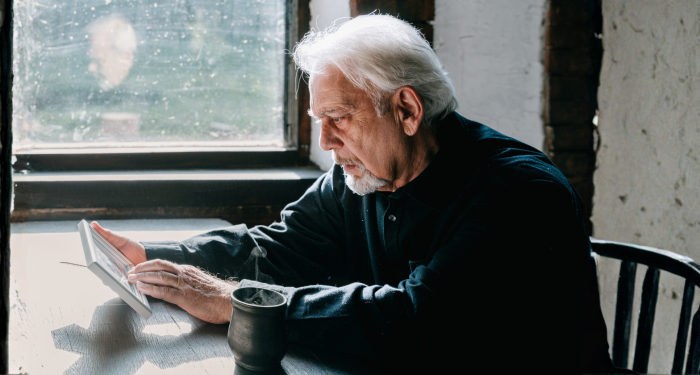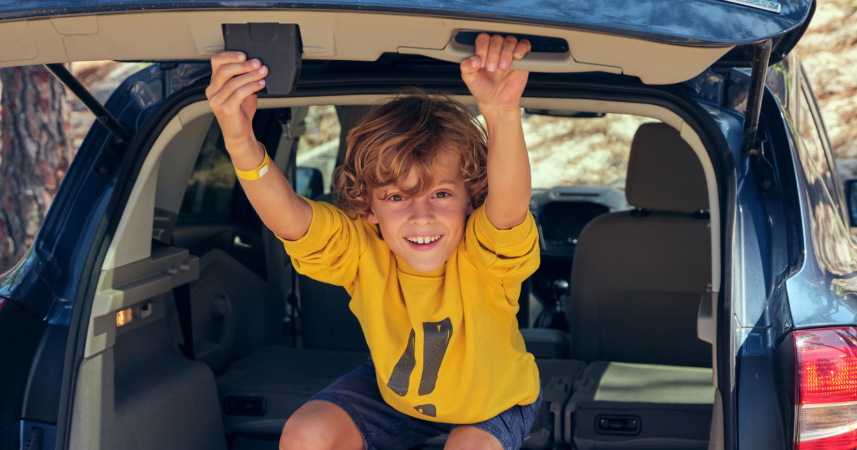
You don’t have to ditch screens to learn from this because you just have to choose moments where you let your brain do what it used to do by default.
If you’ve ever been trapped in the backseat with nothing but your thoughts and a seatbelt buckle digging into your hip, you already know the modern miracle of a screen.
Here’s a fun question: What did families do before the glowing rectangle became the unofficial third parent?
A lot, apparently, and some of it sounds completely unhinged when you picture it now.
I’m saying it’s different and, honestly? Some of those old-school habits might be worth stealing, especially if you’re trying to build focus, patience, and connection in a world that constantly yells for your attention.
Let’s talk about seven ways Boomers kept themselves entertained on long car trips, and what we can learn from the chaos:
1) The license plate obsession
You know that game where you try to spot license plates from all 50 states?
Yeah, that game has been around forever and people were not casual about it.
I’m talking full-on scanning mode, neck craning, leaning across siblings, and sudden shouting like, “Nebraska!” as if they’d just discovered buried treasure.
The “insane without screens” part is how long you could ride that little dopamine hit.
One plate, then another, then a long dry spell where everyone got grouchy, and then boom—a rare one, and the whole backseat lit up again!
Here’s what I love about it, though: It’s attention training disguised as entertainment.
You’re practicing observation, pattern recognition, patience, and delayed reward.
Next time you’re on a trip, try it for ten minutes before you grab your phone.
Notice how your brain starts hunting for stimulation in the real world.
That’s a muscle we don’t flex as often anymore.
2) “I spy” and the art of stretching one idea forever
“I spy with my little eye…”
If you grew up playing this, you know it can be adorable.
However, if you grew up playing it with competitive siblings, you know it can become a psychological thriller.
The basic premise is simple: Someone picks an object, gives a clue, and everyone guesses.
The insane part is how long it could go on, over and over, for miles.
Sometimes the person choosing the object would weaponize it.
“I spy something… gray.” Cool, thanks, it could be the sky, the road, a random sign, half the cars in existence, or your dad’s sock.
Here’s the secret: This game taught kids how to tolerate ambiguity.
That sounds nerdy, but stay with me.
Most of us now get uncomfortable if we don’t know something immediately.
“I Spy” forces you to sit in not-knowing and keep playing anyway, and that’s a real life skill for learning, relationships, and personal growth.
The ability to stay engaged even when you’re not getting instant answers is basically a superpower now.
3) Storytelling that had zero fact-checking
Before kids could look up anything, adults could say anything, and they did.
Family road trips used to come with stories that were part entertainment, part mythology, part “I’m pretty sure Uncle Ron made this up in 1978 and we’re still repeating it.”
Someone would point at a random mountain and claim it was shaped like a sleeping giant, someone would swear a famous person once ate at a diner up ahead, or someone would tell a ghost story tied to a bridge you were about to cross, conveniently right as the sun started going down.
As a kid, you didn’t fact-check and just built whole little mental movies.
From a psychology angle, this is gold.
It’s narrative bonding: Humans attach through stories and it’s how we make meaning, how we remember, and how we turn a boring stretch of road into something that feels alive.
I notice this in my own life when I’m with friends.
If we’re all staring at our phones, we’re sharing space, but not really sharing experience.
However, when someone starts telling a story and everyone’s actually listening, the vibe changes immediately.
Yes, the stories might have been wildly inaccurate, but they built imagination, attention, and connection.
4) Singing like the car was a concert venue

If you want to understand pre-screen entertainment, picture a family loudly singing along to whatever was on the radio, without irony.
Not in a cute “TikTok car karaoke” way, but in a more committed way.
The kind where someone doesn’t know the lyrics but keeps singing anyway.
There’s something almost shocking about how un-self-conscious it was.
Today, even adults get weird about singing in front of other adults. We’re hyper-aware of being perceived.
Singing in the car was normal as it was a pressure release, filled silence, kept people awake, and turned time into rhythm instead of minutes.
Also, this is one of those sneaky habits that actually regulates your nervous system.
Singing uses breath, sound, and vibration; it can shift your mood fast, especially if you’re stressed or restless.
You don’t have to be a “singer” to steal this.
Make a road trip playlist and give yourself permission to be a little cringe.
Being a little cringe is often the doorway to being a little freer!
5) The travel game arsenal: Paper, pencils, and pure determination
Boomers had supplies and, somehow, a thin pad of paper and a sad little golf pencil could carry an entire afternoon.
They played Hangman, Tic-Tac-Toe, Dots and Boxes, categories, Would You Rathe, and Word Searches from a magazine.
If you’ve ever tried to write or draw in a moving car, you know the “insane” part.
Your handwriting becomes abstract art as the paper slides everywhere.
Moreover, it's either someone steals your pencil or you drop it and it disappears into the seat crack forever.
Yet, despite everything, it worked because effort was baked into the entertainment.
I am pro-intentional friction, sometimes.
A little friction makes you present, collaborate, and laugh when it goes wrong.
If you want a simple experiment, bring one paper game on your next trip and see for yourself.
6) Staring out the window like it was a full-time job
This one sounds the most boring, so it’s probably the most radical.
Boomer kids stared out the window for long stretches, just watching trees blur by, counting cows, tracking clouds, looking for weird billboards, and making faces at passing cars.
Yes, there was plenty of “Are we there yet?” energy.
I’m not romanticizing it as all peaceful, but there was a lot more empty space.
That empty space matters because your brain needs downtime to process, daydream, and reset.
When you’re constantly consuming, you don’t get much room to integrate anything.
You’re always taking in, rarely digesting.
Window-staring is basically low-effort mindfulness; the kind where your mind wanders, calms down, and makes surprising connections.
Some of my best ideas show up when I’m running trails or pulling weeds in the garden.
It’s the same principle: Repetitive motion or gentle sensory input gives the brain room to do background work.
7) Talking, arguing, and negotiating like tiny diplomats
Finally, we have the most realistic one: Boomer road trips were also a social pressure cooker.
Kids talked, fought, made alliances, tried to convince parents to stop for snacks, and negotiated seat space like it was international policy.
Without screens, you couldn’t just retreat into your own private world.
You had to deal with the people in the car with you, for better or worse.
That can sound awful, especially if you grew up in a family where “bonding” looked a lot like bickering, but it also built social skills that are easy to dodge now.
Conflict, boredom, compromise, repair; those are all part of being human in a shared space.
I’ve noticed something in myself when I’m uncomfortable or socially drained: My instinct is to reach for my phone.
It’s a quick escape hatch, but it also means I practice avoidance more than I practice engagement.
If you’re traveling with others, consider a gentle version of this: Put phones away for the first 30 minutes and ask thoughtful questions to one another.
It sounds simple, but simple questions can open surprisingly deep doors.
Final thoughts
It’s easy to look back at pre-screen road trips and think, “How did anyone survive this?”
The more interesting question might be: What did those experiences train that we’re losing?
Patience, creativity, social tolerance, the ability to be bored without panicking, and the ability to make meaning out of nothing but a stretch of highway and a weird-shaped cloud.
You just have to choose moments where you let your brain do what it used to do by default.
The next time you’re on a long drive, maybe try one old-school habit on purpose.
It might feel a little insane at first, and then it might feel like you got a part of yourself back!
If You Were a Healing Herb, Which Would You Be?
Each herb holds a unique kind of magic — soothing, awakening, grounding, or clarifying.
This 9-question quiz reveals the healing plant that mirrors your energy right now and what it says about your natural rhythm.
✨ Instant results. Deeply insightful.