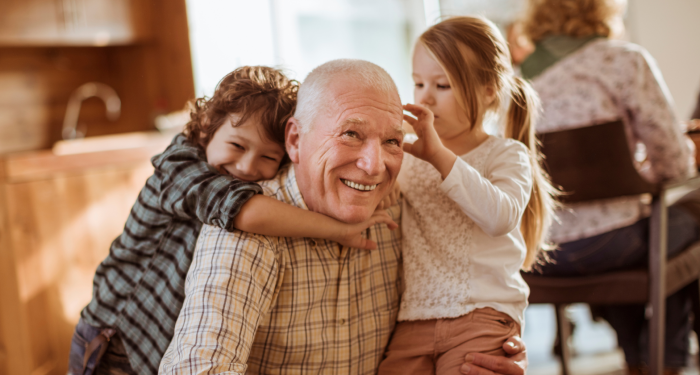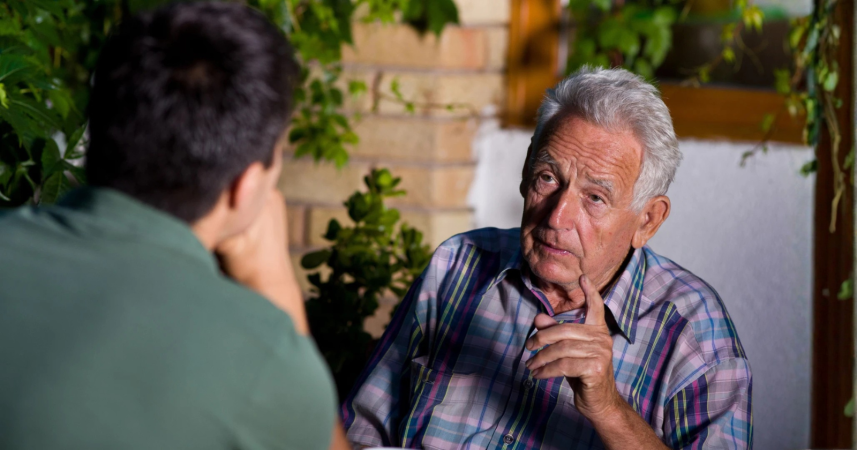
While Boomers reminisce about their carefree childhoods of unsupervised play and simple pleasures, they're missing the profound ways modern society has reshaped what it means to grow up, and why their grandkids' struggles with screens, schedules, and anxiety might actually be signs of adaptation, not weakness.
"When I was your age, we didn't need all these gadgets to have fun. We just went outside and played until the streetlights came on!"
If you've spent any time around Baby Boomers and their grandchildren, you've probably heard some version of this statement. Maybe you've even said it yourself.
As someone who bridges the generational gap between Boomers and Gen Z, I've noticed something interesting. These comparisons, while well-meaning, often completely miss what's actually happening in kids' lives today.
After years of observing these interactions at family gatherings, community events, and even at the farmers' market where I volunteer, I've identified seven common comparisons that sound wise on the surface but actually overlook the real challenges and opportunities facing today's youth.
Let me walk you through them, because understanding these blind spots might just transform how we connect across generations.
1) "We played outside all day" vs. structured activities
Yes, Boomer childhoods were filled with unstructured outdoor play. Kids would disappear after breakfast and return for dinner, building forts and creating their own adventures. Today's kids often have schedules packed with organized sports, music lessons, and tutoring.
But here's what this comparison misses: the world has fundamentally changed. Neighborhoods aren't designed for kids to roam freely anymore.
Many suburbs lack sidewalks, public spaces have disappeared, and both parents often work full-time. When my mother taught school in the 1980s, most of her students had a parent at home. That's simply not the reality anymore.
The structured activities aren't just about keeping kids busy. They're often the only safe, supervised options available when parents are working. Plus, college admissions have become so competitive that starting extracurriculars early feels necessary, not optional.
Instead of lamenting the loss of free play, maybe we should be asking: How can we create safe spaces for unstructured play in today's world?
2) "We had to entertain ourselves" vs. screen time
Boomers love to reminisce about making up games with sticks and rocks, reading for hours, or listening to radio shows that sparked their imagination. Meanwhile, they watch their grandkids glued to tablets and assume technology has killed creativity.
What they're missing is that many kids today are incredibly creative with technology. They're making videos, coding games, creating digital art, and building communities online. When I worked in finance, I saw teenage interns who could create complex spreadsheet models that would've taken us days to figure out at their age.
The real issue isn't screens themselves. It's the quality of what kids are doing on them. A child learning to code or editing videos is engaging in creative work, just with different tools than previous generations used.
3) "We respected our elders" vs. kids speaking up
Growing up, I watched my parents navigate this tension constantly. My father, an engineer, valued precision and facts above all else. When I'd question something that didn't make logical sense, even from an adult, he'd actually encourage it. This was unusual for his generation.
Many Boomers see today's kids as disrespectful when they ask "why" or challenge ideas. But what looks like disrespect might actually be critical thinking. Today's children are taught to question, research, and verify information. They're growing up in an era of misinformation where blind trust can be dangerous.
The ability to respectfully question authority while maintaining relationships is actually a sophisticated skill. When kids push back on ideas, they're often trying to understand, not undermining authority.
4) "We were grateful for what we had" vs. mental health awareness
Boomers often recall being happy with one toy at Christmas and wearing hand-me-downs without complaint. They look at kids today talking about anxiety and depression and think they're just spoiled or weak.
This comparison completely ignores the mental health revolution that's happened. When I finally had honest conversations with my parents about mental health, breaking our family's generational silence on the topic, I learned they had struggled too. They just never had the language or permission to talk about it.
Today's kids aren't weaker. They're more emotionally literate. They can identify and articulate feelings that previous generations buried. This is progress, not regression.
5) "We learned by doing" vs. information overload
Boomers learned skills by watching and doing. They fixed bikes by taking them apart, learned to cook by helping in the kitchen, and figured things out through trial and error.
Today's kids often turn to YouTube tutorials or Google for everything. But here's the thing: they're dealing with exponentially more information than any previous generation. When everything from basic life skills to advanced calculus is available online, the challenge isn't finding information but filtering it.
I witnessed the 2008 financial crisis firsthand and saw how fear drives irrational decision-making. One thing that became clear was that those who could quickly process and verify information made better choices. Today's kids are developing these filtering skills out of necessity.
6) "We had real friendships" vs. online connections
Boomers remember neighborhood friendships, talking for hours on the porch, and deep connections formed through physical proximity. They worry that online friendships are shallow and meaningless.
But for many kids today, online communities provide connection and support they can't find locally. A kid interested in specific hobbies, dealing with unique challenges, or living in a small town can find their tribe online.
These friendships can be just as meaningful and often more accepting than forced proximity relationships.
The pandemic proved that online connections can sustain us through isolation. Rather than dismissing these relationships, we should be teaching kids how to build healthy connections both online and offline.
7) "We were independent earlier" vs. extended dependence
Boomers often got jobs at 16, moved out at 18, and were financially independent by their early twenties. They look at 25-year-olds living at home and see failure.
This comparison ignores economic reality.
When my parents bought their first home, it cost less than three times their annual income. Today, that ratio is often ten times or more. College debt, housing costs, and wage stagnation mean that traditional markers of independence are simply out of reach for many young adults.
What looks like dependence might actually be smart financial planning. Living at home while paying off student loans or saving for a house down payment is strategic, not lazy.
Final thoughts
These generational comparisons aren't inherently wrong, but they're incomplete. They focus on surface differences without acknowledging the fundamental changes in society, economy, and technology that shape childhood today.
Instead of lamenting what's been lost, what if we asked better questions? How can we combine the best of both worlds? How can we create opportunities for free play while keeping kids safe? How can we honor emotional intelligence while building resilience?
The truth is, every generation faces unique challenges and develops specific strengths in response. Boomers developed independence and resilience. Today's kids are developing digital literacy and emotional intelligence. Both are valuable.
Next time you catch yourself or someone else making these comparisons, pause. Ask yourself: What's really different here? What challenges are today's kids facing that we didn't? And most importantly, how can we use our experience to support them rather than judge them?
Because at the end of the day, isn't that what wisdom is really about?
If You Were a Healing Herb, Which Would You Be?
Each herb holds a unique kind of magic — soothing, awakening, grounding, or clarifying.
This 9-question quiz reveals the healing plant that mirrors your energy right now and what it says about your natural rhythm.
✨ Instant results. Deeply insightful.