From television zombies in the 1950s to cancel culture in the Salem witch trials, the "good old days" were filled with the exact same problems Boomers insist are destroying society today.

Add VegOut to your Google News feed. 
"You kids with your phones don't know what real connection is. Back in my day, we actually talked to each other face-to-face."
Sound familiar? If you've spent any time around Baby Boomers, you've probably heard some version of this nostalgic complaint. The narrative goes something like this: life was simpler, people were more genuine, and all these modern problems simply didn't exist.
Here's the thing though. After diving into historical records, old newspapers, and countless documented conversations from the "good old days," I've discovered something fascinating. Many of the issues Boomers claim are new? They've been around for generations.
Growing up in Melbourne, our family dinners often turned into debates about ideas and history. My brothers and I would challenge our parents' rose-colored memories, armed with facts we'd discovered. Those conversations taught me to question everything, especially when someone claims the past was fundamentally different from today.
Let's bust some myths about what supposedly didn't exist "back then."
1) Screen addiction (just different screens)
"Kids these days are glued to their screens!"
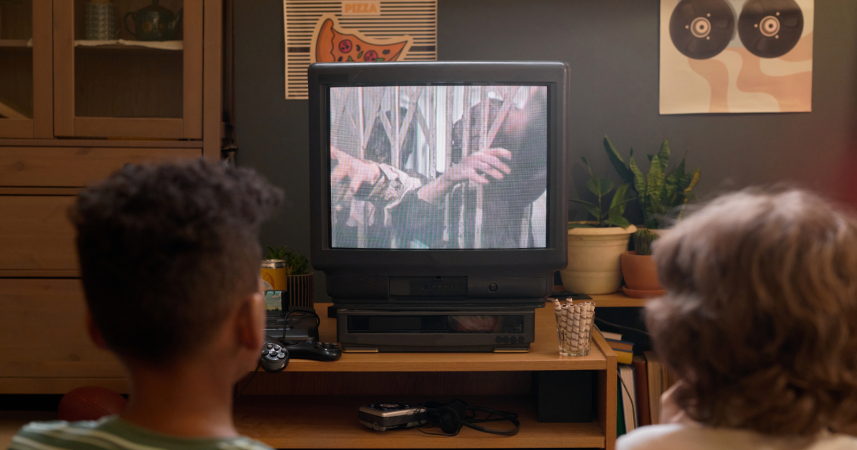
Actually, let me tell you about the 1950s and 60s. Families were literally rearranging their entire living rooms around a new device called the television. Sound familiar?
By 1960, 90% of American homes had TVs, and the average person was watching five hours daily. Parents worried their kids were becoming "television zombies." Newspapers ran panicked articles about children losing their imagination and social skills.
Before that? The 1940s saw moral panic about comic books. The 1920s had parents freaking out about radio serials. Each generation had its screen, and each generation of parents worried about addiction.
The screens have gotten smaller and more portable, sure. But that glazed-over look while consuming media? That's been around since humans started gathering around fires to hear stories.
2) Cancel culture and public shaming
Think cancel culture is a modern Twitter phenomenon? Not even close.
The 1950s had McCarthyism, where people lost their careers for suspected communist sympathies. The 1960s and 70s saw boycotts of businesses that didn't align with political views. Musicians were banned from radio stations for controversial lyrics or behavior.
Remember the Dixie Chicks? They were "canceled" in 2003 for criticizing President Bush. But even before that, John Lennon faced massive backlash for his "more popular than Jesus" comment in 1966. Radio stations organized Beatles record burnings.
The Salem witch trials were literally cancel culture with deadly consequences. Public shaming has been a human pastime since we figured out how to form communities.
In my book, Hidden Secrets of Buddhism: How To Live With Maximum Impact and Minimum Ego, I explore how Buddhist philosophy has dealt with social judgment for centuries. The platform changes, but human nature doesn't.
3) Fake news and misinformation
"You can't trust anything you read online these days!"
Yellow journalism in the 1890s literally helped start the Spanish-American War. Publishers like William Randolph Hearst deliberately sensationalized stories to sell papers. The phrase "Remember the Maine!" was based on speculation and propaganda, not facts.
The 1930s saw Father Coughlin reach millions through radio with conspiracy theories and antisemitic propaganda. The 1960s had underground newspapers spreading unverified claims about everything from government plots to miracle cures.
Tabloids in the 70s and 80s convinced people that Elvis was alive and aliens were walking among us. The difference now? Information spreads faster. But humans have always loved a good conspiracy theory, and there's always been someone ready to profit from that tendency.
4) Young people "disrespecting their elders"
Every generation thinks the next one lacks respect. But guess what? Socrates complained about the youth of Athens over 2,400 years ago.
In 1968, Time magazine ran a cover story about the "Generation Gap," describing young people as rebellious, disrespectful, and destroying traditional values. Those young rebels? They're today's Boomers.
The 1920s flappers scandalized their parents with short skirts and jazz music. The 1950s greasers with their leather jackets and rock 'n' roll were seen as juvenile delinquents. Every generation rebels, and every older generation clutches their pearls in response.
Growing up, I watched my parents navigate this same dynamic with us. Now I see them doing it with their grandchildren. The cycle continues.
5) Kids being "soft" and "entitled"
A 1940s article in Parents Magazine worried that modern conveniences were making children weak. The Greatest Generation thought Boomers were spoiled because they didn't have to walk five miles to school or work in factories as children.
The ancient Greeks worried that writing would make people's memories weak because they wouldn't have to remember everything. Seriously.
Every generation that achieves some level of comfort wants better for their kids. Then they worry those same kids are too comfortable. Boomers benefited from post-war prosperity their parents couldn't imagine. Their parents called them soft for it.
6) Political polarization and division
Think politics has never been more divided? The 1960s would like a word.
The Vietnam War literally split families apart. Anti-war protests turned violent. The 1968 Democratic National Convention erupted into chaos. Students were shot at Kent State. Political assassinations rocked the nation.
Going back further, the 1850s saw Americans literally killing each other over political differences in Bleeding Kansas, leading to the Civil War. The 1930s had American Nazi rallies in Madison Square Garden while communist party meetings happened blocks away.
Reading through Hidden Secrets of Buddhism: How To Live With Maximum Impact and Minimum Ego, I've learned that political discord is as old as politics itself. Buddhist texts from thousands of years ago discuss navigating political turmoil with mindfulness.
7) Hook-up culture and casual relationships
"Nobody commits anymore! In my day, people got married and stayed married!"
The sexual revolution of the 1960s and 70s would suggest otherwise. Free love, swinging, key parties - these weren't millennial inventions. Studio 54 wasn't exactly a bastion of monogamy.
The 1920s had petting parties. The 1940s had "Victory Girls" who dated multiple soldiers. The 1950s, despite its wholesome image, had plenty of "going steady" that involved more than holding hands at the soda fountain.
Divorce rates actually peaked in the early 1980s when Boomers were hitting their stride. The "good old days" of stable marriages often meant people staying in unhappy relationships because divorce carried massive social stigma.
Final words
Why does this matter? Because recognizing these patterns can actually reduce our anxiety about the present and give us perspective on navigating current challenges.
When we realize that every generation has faced similar issues, just with different packaging, we can stop catastrophizing about how uniquely terrible things are now. We can learn from how past generations handled these challenges, both their successes and failures.
The next time someone tells you about how things were so much better or simpler "back then," remember that humans have been human for a very long time. We've always struggled with technology disrupting our lives, with political division, with younger generations challenging older ones.
The tools change. The challenges remain remarkably consistent.
Instead of romanticizing the past or demonizing the present, maybe we can focus on what actually helps: learning from history, practicing empathy across generations, and recognizing that we're all just trying to figure things out with the tools available to us.
After all, in 30 years, we'll probably be telling younger generations about how things were different "back in our day" too.