People in the 70s just had heavier systems so, by the 90s, appliances took some of that weight off.
Have you ever caught yourself thinking, “How did people used to do all this without modern stuff?”
I’m not talking about life without Wi-Fi. I mean the basic, daily grind: clean clothes, edible food, a floor you can walk on without crunching, and a sink that doesn’t look like a science experiment.
Somewhere between the 1970s and the 1990s, home life quietly changed because appliances started eating up the time-heavy chores that used to swallow entire afternoons.
Honestly? It’s a weirdly useful reminder for self-development: Sometimes you need a better system.
Let’s time-travel a bit and look at seven household tasks that used to take hours, then got bulldozed by appliances by the 90s.
While we’re at it, I’ll sprinkle in a question I think we all should ask more often: What are you still doing the hard way, just because you’re used to it?
1) Doing laundry the hard way
Laundry today can be annoying, but it’s usually not a day-long event unless you’ve got a big family or a week that went off the rails.
In the 70s, a lot of households were still dealing with older washers, smaller machines, or even hand-washing certain items.
Even when you had a washer, you didn’t always have the kind of “set it and forget it” cycle options we take for granted now.
Add in line-drying, heavy wet fabrics, and the whole process could eat up hours.
By the 90s, automatic washing machines and dryers had become standard in many places, and the laundry routine shrank.
Here’s the self-development angle I can’t ignore: Time isn’t just “spent,” it’s allocated.
If a chore is eating up more of your attention than it deserves, it quietly steals energy from everything else you want to do, like exercise, creativity, rest, relationships, even basic patience.
If laundry still drains you, the question is: “What part of this could be simplified?”
2) Washing dishes one plate at a time
There’s a very specific kind of fatigue that comes from a sink full of dishes.
It’s both physical and emotional; you look at the pile and feel like you’ve failed at life in some small, domestic way.
Back in the 70s, dishwashers existed, but they weren’t as common, and they weren’t always great.
Lots of families did the nightly routine: Scrape, soak, scrub, rinse, dry, and put away.
That can easily chew up an hour after dinner, especially if you cook from scratch.
By the 90s, dishwashers became more common and more efficient, turning dish duty into a loading and unloading task instead of a full-on scrubbing session.
This is one of those chores that teaches a sneaky life lesson: Repetition creates resignation.
When you do the same draining thing every day, you stop questioning it as it becomes “normal.”
If you’re stuck in a routine that feels heavier than it should, try asking: Is this actually necessary, or is it just familiar?
3) Defrosting the freezer like it’s a seasonal ritual
If you’ve never defrosted an old freezer, picture this: Ice buildup thick enough to qualify as interior decorating, food awkwardly stacked around frozen walls, and a drip situation that turns your kitchen floor into a hazard.
In the 70s, manual-defrost freezers and older fridge models made this a real chore.
You’d pull everything out, chip away ice, mop up water, wait forever, then restock.
It could take half a day, and you’d still feel like you didn’t do it “right.”
By the 90s, frost-free refrigerators and freezers were far more common.
Suddenly, that whole ritual disappeared for a lot of people.
I love this example because it’s basically what personal growth can look like when it’s done well.
The best “upgrade” is removing the conditions that create the problem in the first place.
If your life keeps “icing over” in the same areas, like clutter, missed workouts, constant lateness, it might be worth looking at the environment, not your willpower.
4) Deep-cleaning carpets and rugs by brute force
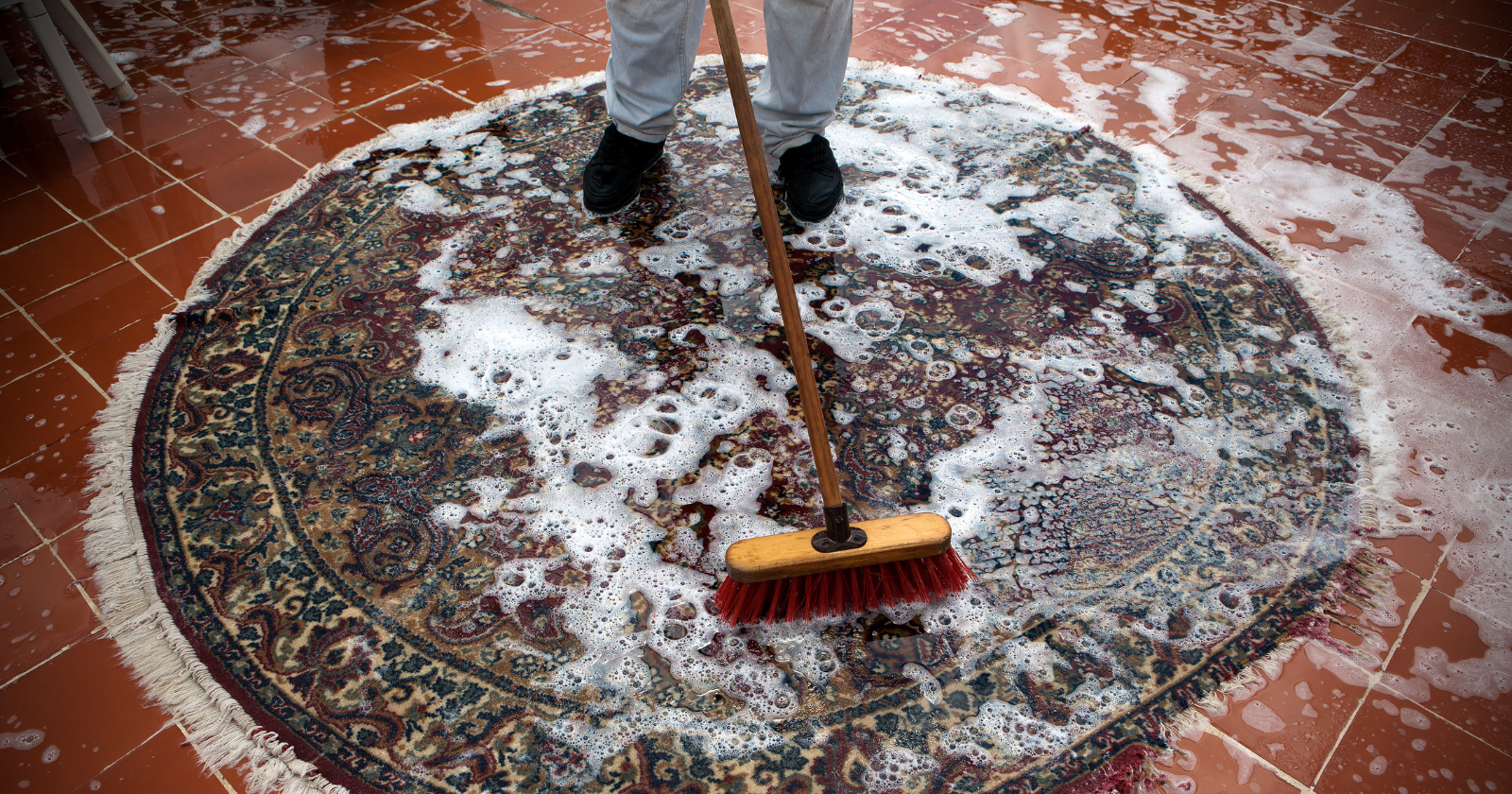
Vacuum cleaners existed long before the 70s, sure, but carpet care used to be a whole different beast.
Think shag carpets, thick rugs, and limited home cleaning tech.
People beat rugs outside, used heavy-duty powders, did spot scrubbing on hands and knees, and rented bulky machines when things got truly grim.
By the 90s, home vacuums improved a lot, and consumer carpet cleaners and steam cleaners became more accessible.
Instead of “we’ll deal with it someday,” you could actually handle messes in real time.
I know this sounds like a stretch, but stay with me: There’s a mindset shift here.
When a task is overwhelming, you tend to avoid it.
Avoidance builds and the problem grows, then you feel behind, guilty and stressed.
Better tools reduce avoidance, so what’s one area in your life you avoid because the “cleanup” feels too big and what would make it smaller?
5) Mixing, whipping, and kneading everything by hand
If you enjoy cooking, you might romanticize hand-mixing but hand-mixing is cute until you’re on minute twelve of beating batter and your arm feels like it’s applying for early retirement.
In the 70s, plenty of households still did a lot of manual food prep.
Not everyone had a stand mixer.
Food processors weren’t as widespread and even basic blending and chopping could take serious time, especially if you were making meals from scratch most days.
By the 90s, stand mixers, blenders, and food processors were common kitchen staples.
Tasks like shredding, slicing, kneading, and whipping became fast and consistent.
Less time, less mess, and less muscle fatigue.
Here’s a practical life takeaway I think about often: Consistency loves convenience.
If you want to stick to a habit, whether it’s eating better, meal prepping, or just cooking more at home, you need to reduce friction.
A small upgrade in tools or setup can do more than a big motivational speech.
6) Reheating and thawing food the slow way
“Dinner will be ready in an hour” used to mean something very literal.
In the 70s, reheating leftovers often meant using the oven or stovetop, and thawing frozen food could take ages.
You planned ahead, or you ate something else.
By the 90s, microwaves were everywhere, and they completely changed the rhythm of home life.
Suddenly, you could defrost, reheat, and even cook certain foods in minutes.
I’m just saying that it made a once-time-consuming chore basically vanish.
That’s worth noticing, because it highlights something we forget in self-development spaces: Speed changes behavior.
When something becomes faster, you do it more often.
You waste less, you make different choices, and you’re less likely to skip meals or grab something random because you “don’t have time.”
If you keep failing at a goal, ask yourself a blunt question: Is the process too slow for the life I’m actually living?
7) Ironing like your life depends on it
This one still exists, but it used to be a much bigger deal.
In the 70s, ironing was often a weekly marathon.
Clothes wrinkled more easily, expectations were stricter, and people wore items that demanded pressing.
If you didn’t have a dryer that helped fluff things out, or you were dealing with line-dried clothes, wrinkles were basically guaranteed.
By the 90s, dryers were more common, permanent-press and wrinkle-resistant fabrics were everywhere, and steam irons made the job quicker.
Ironing didn’t vanish, but the hours-long ritual became far less necessary for most people.
I think this one hits a nerve because it’s about standards as some chores are fueled by genuine needs while others are fueled by “should.”
Should I have perfectly pressed shirts? Should my house look company-ready all the time? Should I do it the way my family did it?
It’s worth checking your “should” list as not everything you inherited is worth keeping.
Final thoughts
There’s a quote I come back to when I’m overwhelmed: “You don’t rise to the level of your goals. You fall to the level of your systems.”
Looking back at these old chores makes that feel very real.
People weren’t weaker or less organized in the 70s.
They just had heavier systems and, by the 90s, appliances took some of that weight off.
Here’s my challenge for you, in the most friendly and non-preachy way possible: Pick one thing in your life that regularly eats up time and energy, and think of what would make it easier in a smart way.
Personal growth is about finally letting something become obsolete.
Just launched: Laughing in the Face of Chaos by Rudá Iandê
Exhausted from trying to hold it all together?
You show up. You smile. You say the right things. But under the surface, something’s tightening. Maybe you don’t want to “stay positive” anymore. Maybe you’re done pretending everything’s fine.
This book is your permission slip to stop performing. To understand chaos at its root and all of your emotional layers.
In Laughing in the Face of Chaos, Brazilian shaman Rudá Iandê brings over 30 years of deep, one-on-one work helping people untangle from the roles they’ve been stuck in—so they can return to something real. He exposes the quiet pressure to be good, be successful, be spiritual—and shows how freedom often lives on the other side of that pressure.
This isn’t a book about becoming your best self. It’s about becoming your real self.