Creating a home that feels stylish and “put together” isn’t about money—it’s about intention. Here are seven simple décor choices families use to bring warmth, harmony, and pride into their spaces, no matter the budget.
Let’s be honest, most of us want our homes to look welcoming, stylish, and a little bit “put together,” even if we’re working with a modest budget.
There’s something deeply human about wanting our surroundings to reflect our aspirations. It’s not about pretending to be something we’re not.
It’s about creating a sense of pride and comfort in the space we call home.
Over the years, I’ve noticed that many lower-middle-class families are masters at this.
They turn limited resources into homes that feel warm, coordinated, and impressively thoughtful.
As someone who’s spent plenty of time analyzing how people spend (and why), I find these choices fascinating because they reveal a lot about values, priorities, and self-expression.
Let’s take a closer look at seven décor decisions that quietly communicate, “We’ve got it together.”
1) Matching furniture sets
Have you ever noticed how a matching sofa and loveseat can instantly make a room look cohesive?
Many families invest in full furniture sets because they offer an easy shortcut to style.
Walk into a furniture store, point to the perfectly staged living room display, and you’ve got a ready-made look that feels intentional and “adult.”
From a psychological perspective, this choice offers reassurance.
Matching pieces signal stability and coordination, qualities that many of us subconsciously associate with success.
Even when the furniture isn’t high-end, the visual harmony can make a big difference.
When I first furnished my own apartment years ago, I fell into this same trap. Instead of curating over time, I wanted everything to look “done” right away.
Looking back, I realize I was craving control. An outward sense of order to balance the financial uncertainty I was feeling back then.
If this resonates with you, there’s nothing wrong with that. Matching furniture can be both practical and pleasing.
Just remember, style doesn’t always come from uniformity. Sometimes, mixing and layering tell a richer story.
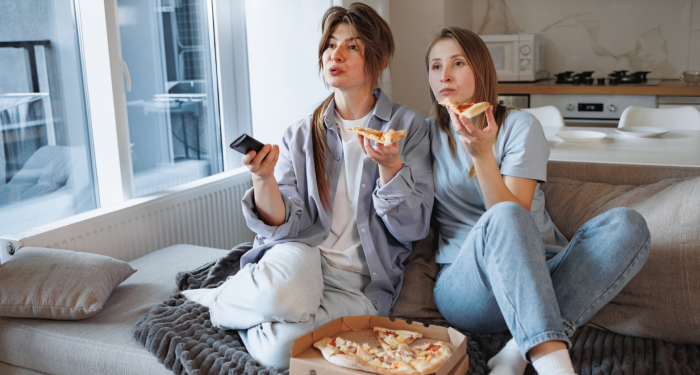
2) Decorative throw pillows and blankets
“Throw pillows are the jewelry of the living room,” a designer once told me, and she was right.
They’re affordable, interchangeable, and instantly elevate a space.
A neutral couch suddenly looks polished with a few strategically placed cushions in coordinating colors.
Add a neatly folded blanket over the armrest, and you’ve got comfort with purpose.
For many families, this is an easy win. It’s a way to experiment with style without breaking the bank.
You can change the vibe of a room seasonally, warm tones in fall, pastels in spring, without committing to new furniture.
But more than that, it’s about creating an impression of care.
When a visitor walks into a living room where the cushions are fluffed and a cozy throw is draped just so, it communicates that someone pays attention to details.
And attention to detail reads as “put together.”
I personally love how small things like this can influence mood. A tidy couch setup after a long workday signals calm, structure, and pride in your environment.
All subtle but powerful psychological boosts.
3) Framed family photos
There’s something grounding about seeing loved ones displayed neatly on a wall or shelf.
For many lower-middle-class families, framed family photos are more than decoration. They’re symbols of unity, history, and belonging.
The frames might not be designer-made, but they’re arranged with intention, often alongside inspirational quotes or small mementos.
Growing up, my parents didn’t have art prints or sculptures, but we had dozens of family photos. Vacations, birthdays, graduations, all lined up in chronological order.
Looking back, I realize that was our version of a gallery wall. It wasn’t about showing off. It was about affirming identity and pride.
In psychological terms, these displays satisfy a deep human need. To be seen and remembered.
They turn ordinary hallways into personal museums. And when done with care, matching frames, balanced spacing, they subtly say, “This family values connection.”
It’s a beautiful, authentic way to look “put together” without pretending.
4) Coordinated color schemes

Indira Cristin Decorating a Cake Courtesy of Bettersweet Bakery
Ever notice how even a small apartment feels more sophisticated when the color palette is consistent?
That’s no accident. Many families intentionally choose two or three colors and repeat them throughout their space.
Gray and navy in the living room, echoed by navy towels in the bathroom and gray bedding in the bedroom.
This visual continuity creates flow, which our brains interpret as organization and calm.
As someone who once analyzed consumer spending patterns, I can tell you this. Coordinated color schemes are one of the smartest low-cost ways to create a sense of luxury.
Paint is relatively cheap, and accessories in matching tones can be found anywhere from thrift shops to big-box stores.
When I moved into my current home, I experimented with soft sage green across several rooms.
Even though I spent very little, guests often comment on how “intentional” everything looks.
It’s a reminder that consistency, not cost, creates cohesion.
If you’ve ever wondered why some homes feel serene while others feel chaotic, pay attention to the color story.
It’s one of the simplest psychological cues that tells our brains, “Everything is in its place.”
5) Faux plants and greenery
Not everyone has the time or budget to care for live plants. That’s where faux greenery steps in as the unsung hero of home décor.
Many families add artificial succulents, hanging vines, or leafy arrangements to fill empty corners and breathe life into spaces that might otherwise feel stark.
The effect is instant, more warmth, more texture, more life.
There’s also a practical side. Faux plants last forever, require no sunlight, and look fresh year-round.
When styled well in coordinated pots or woven baskets, they create an impression of mindfulness and aesthetic care.
Interestingly, research supports this instinct. Studies show that even fake plants can reduce stress levels because our brains associate greenery with calmness and renewal.
So yes, those dollar-store leaves might be doing more for your mental health than you realize.
As a gardener myself, I’ll admit nothing beats the smell of real soil under your nails.
But if fake greenery helps you create a home that feels nurturing, that’s still self-care in my book.
6) Statement wall art or mirrors
There’s usually at least one focal point in every well-kept home. A large mirror above the sofa, a canvas print over the dining table, or a framed quote in the entryway.
These statement pieces aren’t random. They act as visual anchors that tie the space together.
For many families, choosing that one impressive piece is a way of saying, “We pay attention to design.”
Mirrors, in particular, are popular because they make rooms look bigger and brighter. That’s especially valuable in smaller homes where space is tight.
Art prints and framed quotes, on the other hand, offer personality. They express taste, values, or aspirations, sometimes all three.
One of my friends, a single mother of two, once told me she saved up for months to buy a large framed mirror for her living room. It wasn’t about vanity.
“It makes the whole place feel lighter,” she said. And she was right. When I visited, that mirror reflected not just light but a quiet sense of pride.
In the end, décor choices like this aren’t about impressing others. They’re about shaping how we experience our own spaces.
7) Coordinated kitchen and bathroom accessories
Matching dish towels, soap dispensers, and shower curtains might seem trivial, but they’re one of the most common and effective ways families create a “finished” look.
It’s the same principle as matching your outfit. Coordination conveys care.
A kitchen where the utensils, containers, and towels share a color theme feels cleaner and more intentional.
The same goes for bathrooms with matching mats, curtains, and storage baskets.
For lower-middle-class households, these items often serve as affordable luxuries.
You don’t need granite countertops or designer fixtures to have a well-kept home, just a sense of order and harmony.
There’s a hidden psychological payoff, too. When your home feels cohesive, you subconsciously feel more in control.
And for many families juggling work, bills, and daily life, that small sense of control can be deeply comforting.
I’ve noticed this in my own space as well.
After switching to all stainless-steel canisters and a matching set of glass jars, my kitchen suddenly felt calmer, even though nothing structural changed.
Sometimes the smallest upgrades carry the biggest emotional impact.
Final thoughts
At the heart of it, these décor choices aren’t about pretending to have more. They’re about celebrating what we already have.
They reflect creativity, resilience, and the desire to make something beautiful out of the resources available. To me, that’s the real definition of being “put together.”
If you look closely, each of these choices tells a deeper story.
Of wanting stability, of craving belonging, of expressing pride in one’s home. And there’s absolutely nothing shallow about that.
So if you ever catch yourself feeling self-conscious about trying to make your home look “nicer,” remember, these gestures are acts of care.
They show that you value your environment, your family, and yourself.
And in the end, that’s what makes any home truly beautiful.
If You Were a Healing Herb, Which Would You Be?
Each herb holds a unique kind of magic — soothing, awakening, grounding, or clarifying.
This 9-question quiz reveals the healing plant that mirrors your energy right now and what it says about your natural rhythm.
✨ Instant results. Deeply insightful.