If you’re hosting this season, you can keep the parts that feel loving and release the parts that make you resent your own gathering.
The holidays have a funny way of turning otherwise calm people into event planners with clipboards.
If you grew up around Boomers, you probably saw it: The deep cleaning that started days early, the stress about whether the napkins “matched,” the quiet panic about someone showing up five minutes early while the host was still in curlers or halfway through basting a roast.
Now a lot of younger hosts do things differently: More casual, more flexible, and way less interested in performing “the perfect gathering.”
And honestly? I get both sides.
There is something sweet about wanting everyone to feel taken care of, but there’s also something exhausting about treating hosting like an Olympic sport.
Let’s talk about the hosting rules Boomers tend to stress over, and why younger hosts often shrug and move on:
1) “The host's house must be spotless.”
This one is the classic.
Some Boomers host like they’re expecting a surprise visit from a judgmental aunt who also happens to be an interior designer.
Floors vacuumed, baseboards wiped, and bathroom hand towels replaced with the “nice” ones no one is allowed to touch.
I remember watching this growing up and thinking hosting was basically a cleaning competition.
Like, if the sink had a water spot, you had failed as a person.
But younger hosts? They’re more likely to do a quick reset and call it good.
The living room looks decent, the bathroom has soap, and any clutter gets shoved into a bedroom like it’s in witness protection.
And you know what? What guests actually notice is the vibe.
Do you seem happy to see them? Is there a place to sit? Is the bathroom situation functional?
That’s 95% of it!
2) “The host must serve dinner at the exact time.”
Boomers often treat the meal time like a flight departure.
If dinner is at 5:00, it is at 5:00; people should arrive at 4:30., and the appetizers begin at 4:31.
If someone walks in at 5:10, it’s basically a personal insult.
Younger hosts are more likely to build the schedule around reality instead of control: People have kids, people have traffic, someone always gets lost even with GPS, and someone’s bringing a dish and they’re running behind because they couldn’t find the right vegan butter (been there).
The newer approach is often: “Come around 4,” with food happening when it happens.
This drives some older guests nuts because it feels “disorganized,” but for a lot of hosts, it’s just humane.
3) “The host needs a formal sit down meal.”
There’s something very Boomer about the full production: Assigned seats, place cards, matching plates, the good silverware, and everyone sitting down at the same time for the main event.
I’ll admit, a formal meal can feel special.
It creates structure, and it signals, “This matters.”
However, younger hosts often prefer something more fluid: A buffet, grazing boards, big pots of food people can serve themselves, or a spread that lets guests mingle instead of staying locked into one conversation for two hours.
Also, the formal sit down meal puts a lot of pressure on the host.
You’re stuck timing everything, refilling drinks, and worrying if Aunt Linda is talking politics at the table again.
A looser setup gives you room to breathe, and it also makes it easier to accommodate different diets without turning dinner into a complicated announcement.
4) “The host should never ask guests to help.”

This rule is deeply ingrained in a lot of Boomer households.
Guests are guests, so the host serves, refills, clears plates, and suffers quietly in the kitchen while everyone else relaxes.
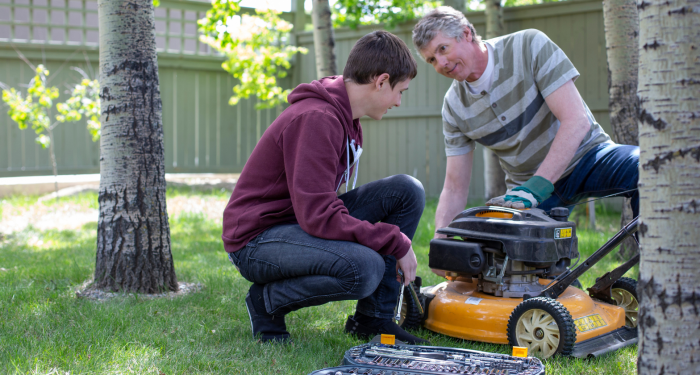
Meanwhile, younger hosts are far more likely to say, “Hey, can you open the wine?” or “Can you toss the salad?” or “Do you mind setting out the plates?”
This is all because they see hosting as communal; more like “we’re doing this together” than “I am performing hospitality while you watch.”
Letting people help can make them feel included as it turns the gathering into a shared experience instead of a one person show.
If asking for help feels uncomfortable, start small.
“Can you grab ice?” is basically the gateway request.
No one feels burdened, and you get one more thing off your mental load.
5) “The host must offer a wide variety of food, and there must be plenty.”
Boomers often stress about quantity like it’s a moral issue.
There has to be enough food to feed the entire neighborhood, plus leftovers, plus a mysterious extra tray “just in case.”
I’ve seen hosts spiral over whether there are enough sides, enough desserts, enough options, enough everything.
It’s generous, but it’s also a recipe for burnout and waste.
Younger hosts tend to be more minimalist: A few solid dishes, something sweet, maybe a snack table.
They’re also more likely to do potluck style without apology.
There’s also a quiet shift happening where people care less about abundance and more about intention.
Great food, not endless food.
As a vegan, I’ve noticed this matters a lot when you’re trying to make sure everyone has something they can actually eat.
It’s about having one or two options that feel thoughtful.
A helpful mindset change is this: You’re trying to feed people well.
6) “The host should make everything match and look ‘nice’.”
The pressure for a coordinated tablescape is real.
Boomers were raised in a culture where hosting was part etiquette, part presentation.
Matching dinnerware, coordinated napkins, seasonal decor, and centerpieces that look like they came straight from a magazine spread.
Younger hosts are more likely to mix and match: A random assortment of plates, paper napkins, candles that don’t match anything, and flowers from the grocery store shoved into a jar.
Somehow, it still looks great because it feels lived in, and real and warm.
Here’s the psychological piece: When people prioritize “looking right,” they can start hosting for an imaginary audience instead of the actual humans in front of them.
I’ve caught myself doing this too, especially when I’m stressed.
I start fussing over small details because it feels like control; if the table looks perfect, maybe everything will feel perfect.
However, connection requires presence.
If decor is your joy, go for it; if it’s your stress, skip it.
No one leaves a holiday gathering thinking, “I loved it, but her candlesticks weren’t symmetrical.”
7) “The host has to keep everyone entertained and keep things ‘proper’.”
This one is sneaky because it’s about emotional labor.
Boomers often feel responsible for the entire social atmosphere, so they try to manage everything: Background music, structured activities, polite conversation topics, and the unspoken rule that nobody should rock the boat.
Younger hosts are more likely to let gatherings be what they are.
If someone needs to step outside for air, fine; if the night includes laughter, chaos, and a slightly weird argument about whether Die Hard is a holiday movie, also fine.
In a lot of ways, younger hosts are opting out of “polite performance” and choosing authenticity.
Yes, authenticity can be a little messy but it can also be the thing that makes people feel safe.
If you find yourself trying to manage everyone’s feelings, try this question: What would happen if I let the room breathe?
Not everything has to be smoothed over, sometimes the best hosting is simply making space and letting people be people.
Final thoughts
Holiday hosting has always been about more than food; it’s about identity, family roles, and unspoken expectations.
For Boomers, many of these rules came from a real place of wanting to be respectable, to be a good host, and to create comfort through tradition.
Yet, younger hosts are showing us another option: Hosting that prioritizes connection over perfection, ease over performance, and people over presentation.
If you’re hosting this season, you can borrow what works and drop what doesn’t.
Keep the parts that feel loving, and release the parts that make you resent your own gathering.
If your house is a little messy, the timing is loose, and the plates don’t match? Congrats, you’re probably doing it right!