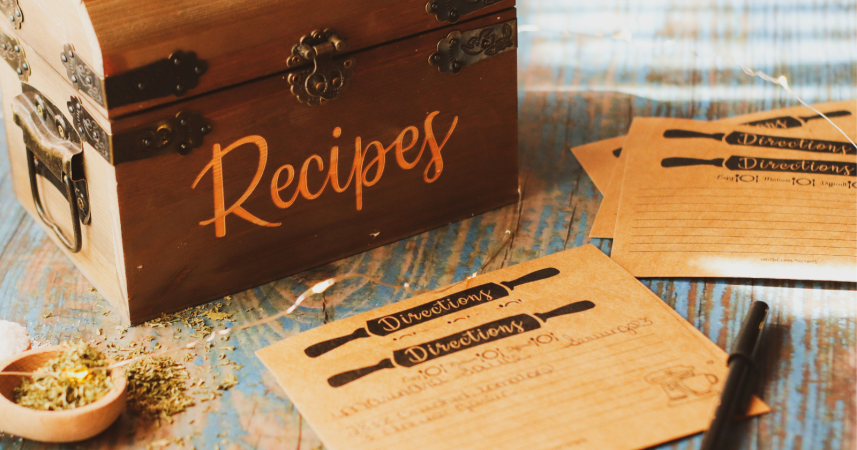
A recipe card is small, but it carries proof that someone took a moment to think about you.
There’s a very specific kind of magic in a handwritten recipe card.
I’m talking about a stained index card with someone’s slanted handwriting, a smudged note that says “don’t skip the lemon,” and maybe a tiny burn mark from living too close to the stove.
Boomers grew up in an era where recipes traveled through people, and the way they shared them was basically social networking, except it came with casseroles and eye contact.
If you’ve ever wondered why modern food culture sometimes feels weirdly lonely (even with 10,000 cooking videos in your pocket), this is a big reason.
Here are seven recipe card exchanges Boomers remember, and why they mattered way more than the food:
1) The neighborly “borrow a cup of sugar” swap
This one usually started with a knock on the door and ended with a recipe you didn’t ask for, but were grateful to receive.
A neighbor would come over for something small: Sugar, flour, or a stick of butter.
Then, because humans are going to human, the conversation would turn into: “Oh, if you’re baking, you have to try my banana bread.”
Next thing you know, you’re standing in the kitchen, holding an index card while she walks you through the part where you mash the bananas “until they look like baby food.”
That’s the part we’ve lost.
Today, we ask the internet; back then, you asked a person and that created a thread, a relationship, and a reason to talk again.
If you want that energy back, try this: The next time you bring food to someone, include a handwritten card with the recipe.
It feels like you actually meant it.
2) The church potluck recipe table
Even if you didn’t go to church, you’ve probably seen this ecosystem in action: A long table, a parade of covered dishes, and at least one dessert that disappears faster than it should.
Potlucks were about contribution.
Boomers learned early that showing up with food was a kind of social currency.
It said, “I’m part of this,” and the recipe cards were basically proof of goodwill.
Someone tries your casserole, loves it, and asks how you made it.
You share it because the whole point is the sharing.
In luxury F&B, we obsess over “hospitality,” but potlucks are hospitality in its purest form.
Want a modern version? Start a monthly “bring a dish, bring a card” dinner with friends.
Everyone leaves with one new recipe and, more importantly, one new story.
3) The PTA and school fundraiser hand-me-downs
Boomers inherited recipes through school communities.
PTA meetings, bake sales, fundraisers, and classroom parties all of it came with food.
Food came with questions, such as:
- “What are these brownies?”
- “How did you get them so fudgy?”
- “Why does this frosting taste like childhood?”
Then came the little paper exchange: Sometimes a recipe card, a torn piece of notebook paper, or the back of an envelope (which is objectively chaotic but kind of charming).
What made it special was the context.
You were getting the identity of the person who made it, plus the vibe of the room where you ate it.
If you’re a parent now, or even just someone with a community, this is an easy upgrade: bring something homemade, and offer the recipe before anyone asks.
It signals generosity, and generosity is a shortcut to connection.
4) The workplace “desk drawer cookbook”

Before Slack channels and Teams chats, offices had something better: food people actually brought in.
Boomers remember coworkers swapping recipes the way people now swap memes.
Someone brought in chili, while someone else brought in lemon bars.
Suddenly, the break room felt less like a place to suffer and more like a place to breathe.
A recipe card in an office was about being human in a system that often tries to make you a productivity robot.
I’ve seen this in high-end kitchens, too: The stress can be intense, but the moment someone shares food, the temperature drops.
You remember you’re on the same team.
If you work anywhere with other humans, start here: Bring one dish once a month and keep a small stack of blank cards.
If someone likes it, hand them one and you’ll be surprised how fast your workplace gets warmer.
5) The bridal shower and baby shower recipe box
Boomers gave future-you gifts.
At bridal showers, guests would bring recipe cards for the couple; at baby showers, they’d do the same, sometimes adding “quick meals” because everyone understood what sleep deprivation does to the soul.
This was a community saying: “We know life is about to get real. Here’s something that will help.”
Unlike a blender you’ll never use, a recipe can become a family habit.
You make it once, then again, then suddenly it’s part of your life.
There’s also something quietly emotional about cooking a recipe someone gave you for a milestone.
It’s like they show up again, every time you make it.
If you’re going to a shower soon, consider skipping the generic gift and bringing a small recipe box with five handwritten cards.
Comfort food, easy weeknight meals, a dessert for bad days; that’s love, in practical form.
6) The holiday cookie and dessert exchange
Boomers turned December into a baking economy.
Cookie swaps were simple: Everyone makes one or two kinds of cookies in bulk, then trades so you go home with a variety.
But the secret ingredient was belonging.
You’d chat while packing tins, compare notes about whose oven runs hot, and laugh about the batch that spread too thin and became “cookie brittle.”
Recipe cards made it official.
They were like little signatures attached to the treat.
This is also where a lot of family legends got born:
- “Aunt Linda’s snickerdoodles.”
- “Grandma’s fudge.”
- “That peppermint bark that everyone fights over.”
Here’s what I’d steal from this tradition: Make your holiday cooking collaborative.
Invite people over specifically to prep together, then send them home with a few portions and the handwritten recipe.
Convenience is great, but convenience rarely builds memories.
7) The “we’re playing cards” recipe pass-around
This is the one people forget, but it mattered: Boomers had bridge clubs, poker nights, bunco groups, Sunday card games.
Those gatherings were basically an ongoing dinner party series.
Someone would bring a dip, a casserole, or a pie that made the whole room go quiet for a second.
Then the recipes would circulate because it was part of the ritual.
Food was the social glue, and recipe cards were the receipts.
Finally, what I love about this exchange is that it wasn’t performative.
It was just people enjoying each other, and a recipe was a way to keep that enjoyment going past the night itself.
If your social life could use a reboot, borrow this model: start a recurring hang that has nothing to do with networking or “plans.”
Make one dish your signature, and keep the recipe ready to share when someone asks.
The bottom line
If you strip all the nostalgia away, the lesson is pretty simple: Handwritten recipes were about effort, presence, and saying, “This worked for me, and I want it to work for you too.”
A recipe card is small, but it carries something modern life is weirdly short on: Proof that someone took a moment to think about you.
Here’s a challenge that takes almost no time: The next time you cook something you love, write it down on an actual card.
Make two copies, then keep one and give one away.
You’ll be passing along more than instructions and connection!
If You Were a Healing Herb, Which Would You Be?
Each herb holds a unique kind of magic — soothing, awakening, grounding, or clarifying.
This 9-question quiz reveals the healing plant that mirrors your energy right now and what it says about your natural rhythm.
✨ Instant results. Deeply insightful.