
Parking lots are not just annoying errand zones because every small choice there tells a story about patience, empathy, entitlement, and integrity.
Parking lots are tiny social laboratories.
No one is giving a TED Talk out there.
There are no performance reviews because it is just people, their cars, and whatever mood they are really in that day.
That is exactly why I pay attention to how people behave there.
When we think no one is really judging us, our real character tends to leak out.
Here are seven things drivers do in parking lots that reveal who they are much faster than any polished bio ever could:
1) How they move through the space
Watch how someone drives the moment they turn off the main road and into the lot.
Do they slow down, scan for people, and follow the arrows on the ground? Or do they treat the lot like a video game level, cutting across empty spaces, speeding through lanes, and forcing others to jump out of the way?
People who barrel through a parking lot are basically saying, "My time matters more than your safety."
They may not say it out loud, but their behavior does.
On the other hand, the person who rolls in slowly, pauses at crosswalks, and actually respects those faded white arrows is doing something else.
They are showing they can switch out of "me-first" mode and into "shared-space" mode.
In psychology, that is a form of perspective taking.
You are imagining the parent pushing a stroller, the older person with a cane, the worker gathering carts.
If someone cannot adjust their speed in a small, clearly shared environment, they probably struggle to adjust in other areas of life too.
2) How they treat pedestrians
Here is a simple test: You are behind the wheel, and a person steps off the curb with their groceries, so what happens next?
Some drivers hit the brake early, give them space, maybe even wave them across with a smile.
Others roll as close as they can, inching forward, pressuring the person to hurry, like the crossing is a personal insult.
Years ago, I was carrying way too many grocery bags, trying not to drop a jar of marinara on the ground.
A car came around the corner a bit fast, then stopped hard.
Instead of backing up to give me space, the driver just stared, hand on the wheel, clearly annoyed that I existed.
No words were exchanged, but the message was loud.
How we treat pedestrians is really about how we handle power.
In a car, you have the heavy metal box, the engine, the momentum.
The person walking has their body and whatever they are carrying.
If you use that power gently, you are probably someone who understands empathy in other areas.
However, if you use it to intimidate then you might be someone who needs to feel bigger than others to feel okay.
3) What they do with the parking space
When someone consistently takes up more than one space, what they are really doing is announcing: "My convenience is more important than everyone else's opportunity."
It is entitlement in physical form.
The opposite is the driver who takes a few extra seconds to straighten out.
They might even back up and redo it so there is equal room on both sides, plus they know it is a shared resource.
Parking lots run on a kind of unspoken social contract.
If you respect the lines, you respect the fact that other people exist; you understand that your car is not the main character in the story.
When I see someone park carefully, even when the lot is almost empty, I tend to trust them more.
People who do the right thing only when it is crowded are still thinking mainly about being caught, while people who do it when no one is looking are thinking about integrity.
4) How they handle waiting
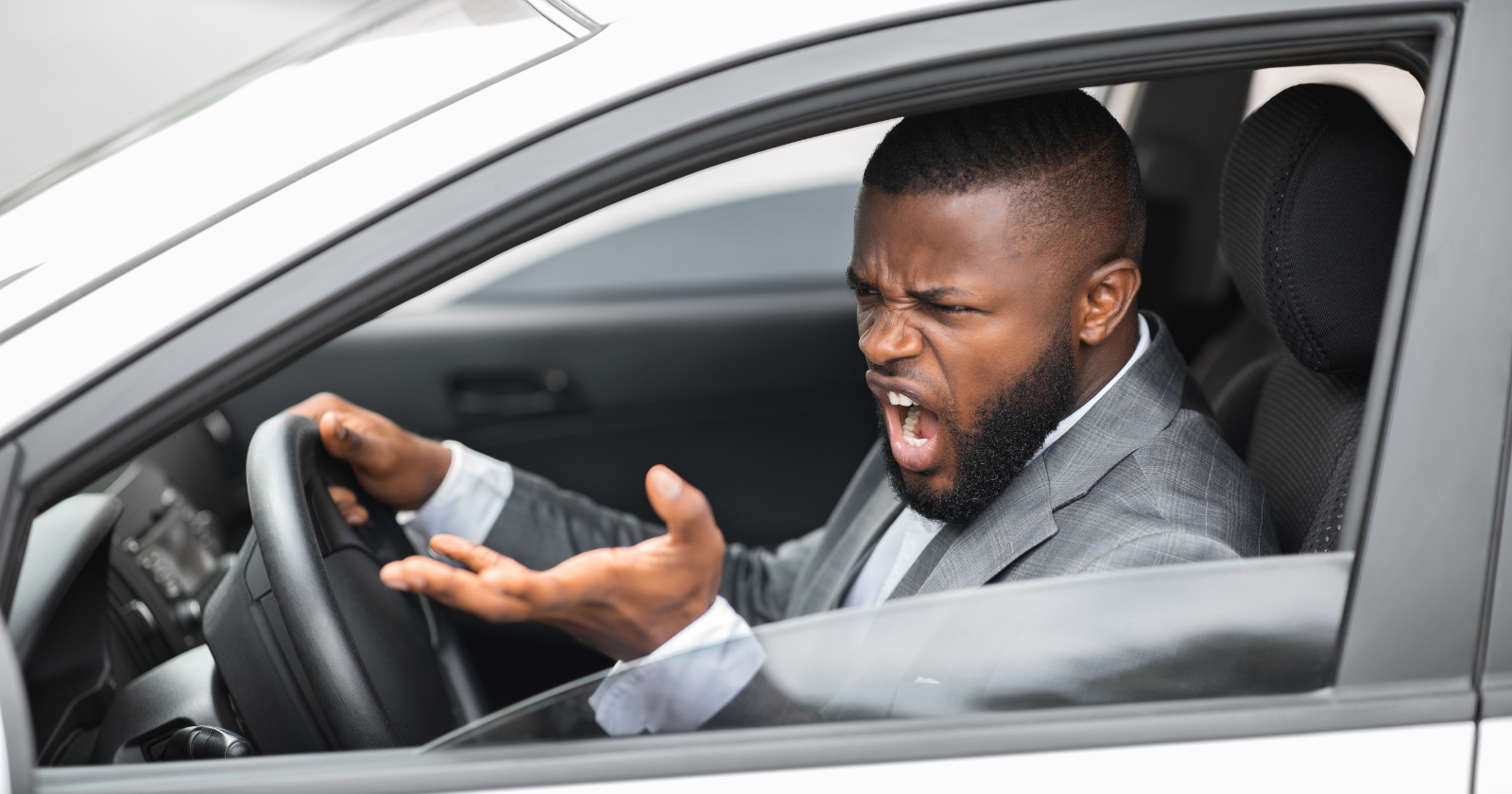
Few things expose character faster than a full parking lot and limited spaces.
I once sat in my car for a minute, answering a text before driving off.
A driver pulled up behind me, waited two seconds, then laid on the horn like I had personally ruined his year.
Technically, he wanted my spot.
Psychologically, he wanted control.
Waiting reveals our relationship with discomfort: Can you sit in mild annoyance without taking it out on everyone around you, or does any delay trigger a need to dominate, rush, or punish?
I have mentioned this before, but micro moments of patience are like reps in a mental gym.
Every time you choose not to lean on the horn or rush someone backing out, you are training your brain to tolerate frustration.
People who practice patience in parking lots usually bring that same energy to lines at the airport, tough conversations, and long-term goals.
5) How they treat carts and trash
What happens after the groceries are in the trunk is one of my favorite character tells.
Some people push the cart to the corral or all the way back to the store, some leave it gently in a corner where it will not bother anyone, and others push it into an empty spot, abandon it in the middle of the lane, or let it roll wherever it wants.
Same with trash: Do they pick up the coffee cup that fell out of their car and toss it in a bin, or do they just drive off, leaving the mess for someone else?
As a vegan, I think a lot about the idea of reducing harm.
Returning a cart or throwing away your own trash is about accepting that you are part of a shared system, and your tiny actions either make things smoother or harder for everyone else.
People who always "let the staff handle it" often carry that mindset into other areas of life.
They expect unseen labor to clean up after them, emotionally and practically.
The person who takes 15 extra seconds to return the cart is saying, "I see the invisible work. I choose not to add to it."
That is a quiet but powerful kind of character.
6) How they respond to mistakes
We all mess up in parking lots, but what happens next is the test.
Some drivers throw up a hand, mouth "sorry," and actually change their behavior.
They pull out, wave the other person in, or reposition the car.
Others double down: They avoid eye contact, speed away, or act like you were the one in the wrong.
Sometimes they even add a rude gesture to make sure you know they feel justified.
Owning a mistake is uncomfortable as it pricks the ego, but it is also a sign of maturity.
People who can acknowledge small errors in low-stakes places are usually better at taking responsibility in bigger areas, like relationships and work.
People who cannot ever be wrong in a parking lot are usually not great at being wrong anywhere.
Their identity depends on always being the hero of the story.
If you want a quick read on someone, watch what they do right after they realize they messed up.
7) How they treat workers and neighbors
Imagine a parking attendant waving people into open spots, or a worker pushing a long line of carts across the lot.
Does the driver slow down to give them space and maybe nod a quick thanks, or do they cut around them, roll their eyes, or act like the workers are obstacles instead of people?
I have seen people scream at parking attendants for enforcing rules about reserved or accessible spots.
That is about how they treat people who have less power in a given situation.
Kindness toward staff and strangers is one of the strongest character signals we have.
It shows whether someone only turns on the charm when they think it will benefit them, or whether they are grounded in basic respect.
The lot is also where noise shows up.
If someone blasts music at a level that shakes other cars, leans on the horn for fun, or shouts across the rows, they are signaling how much they consider the experience of people around them.
People who can have fun without disturbing everyone else usually have a decent sense of boundaries.
The bottom line
Parking lots are quick character audits.
Every small choice there tells a story about patience, empathy, entitlement, and integrity.
The useful question is "What am I doing?"
Next time you pull into a lot, treat it as a practice round for the kind of person you want to be.
Move with care, wait with patience, own your mistakes, and leave the space a little better than you found it.
That is self-development in real time, one parking space at a time.
What’s Your Plant-Powered Archetype?
Ever wonder what your everyday habits say about your deeper purpose—and how they ripple out to impact the planet?
This 90-second quiz reveals the plant-powered role you’re here to play, and the tiny shift that makes it even more powerful.
12 fun questions. Instant results. Surprisingly accurate.