There’s a quiet clue hidden in how some people organize their days, and it says a lot about what drives them.
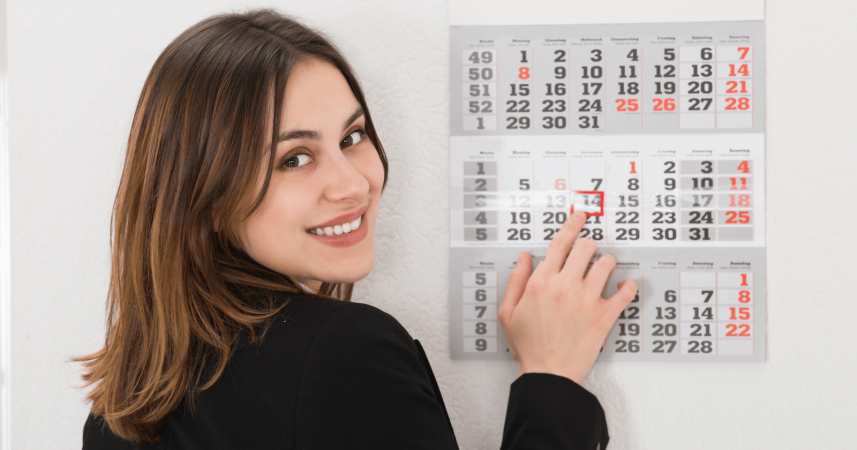
There’s something oddly satisfying about flipping through a paper calendar, isn’t there? The crisp sound of the pages, the faint scent of ink, the feeling of grounding that comes with putting pen to paper. It’s tactile. It’s deliberate. It’s real.
We live in a world that’s constantly nudging us toward screens, from reminders that ping relentlessly to color-coded notifications that scream for our attention. And yet, despite all the tech tools available, there are still plenty of people who choose paper.
You might think it’s just a habit or a preference for aesthetics, but it’s more than that. Over the years, I’ve noticed that those who stick to old-fashioned planners and wall calendars tend to share some pretty distinct personality traits.
It’s not about being “behind the times” or “anti-digital.” In fact, it’s about something deeper, a mindset that values reflection, control, and presence over speed and convenience.
Let’s explore what makes these paper calendar users a little different.
1) They’re intentional about their time
Here’s the thing: writing something down takes time. You can’t just tap a button or drag an event across a screen. You have to think about what you’re scheduling, how long it’ll take, and whether it’s really worth doing.
People who write their plans out tend to approach time more deliberately. They see it as a limited resource, one that deserves to be managed thoughtfully.
When I worked as a financial analyst, my calendar was all digital. It looked efficient on the surface: perfectly synced, auto-filled, and endlessly shareable. But I noticed that I rarely stopped to think about what I was agreeing to. I’d add meetings, appointments, and social events without considering whether they aligned with what actually mattered to me.
When I switched to a paper planner, that changed. The simple act of writing forced me to pause. It made me ask myself, “Do I really want to commit to this?”
That’s what intentional people do. They make decisions slowly and consciously. Paper helps them do that.
2) They value simplicity over optimization
We live in the age of “smart everything.” Smart watches, smart fridges, smart calendars. And while there’s nothing wrong with technology, there’s something quietly powerful about saying, “I don’t need all that.”
People who stick with paper planners tend to crave simplicity. They’re not chasing endless upgrades or searching for the “perfect” app that will magically organize their lives. They know what works, and they stick with it.
A paper calendar doesn’t buzz, pop up, or distract you with suggested events. It just sits there, quietly waiting for you to engage with it.
These people usually find joy in streamlined systems. They’re less concerned with optimization and more interested in balance. They understand that fewer moving parts often means fewer distractions.
It’s the same kind of mindset that drives someone to declutter their home or pare down their wardrobe. It’s not about minimalism for the sake of minimalism. It’s about peace of mind.
3) They’re more reflective by nature
Have you ever found yourself doodling in the corner of your planner during a long call? Or flipping back to see what you accomplished last month? That’s the beauty of paper. It becomes a living record of your life.
People who write things down tend to be reflective. They like looking back, understanding patterns, and noticing growth. They see their planners not just as tools for organization but as extensions of memory.
There’s a tactile comfort in seeing how far you’ve come. I sometimes flip through old planners and find little notes like, “Call Mom” or “First day of the new trail run.” Those details bring me right back to specific moments.
That physical trace of time connects you to your own story in a way no digital archive ever could.
Paper-calendar people are often the kind of folks who keep journals, collect meaningful mementos, or take photos of everyday beauty. They’re not just moving through life; they’re paying attention to it.
4) They have a strong sense of autonomy
One thing that stands out about paper-calendar users is how fiercely independent they are. They don’t need everything to be shared, synced, or approved. Their time is their own.
There’s a quiet autonomy in jotting things down privately. You decide what to include, how to structure it, and what to prioritize. Nobody’s algorithm is suggesting when to schedule your workout or reminding you to join the meeting early.
In my experience, these people are self-reliant. They trust their systems and instincts. They don’t outsource their sense of control to technology, and that extends far beyond their calendars.
They’re often the ones who don’t wait for permission to take a day off, start a new project, or try something unconventional. They believe in self-direction, and a paper planner is a reflection of that.
5) They crave tangible connection in a digital world
There’s a deep satisfaction in physically touching your plans. Turning a page, highlighting a completed goal, or sticking a note where you’ll see it later, those small tactile actions create a sense of connection.
People who love paper calendars tend to crave tangible experiences. They like grounding themselves in something they can hold. Maybe it’s because so much of life feels abstract and intangible now, with messages that disappear, files that live in the cloud, and relationships that exist through screens.
Using paper is a quiet reminder that not everything has to be digitized to matter.
It’s the same kind of fulfillment I get from gardening. There’s dirt under your nails, a breeze on your face, and something alive growing because you nurtured it. That’s what tangible living feels like.
Paper planners bring that same energy into the everyday. They root you in the present moment, one ink mark at a time.
6) They tend to be more creative thinkers
If you’ve ever brainstormed with a pen and paper, you already know the difference. Ideas flow differently when you’re not constrained by drop-down menus or auto-correct.
Paper-calendar people often think in color, shape, and texture. Their pages might be filled with arrows, doodles, and little bursts of creativity.
There’s science behind this too. Writing by hand engages parts of the brain related to memory and conceptual thinking. It slows your thoughts just enough to let them deepen. That’s why writers, artists, and even scientists often use notebooks even when digital tools are available.
I’ve found that creativity often thrives when you allow yourself to be messy, to scribble, circle, underline, or even tear out a page. Digital tools rarely give that freedom.
So it’s no surprise that people who prefer paper also tend to be imaginative, visual, and open to new ideas. They’re the kind of people who find beauty in small details and who enjoy creating systems that reflect their personality.
7) They’re nostalgic but not stuck in the past
Let’s clear something up: nostalgia doesn’t mean resistance to progress. It means appreciation for what still works.
Paper-calendar users often have a healthy sense of nostalgia. They remember what life felt like before constant pings and push notifications. They enjoy slowing down and reconnecting with analog pleasures, like writing a letter or flipping through a cookbook instead of scrolling for recipes.
But they’re not anti-tech. They’ll use phones, laptops, and apps when they make sense. They just don’t let technology dictate their habits.
I met a woman at a local farmers’ market who kept a tiny paper planner filled with colorful sticky notes. She said it helped her “feel anchored” in her days. That resonated with me deeply. Choosing paper isn’t about rejecting modern life; it’s about choosing what feels more human.
And there’s something beautifully grounded about that.
8) They’re grounded and value ritual
Finally, paper-calendar users tend to be people of ritual. They take comfort in small, consistent acts that create structure.
For some, it’s the Sunday-night ritual of planning the week ahead. For others, it’s the morning moment with coffee and an open planner, reflecting on what matters most that day. These routines are small but deeply centering.
I think that’s why paper appeals to them. It transforms planning from a task into a ritual, something meaningful, not mechanical.
When you take time to physically engage with your goals, your week, your life, it sends a message: This matters.
And that’s what being grounded really means. You’re not just managing time; you’re nurturing it.
Final thoughts
If you’re one of those people who still uses a paper calendar, you’re probably nodding along right now. You recognize the joy of flipping to a new month, the satisfaction of ticking off tasks, the beauty of handwriting your plans.
You might be reflective, creative, independent, and calm, someone who values presence over productivity. Someone who enjoys feeling connected to the tangible details of life.
And if you’re not? Maybe it’s worth trying. For just one week, ditch your app and pick up a paper planner. Notice how it changes your mindset. See if you feel more grounded, more intentional, more in control.
Because sometimes, the simplest tools teach us the most about who we are.
After all, a calendar isn’t just a way to track your days. It’s a reflection of how you choose to live them.