The quiet rituals of saving “special” things reveal how middle-class families turned ordinary objects into symbols of aspiration, restraint, and belonging.
There’s something about growing up middle class that shapes the way you see both money and meaning.
When I think back on my own childhood, certain objects carried a kind of reverence—not because they were inherently valuable, but because they symbolized “special.” These weren’t everyday items. They were tucked away, saved, and only pulled out for occasions that felt worthy.
And here’s the kicker: half the time, those “special” things didn’t even get used. They sat in closets, cabinets, and drawers for years, quietly collecting dust.
If you grew up in a middle-class household, I’m betting at least a few of these will sound familiar.
Let’s dive into the list.
1. The “good” china or dishware
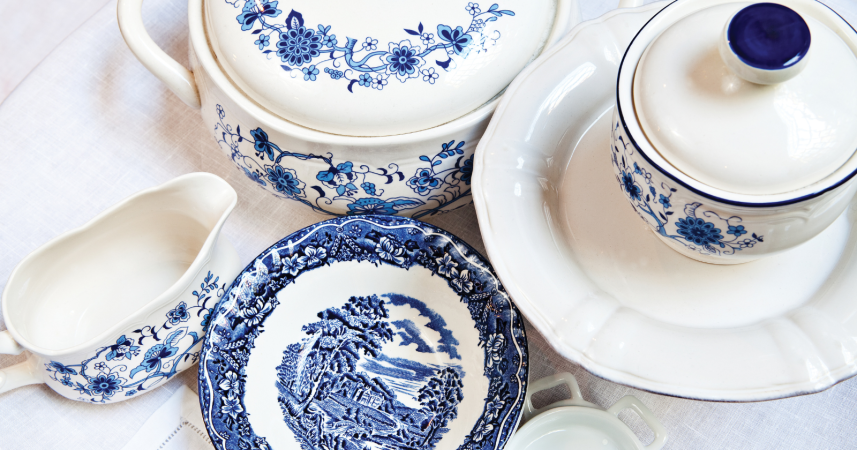
Do you remember that set of plates that lived in the cabinet but practically never saw the light of day? Maybe they had gold trim, maybe they were bone-white with delicate flowers. Either way, they were “the good dishes.”
Ordinary meals didn’t deserve them. Tuesday night spaghetti? Nope. Frozen pizza? Forget it. These were reserved for holidays, guests, or maybe a milestone birthday.
It’s fascinating how this practice reflected both pride and restraint. Middle-class families often wanted to signal a certain standard, but resources were finite. So, instead of everyday luxury, they curated moments of it.
There’s research to back this up. In one experiment, participants were willing to pay about 50 percent more when a watch was described as “exclusive limited edition,” illustrating our tendency to value items more when they’re scarce.
2. The plastic-covered living room furniture
If your family had a “company room” that felt more like a museum exhibit than a place to sit, you’re not alone.
Many middle-class households had at least one room—or one couch—wrapped in plastic. It was meant to preserve the furniture, as if the sofa itself were an heirloom. The irony? Nobody ever really got to enjoy it.
I remember visiting my aunt’s house where the plastic crinkled every time you shifted in your seat. In summer, you’d stick to it like glue. It was wildly uncomfortable, but she insisted it kept things “nice.”
Psychologists sometimes call this delayed gratification turned material. Instead of experiencing the comfort daily, families preserved it for an imagined future guest list that might never come. One long-term study showed that early capacity to delay gratification was linked to better coping skills and social competence later in life.
It was less about comfort and more about the appearance of having something worth preserving.
3. Special-occasion outfits
Every kid I knew had two wardrobes: school/play clothes and “nice” clothes. Nice clothes were off-limits except for Easter Sunday, weddings, or professional photos.
This separation taught us early on that appearance was situational. Looking presentable wasn’t just about self-expression—it was about honoring an event or people we wanted to impress.
And let’s be real: half the time those “nice” shoes pinched, and the dress pants itched. But you wore them anyway, because that’s what it meant to show respect.
It was also a subtle lesson in class signaling. As sociologist Pierre Bourdieu noted, the way families transmitted tastes—even through clothing—“functions as a sort of social orientation, a ‘sense of one’s place’."
For many middle-class families, the “nice outfit” was a way to bridge the gap between everyday affordability and aspirational presentation.
4. Fancy towels no one could touch
In many homes, the “guest bathroom” was a shrine. The plush towels—sometimes monogrammed, sometimes lace-trimmed—hung beautifully but weren’t for actual use.
I still laugh thinking about the scolding I once got for drying my hands on the “wrong” towel. But here’s the deeper point: these towels weren’t about function. They were about image.
They signaled to visitors that “we care about appearances” and that our home wasn’t just about practicality—it was also about dignity.
Sociologist Juliet Schor shows that middle-class families often participate in “competitive consumption,” purchasing symbolic goods to keep up with social norms even when they serve little practical purpose.
The unused towels fell squarely into that dynamic: a subtle display of “we have nice things too,” even if no one was actually allowed to use them.
5. Holiday-only foods
Remember the foods that only appeared at certain times of year? Maybe it was your mom’s pecan pie recipe, a specific brand of sparkling cider, or that one giant tin of butter cookies shaped like sewing supplies.
In a way, these foods reinforced the rhythm of middle-class life. Everyday meals were practical. But when it was time to celebrate, those hidden treasures surfaced, signaling abundance and joy.
Food, after all, is never just fuel. It’s cultural shorthand for love, belonging, and identity. By restricting certain foods to “special” times, families heightened their emotional meaning.
Even now, I can’t eat a candy cane without flashing back to childhood Decembers, when peppermint meant something bigger than sugar. And when I taste green bean casserole, I don’t just taste beans—I taste family history, tradition, and the pride of a home-cooked holiday meal.
6. The “good room” no one lived in
Not to be confused with plastic-covered furniture, the “good room” was often an entire space. Maybe it was a formal dining room that only saw action at Thanksgiving, or a sitting room with pristine carpet.
Growing up, I never understood why we weren’t allowed to hang out in the nicest room in the house. But looking back, I see the psychology: that room represented aspiration. It was proof we weren’t just surviving—we were holding a piece of elegance, even if only symbolically.
It’s a fascinating paradox: middle-class families worked hard for a home but sometimes treated the best parts of it as off-limits. In doing so, they unintentionally created a kind of theater—a stage reserved for an audience that might never arrive.
7. Perfume, cologne, or aftershave reserved for big events
In my family, a bottle of cologne could last a decade. Why? Because it only came out for church, dates, or weddings. Everyday hygiene? A bar of soap would do.
Fragrance carried weight. It was about signaling importance, showing effort, and marking the occasion. And again, it reflected middle-class values: why use something up casually when you could stretch it across years of “special”?
Even today, I know people who spritz their designer perfume only when they’re sure it’s worth the “expense” of a spray. It’s almost like a ritual: anointing yourself with luxury when the stakes feel high enough.
8. “Good” jewelry and watches
Last but not least: the jewelry box.
Everyday pieces were modest—maybe a watch from the department store or a pair of simple studs. But tucked away in velvet boxes were the “good” items. A gold chain, a pearl necklace, a diamond ring passed down from grandma.
These weren’t just accessories; they were family pride in physical form. Often, they carried stories: anniversaries, sacrifices, or inheritances. Wearing them casually was unthinkable.
Instead, they came out only for graduations, weddings, or other once-in-a-blue-moon events. In a way, these pieces carried the family’s middle-class hopes: dignity, stability, and legacy.
And maybe that’s why, when I wear my grandmother’s bracelet today—even to something ordinary like a lunch with a friend—it feels almost rebellious. I’m rewriting the script, giving the “good” jewelry a new kind of life.
Final thoughts
Looking back, I realize that saving things for “special occasions” wasn’t just about money. It was about meaning.
Middle-class families often lived in the in-between space—comfortable enough to have “good” things, but cautious enough to ration them. The result? A life where objects became symbols, teaching us lessons about value, restraint, and pride.
Do I think it was always healthy? Not entirely. Sometimes, it made us miss out on joy in the everyday. How many of those “good” towels yellowed in the linen closet, never touched? How many china plates ended up chipped in storage rather than used at the dinner table?
But it also gave us a sense of reverence that’s easy to lose in a throwaway culture.
These days, I try to strike a balance. I’ll drink wine out of a fancy glass on a random Tuesday. I’ll wear my favorite necklace to the grocery store. Because why not? Life itself is occasion enough.
And yet, when I see that untouched set of towels in someone’s bathroom or spot a velvet jewelry box waiting for the right day, I can’t help but smile. It’s a reminder of where I—and so many of us—come from.
It’s a reminder that being middle class wasn’t just about money. It was about aspiration, about honoring tradition, and about creating moments of meaning with what we had.
What’s Your Plant-Powered Archetype?
Ever wonder what your everyday habits say about your deeper purpose—and how they ripple out to impact the planet?
This 90-second quiz reveals the plant-powered role you’re here to play, and the tiny shift that makes it even more powerful.
12 fun questions. Instant results. Surprisingly accurate.