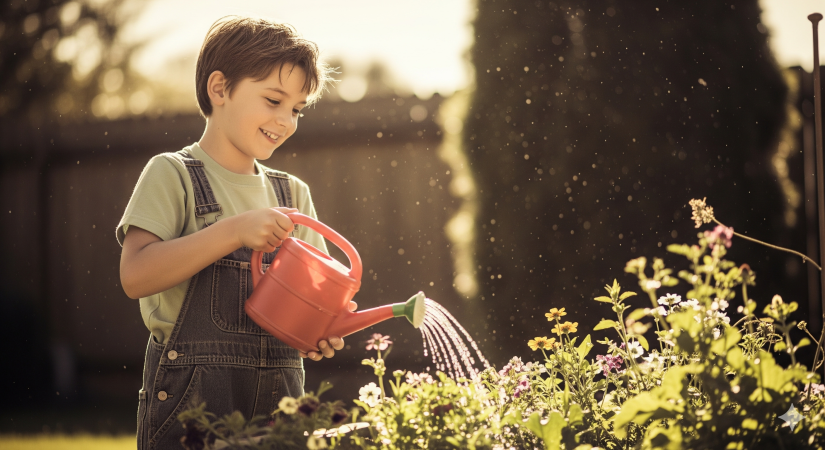
The simple chores of childhood may have quietly trained us in resilience, discipline, and presence—lessons that still echo in how we live today.
Do you remember what Saturday mornings used to look like before the internet hijacked our attention?
Back then, “chores” weren’t neatly tracked on apps or delegated to robots. They were an unspoken family contract. Everyone pitched in, no excuses.
Looking back, those little tasks carried lessons we didn’t fully appreciate at the time. They taught us responsibility, patience, and sometimes—let’s be real—a little resentment. But they also shaped the way we move through life today.
If these sound familiar, you definitely grew up in the pre-Wi-Fi era.
1. Hanging laundry on the clothesline
Before dryers were standard in every household, the sun was the original energy source.
I can still picture the rows of damp jeans and stiff towels pinned up with wooden clothespins. The wind made them dance, and the smell of freshly dried sheets was better than anything you’d buy in a bottle.
Of course, there was the gamble of rushing outside to grab everything when the clouds rolled in. Or worse—realizing you left the laundry overnight and now every shirt was damp with dew.
The real lesson? Patience. You couldn’t fast-forward the drying process. You learned to wait—or to sleep in scratchy sheets. And as adults, many of us struggle with exactly that: slowing down, accepting that not everything can be rushed. This chore planted that seed early on.
2. Washing dishes by hand
Dishwashers weren’t always a given. Many of us grew up squabbling with siblings over who had to wash and who got to dry.
Standing at the sink with rubber gloves and a sponge wasn’t glamorous, but it was strangely meditative. The sound of running water, the rhythm of scrubbing, the small satisfaction of stacking clean plates—it gave a sense of order.
Psychologist Mihaly Csikszentmihalyi described “flow” as those moments when even simple tasks absorb us fully. Washing dishes often brought that—whether we realized it or not.
It also reinforced teamwork. One person scrubbing, another drying, maybe a third putting things away. You learned to coordinate and share responsibility, something that still shows up in how you collaborate today.
3. Raking leaves
Remember the giant piles you could jump into afterward? This chore had a rare fun payoff.
But it wasn’t all laughter. If your yard had lots of trees, it meant hours of raking, blisters on your hands, and bags so heavy they’d tear when you tried to drag them to the curb.
Still, there was something deeply satisfying about transforming chaos into neat rows of bagged leaves. It was visible proof that your effort mattered.
That’s a lesson we often forget as adults. Progress in life is usually subtle and invisible—emails sent, small habits formed, bills paid. Raking leaves was one of those chores that showed us effort adds up, and sometimes the reward is simply witnessing the change you created.
4. Shoveling snow
If you grew up in a colder climate, you know this one wasn’t optional.
Shoveling the driveway before school wasn’t just about clear sidewalks—it was about safety. Miss a spot and someone could slip.
There was no waiting it out, either. Snow demanded immediate action. And when the plow came through and pushed another wall of slush onto the end of your driveway? You learned the meaning of persistence.
This chore instilled accountability in a way few others did. You weren’t just moving snow—you were protecting your family and neighbors. Responsibility didn’t get more real than that.
And if you’ve ever had to “dig yourself out” metaphorically as an adult—whether from debt, burnout, or life’s setbacks—you probably know that shoveling snow was an early rehearsal for those bigger battles.
5. Polishing furniture
Saturday mornings often came with a can of Pledge and a rag.
Furniture polish had its own nostalgic smell—the scent of “clean” in many homes. Moving knickknacks, dusting shelves, and shining tabletops wasn’t glamorous, but it was how we learned attention to detail.
Skipping corners didn’t go unnoticed. Parents had radar for dust.
That’s the real insight here: effort without thoroughness doesn’t hold up. The shiny surface meant nothing if you missed the edges. As adults, this translates into the projects we take on. Rushing to finish without minding the details? That habit never ends well.
6. Ironing clothes
Before wrinkle-release sprays and “casual wear” offices, pressed clothes were a must.
I remember standing over an ironing board, carefully navigating collars and pleats, hoping not to scorch a shirt. It felt tedious then, but ironing was about pride—showing up neat, prepared, and presentable.
There’s something psychological about crisp clothes. Studies show people tend to perform better when they feel put together. That iron wasn’t just removing wrinkles—it was instilling discipline and reminding us that small, precise actions mattered because the result reflected how we carried ourselves in the world.
7. Cleaning windows
A bottle of Windex and a roll of paper towels could transform a room.
But here’s the thing: parents had impossibly high standards for “clear.” Half the battle was streaks, and if the sunlight revealed what you missed, you’d be sent back for round two.
This wasn’t about the glass—it was about thoroughness. It taught us that “good enough” wasn’t always good enough. There’s a place for excellence, even in the smallest tasks.
It’s a mindset that carries into adulthood. Whether you’re preparing a presentation, nurturing a friendship, or cooking dinner, cutting corners rarely feels as good as doing it properly.
8. Watering the garden
Today, automatic sprinklers handle this, but back then it was often your job to lug around the hose or carry a heavy watering can.
There was a rhythm to it: saturating the soil, moving pot by pot, watching the ground darken as it drank. Sometimes you got bored, sometimes you splashed yourself, but there was a quiet connection in the process.
Gardening teaches patience and care. As Rudá Iandê writes in Laughing in the Face of Chaos, “When you nurture the earth, you nurture yourself.” Back then, you didn’t think of it as mindfulness. You were just watering plants. But the roots of mindfulness were there—literally.
9. Taking out the trash
It might not have been glamorous, but it was non-negotiable.
Trash night had a rhythm: dragging the heavy cans to the curb, hoping the bag didn’t break along the way. And of course, remembering at the last minute—usually right when you were about to crawl into bed.
Taking out the trash wasn’t about skill. It was about consistency. Someone had to do it, and doing it regularly mattered.
There’s something powerful in that. Many of life’s most important tasks aren’t flashy—they’re repetitive and necessary. Showing up for them builds reliability, a trait people lean on whether in families, friendships, or work teams.
Final thoughts
Chores weren’t just tasks—they were tiny training grounds for resilience.
They taught us how to follow through, contribute to a group, and find satisfaction in ordinary work. Without realizing it, we picked up lessons about patience, pride, and responsibility that still shape how we handle life today.
So if these chores sound familiar, you’ve got more than just memories. You’ve got proof that you grew up in a time when responsibility wasn’t optional, and when family life was built on small but steady acts of contribution.
And maybe that’s worth holding onto—even in a world where so much can now be outsourced or automated.
Because here’s the truth: the internet changed how we live, but those chores shaped who we became.
What’s Your Plant-Powered Archetype?
Ever wonder what your everyday habits say about your deeper purpose—and how they ripple out to impact the planet?
This 90-second quiz reveals the plant-powered role you’re here to play, and the tiny shift that makes it even more powerful.
12 fun questions. Instant results. Surprisingly accurate.