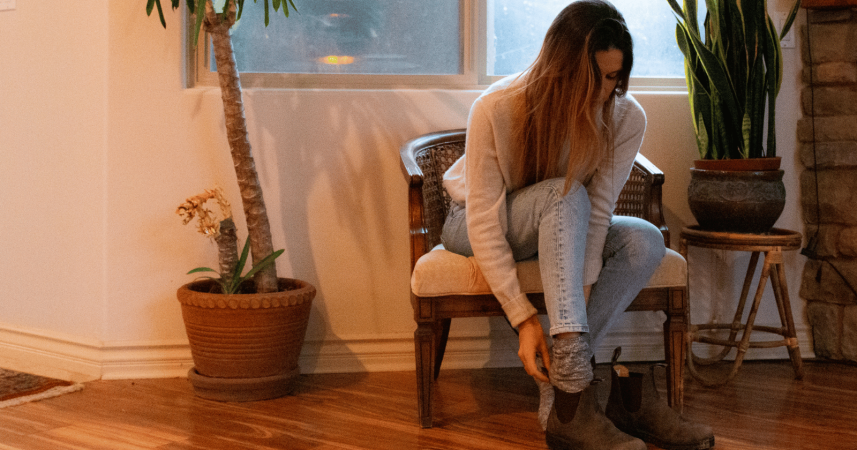
While the great indoor shoe debate might seem trivial, this everyday habit reveals fascinating patterns about cultural identity, with research showing that your footwear rules at home are likely inherited from one of seven distinct cultural backgrounds that shape everything from your concept of cleanliness to hospitality.

Add VegOut to your Google News feed. 
Growing up, I remember the first time I visited my college roommate's family home. I walked straight through the front door in my sneakers, only to freeze when I noticed the neat row of shoes by the entrance and everyone padding around in socks.
The look of mild horror on her mother's face is something I'll never forget. It was one of those moments where you realize that what feels completely normal to you might be totally foreign to someone else.
That experience sparked my curiosity about why some families wear shoes indoors while others treat it like a cardinal sin. After years of observing patterns in different households and diving deep into cultural research, I've discovered that people who wear shoes inside typically come from specific cultural backgrounds that shape this seemingly simple habit.
Let me walk you through what I've learned.
1. Traditional American suburban households
This one hits close to home for me. Growing up in a middle-class suburb with parents who prioritized practicality over tradition, we never thought twice about wearing shoes indoors.
My mother would come home from teaching and walk straight to the kitchen to start dinner, still in her work flats. My father would tinker in the garage and wander back inside, work boots and all.
In many American suburban homes, especially those built in the mid-to-late 20th century, the culture emphasized convenience and efficiency. The idea was that taking shoes on and off multiple times a day when you're constantly running between the car, the yard, and the house was simply impractical.
What's fascinating is how this habit often correlates with families who view their homes as functional spaces rather than sacred ones. The house is for living in, not preserving. Carpets can be cleaned, floors can be mopped, and life moves on.
2. Western European backgrounds
Many of my friends with British, French, or German heritage grew up in households where shoes indoors were completely normal. One friend told me her British grandmother would look puzzled when visitors asked if they should remove their shoes, responding with "Whatever for? We have doormats!"
In these cultures, particularly in urban areas, wearing shoes inside has historically been associated with being properly dressed. The concept ties into social etiquette where being "presentable" means being fully dressed, shoes included. Taking off your shoes might even be considered too intimate or casual for certain social situations.
3. Mediterranean cultures
During a work trip to Spain years ago, I noticed something interesting. My colleagues would invite me to their homes, and nobody ever mentioned shoes. Everyone kept them on, from the grandparents to the kids. The same pattern appeared when I visited Italy and Greece.
In Mediterranean cultures, the indoor-outdoor lifestyle is much more fluid. With warmer climates and a culture that embraces outdoor living, the boundary between inside and outside spaces becomes blurred. Terraces, courtyards, and balconies are extensions of the home, and people flow between these spaces naturally.
Plus, many traditional Mediterranean homes have tile or stone floors that are easy to clean, making shoe-wearing less of a concern than it might be with carpeted floors.
4. Latin American households
A colleague once told me about growing up in her Mexican-American household where removing shoes was practically unheard of. "My abuela would say that bare feet or socks on the floor would make you sick," she laughed. This belief, common in many Latin American families, stems from traditional ideas about cold floors causing illness.
In many Latin American cultures, there's also a practical element. In regions where flooding or insects are common concerns, wearing shoes provides protection. The cultural norm has persisted even when families immigrate to different climates or living conditions.
The emphasis on hospitality in these cultures also plays a role. Asking guests to remove their shoes might be seen as inhospitable or overly formal.
5. Certain Southern U.S. regions
Having spent time in various Southern states for work conferences, I've noticed that shoe-wearing indoors is particularly common in certain Southern communities. The combination of hot, humid weather and a culture of casual hospitality creates an environment where shoe removal isn't typically expected.
One Southern friend explained it perfectly: "We're in and out of the house all day long. Between the porch, the yard, running errands, and dealing with the heat, taking shoes on and off would be a full-time job."
There's also a historical component. In agricultural communities where people worked the land, coming inside for quick breaks while keeping work boots on was practical and necessary.
6. Urban apartment dwellers from major cities
This one surprised me when I first noticed the pattern. People who grew up in major urban centers like New York, London, or Paris often wear shoes indoors, regardless of their ethnic background. After living in a city apartment for a few years during my analyst days, I understood why.
When you live in a city where you're walking on questionable sidewalks, taking public transportation, and dealing with all sorts of urban grime, your shoes become armor. But here's the twist: many urban dwellers have "inside shoes" that never go outside. It's about protection and comfort rather than tracking in dirt from outside.
The psychology is different too. In cramped city spaces, being fully dressed, including shoes, can make you feel more put-together and ready to head out at a moment's notice.
7. Mixed-culture households
Some of the most interesting cases come from households with mixed cultural backgrounds. When one parent comes from a shoes-off culture and another from a shoes-on culture, families often develop their own unique rules.
I've seen households where shoes are worn in common areas but not in bedrooms, or where adults wear shoes but children don't. These hybrid approaches show how cultural norms evolve and adapt when different backgrounds merge.
Final thoughts
After all these years of observation and research, I've learned that something as simple as wearing shoes indoors tells a complex story about where we come from and what we value. Whether you're team shoes-on or shoes-off, these habits are deeply rooted in cultural experiences that shape our sense of home and comfort.
What matters isn't whether you wear shoes inside or not, but understanding that both choices come from valid cultural perspectives. So the next time you visit someone's home, take a quick glance at the entryway. That pile of shoes, or lack thereof, might just tell you something interesting about their story.