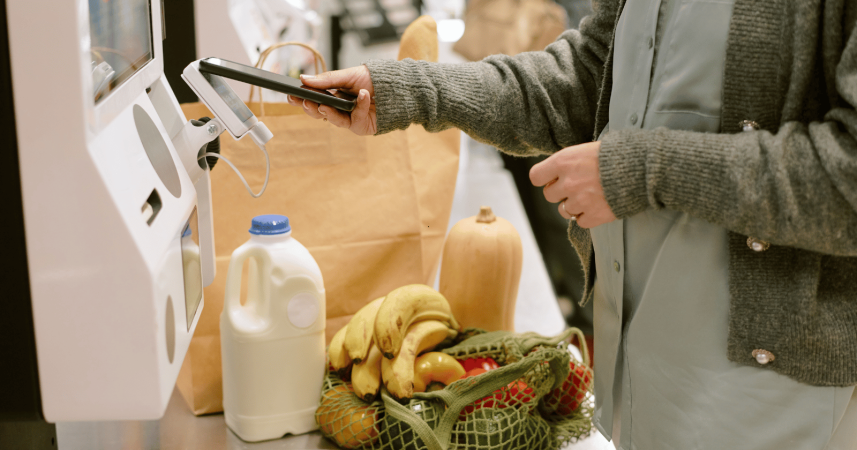
While self-checkout was designed to speed up your shopping experience, certain generational habits can transform a quick scan-and-go into a comedy of errors that leaves everyone in line checking their watches and reconsidering their life choices.
Picture this: You're standing in line at the grocery store, your basket containing exactly three items. The regular checkout lanes snake around like theme park queues, but the self-checkout area beckons with its promise of efficiency.
You stride over confidently, ready for a quick escape, only to find yourself stuck behind someone who's treating the scanner like it's an alien artifact from another dimension.
We've all been there, haven't we? And while I hate to generalize about any generation, there's a pattern I've noticed that's hard to ignore. Many folks from the Boomer generation seem to approach self-checkout with habits that completely miss the point of these machines.
Before anyone gets defensive, let me be clear: this isn't about age-shaming. My own parents are Boomers, and I adore them. But watching my dad at self-checkout last week was like witnessing someone trying to send a text message on a rotary phone.
The whole experience got me thinking about why these particular behaviors are so common and how they transform what should be a 2-minute transaction into a 15-minute ordeal.
1. Calling over the attendant for every single item
You know that helpful store employee stationed near the self-checkout area? They're there for emergencies, not to scan your entire grocery haul. Yet I regularly see shoppers flag them down for every produce item, coupon, or slightly crumpled barcode.
Last month, I watched someone call the attendant over six times during one transaction. Six times! At that point, you're basically getting full service at a self-service station. The attendant might as well pull up a chair and make themselves comfortable.
The whole point of self-checkout is independence. If you need constant assistance, those staffed lanes are literally designed for that exact purpose. There's no shame in using them. In fact, it's faster for everyone involved.
2. Treating the scanner like it needs a full windup
Have you ever watched someone at self-checkout who seems to think the scanner requires Olympic-level athleticism? They lift items high above their heads, swing them in wide arcs, and perform what can only be described as interpretive dance with a box of cereal.
The scanner needs a clear view of the barcode, not a theatrical performance. A simple pass over the glass usually does the trick. Yet somehow, this straightforward action becomes a full-body workout for some folks.
Modern scanners are surprisingly good at their jobs. They don't need the barcode presented from seventeen different angles. Trust the technology. It's more capable than you think.
3. Refusing to use the hand scanner for large items
Water softener salt. Cases of soda. Giant bags of dog food. We've all got those heavy items that make our backs hurt just looking at them. That's precisely why self-checkout stations have those magical hand scanners attached.
But instead of using this convenient tool, I regularly see people attempting to hoist 40-pound bags onto the scanner bed, usually while complaining about their backs the entire time. The hand scanner exists for a reason, folks. It's not decoration.
During one of my farmers' market volunteer shifts, an older gentleman told me he didn't trust "those gun things" because he couldn't see if they actually worked. I gently showed him the screen that confirms each scan. His mind was blown. Sometimes people just need a little education about the tools available to them.
4. Having full conversations while scanning
Self-checkout requires at least minimal attention. You need to follow prompts, bag items, and keep the line moving. What it doesn't accommodate well is a full phone conversation about your grandson's college choices while you're trying to weigh bananas.
I get it. Multitasking feels efficient. But when you're chatting away and repeatedly scanning the same item because you're not watching the screen, or worse, holding up the payment process because you're deep in conversation, you're creating the exact bottleneck self-checkout was designed to eliminate.
Save the catch-up calls for the car ride home. The self-checkout deserves your full attention for those few minutes.
5. Bringing a month's worth of groceries
There's technically no rule against bringing 147 items through self-checkout. But there is such a thing as reading the room. When you roll up with a cart that looks like you're preparing for nuclear winter, and everyone else has five items or fewer, maybe reconsider your lane choice.
Self-checkout shines for quick trips. A few items, in and out, no waiting behind someone writing a check or digging for exact change. When you bring your wholesale shopping haul through, you're turning the express lane into a parking lot.
Those regular checkout lanes have baggers and conveyor belts for a reason. They're equipped for your mega-hauls. Use them.
6. Arguing with the machine about prices
"That's not the right price! The sign said $3.99!"
The machine doesn't set prices, and it certainly can't negotiate with you. Yet I regularly witness people having heated discussions with an inanimate object, as if passionate argument will somehow convince the computer to change its mind.
If there's a price discrepancy, the self-checkout station isn't going to resolve it through debate. You need a human for that. Either accept the price and discuss it at customer service later, or switch to a regular lane where someone can help immediately.
7. Insisting on paper bags but not knowing how to use them
Paper bags at self-checkout can be tricky. They need to be opened properly, positioned correctly, and the weight sensor needs to recognize them. It's a skill that takes a minute to learn.
What doesn't work is cramming unopened paper bags onto the bagging area and then wondering why the machine is having a meltdown. Or trying to use your own bags without pressing the "I'm using my own bag" button first.
During one of my digital detox weekends, I spent time helping at our local grocery store for a community event. The manager mentioned that bag-related issues cause more self-checkout delays than any other problem. The solution? Either master the bag technique or choose a lane where someone else handles it.
8. Paying with a checkbook
Yes, this still happens. In 2024. At the self-checkout.
If you're writing checks at self-checkout, you've fundamentally misunderstood the assignment. It's like bringing a typewriter to a video game tournament. Sure, technically you might be able to make it work, but why would you want to?
Most self-checkout systems aren't even equipped to process checks efficiently. You'll end up needing attendant assistance anyway, defeating the entire purpose of the self-service model.
Final thoughts
Look, I understand that technology moves fast. When my mother had surgery last year, I watched her struggle with the hospital's digital check-in system, and it reminded me that not everyone grew up with screens and scanners. There's no shame in that.
But here's the thing: self-checkout is optional. If it stresses you out, frustrates you, or takes you three times longer than a regular checkout would, then maybe it's not for you. And that's perfectly fine.
The regular checkout lanes aren't going anywhere. They're staffed by patient people who are happy to help. Using them isn't admitting defeat. It's choosing the option that works best for your comfort level and shopping style.
For those determined to master self-checkout, remember it's designed for speed and efficiency. Keep it simple, stay focused, and save the complicated transactions for the human cashiers. Your fellow shoppers will thank you, and you might even find yourself zipping through faster than you ever imagined possible.