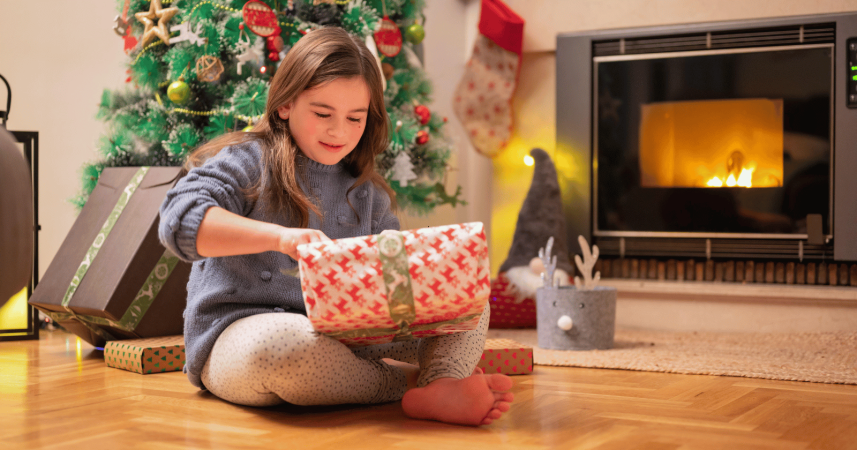
From promising to eat vegetables without complaint to offering straight A's in exchange for plastic robots that knocked each other's blocks off, these eight toys had Boomer kids negotiating behavioral contracts that would make a lawyer proud.
Remember that feeling of pure, unbridled Christmas morning excitement? The kind where you'd wake up at 4 AM, heart pounding, sneaking downstairs to see if Santa had actually come through this year?
I recently stumbled upon my old Christmas wish lists while helping my parents clean out their attic, and wow, talk about a time capsule. These crumpled pieces of paper, some written in crayon, others carefully typed on an actual typewriter, contained the most earnest promises of good behavior you've ever seen.
"I promise to clean my room EVERY DAY if I get this," one read, underlined three times for emphasis.
For Boomer kids, certain toys weren't just wants; they were obsessions that dominated entire years of childhood. These were the gifts that made us promise the moon and stars, swear off fighting with neighborhood kids, and actually eat our vegetables without complaint. Let's take a nostalgic journey through the presents that had us on our absolute best behavior.
1. The Schwinn Sting-Ray bicycle
This wasn't just any bike. With its banana seat, high-rise handlebars, and that distinctive slick rear tire, the Sting-Ray was freedom on two wheels. Every kid in the neighborhood who had one instantly became royalty.
I remember pressing my nose against the glass at the local bike shop, mentally calculating how many weeks of perfect behavior it would take. The Sting-Ray meant you could finally keep up with the older kids, cruise to the corner store for candy, and most importantly, look incredibly cool doing it.
Parents knew this bike's power. They'd dangle it like a carrot throughout the year: "Remember, Santa's watching!" And you know what? We believed them. We made our beds, took out the trash, and even shared our Halloween candy with younger siblings, all in service of that glorious Christmas morning possibility.
2. Easy-Bake Oven
Before anyone starts with the gender stereotypes, let me tell you, both boys and girls desperately wanted this miniature culinary wonder. The idea that you could make actual, edible food with a light bulb? Pure magic.
The Easy-Bake Oven represented independence in its most delicious form. No more begging mom for cookies or waiting until after dinner for dessert. You were now a chef, a baker, a creator of tiny cakes that somehow tasted better than anything from a real oven simply because you made them yourself.
Kids would practice their best behavior for months, setting the table without being asked, helping with dishes, all while dropping not-so-subtle hints about how responsible they'd become. "Look, Mom, I'm helping with dinner! I'd be REALLY good with my own oven..."
3. Rock 'Em Sock 'Em Robots
Two plastic robots. One ring. Endless hours of competitive fury. The satisfying "PING!" when you knocked your opponent's block off was worth every chore, every early bedtime, every "yes ma'am" and "no sir" throughout the year.
What made this toy so coveted wasn't just the game itself, but what it represented: sanctioned violence in a world where we were constantly told not to fight. Parents who normally preached peace suddenly endorsed mechanical mayhem, and we were here for it.
The commercial's tagline "You knock my block off!" became playground currency. Kids who owned the game hosted tournaments. Those who didn't spent the year campaigning, promising academic excellence and household harmony in exchange for their own robot boxing ring.
4. G.I. Joe with Kung-Fu grip
When Hasbro introduced the Kung-Fu grip feature in 1974, it changed everything. Suddenly, G.I. Joe could actually hold things properly. Weapons, ropes, other action figures in dramatic rescue scenarios; the possibilities were endless.
This wasn't just a doll (though we'd never call it that). This was a fully poseable adventure companion with realistic hair, a beard you could actually feel, and hands that gripped with authority. Kids would demonstrate their responsibility by taking meticulous care of their existing toys, hoping parents would notice their museum-quality preservation skills.
The promise list for G.I. Joe was extensive: straight A's, no talking back, helping dad in the garage without complaint, even volunteering to visit boring relatives. Whatever it took to secure that military hero with the revolutionary grip technology.
5. Lite-Brite
"Lite-Brite, making things with light. Out of sight, making things with Lite-Brite." If that jingle just played in your head, you understand the magnetic pull of this seemingly simple toy.
Pushing colored pegs through black paper to create glowing artwork felt like having superpowers. You weren't just playing; you were creating illuminated masterpieces that looked especially impressive in a dark room. The fact that you could make your own designs or follow the included patterns gave it endless replay value.
Parents loved Lite-Brite because it was quiet, creative, and kept kids occupied for hours. Kids loved it because it felt sophisticated, artistic even. We'd promise to limit TV time, read more books, and stop leaving our bikes in the driveway if only we could have our own light-up art studio.
6. The original Star Wars action figures
When Star Wars exploded onto screens in 1977, it created a merchandising phenomenon unlike anything before. Those 3.75-inch action figures weren't just toys; they were portals to a galaxy far, far away.
The genius of these figures was their size and affordability (relatively speaking). You could collect them all, theoretically. Luke, Leia, Darth Vader, even the random Death Star droid. Each figure came with its own accessories and backstory, turning bedroom floors into epic battle scenes.
Kids became negotiation experts, proposing complex behavioral contracts: "If I get straight A's this semester AND help with yard work every Saturday AND don't ask for anything else all year, can I get the Millennium Falcon for Christmas?" The answer was usually maybe, which was enough to fuel months of exemplary conduct.
7. Atari 2600
This gaming console was the holy grail of Christmas gifts. It transformed your regular TV into an arcade, bringing Pac-Man, Space Invaders, and Asteroids right into your living room. The wood-grain finish made it look like a piece of furniture, which somehow made it easier for parents to justify.
The Atari wasn't just expensive; it was an investment in your social status. Having one meant your house became the after-school destination. Kids would promise practically anything: perfect attendance, voluntary summer school, teaching grandma how to play. Some even offered to share it with siblings, the ultimate sacrifice.
8. Big Wheel
Before we had Power Wheels, we had the Big Wheel, and it was glorious. That low-riding, plastic three-wheeler with the enormous front wheel was built for one thing: speed. Well, speed and that amazing ability to spin out with the hand brake, leaving skid marks on the driveway that would make your parents cringe.
The Big Wheel was outdoor freedom for kids too young for a real bike. You could race, you could cruise, you could even attempt jumps off the curb (though this usually ended badly). The distinctive sound of plastic wheels on pavement became the soundtrack of suburban childhoods everywhere.
Final thoughts
Looking back at these coveted Christmas gifts, what strikes me most isn't just the toys themselves, but what they represented. Each one promised adventure, creativity, or social currency in the complex economy of childhood. They were tickets to imagination, tools for storytelling, and bridges to friendship.
Did we keep all those promises of perfect behavior? Probably not. But the hope, the anticipation, and yes, even the negotiations, were all part of the magic. These toys taught us about desire, patience, and the art of the deal long before we knew those were life skills.
Today's kids might not understand the appeal of a bike without Bluetooth or an oven powered by a light bulb. But for Boomer kids, these simple, analog treasures were everything. They were worth being good for, at least until December 26th.