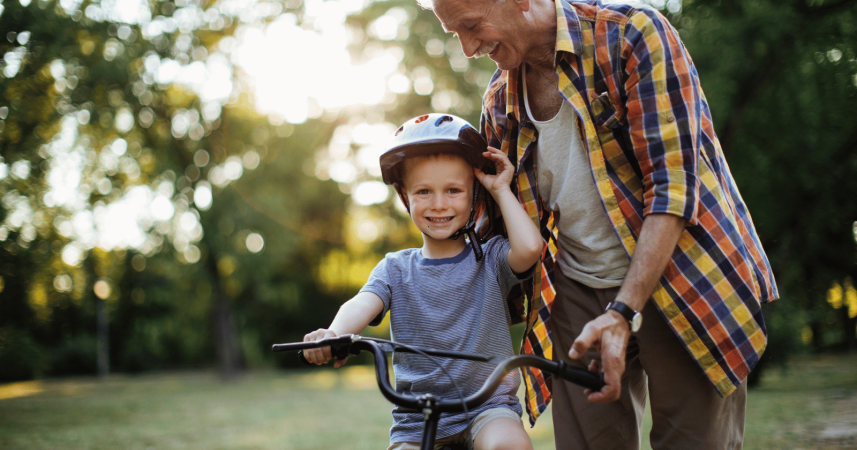
The same generation that sent their kids outside with nothing but a house key and "be home before dark" now tracks their grandchildren's every movement like anxious security guards.
Remember when kids disappeared for hours and parents didn't panic? When "be home before dark" was the only tracking device needed?
Growing up in the '80s, I spent entire summer days roaming the neighborhood with zero adult supervision. My boomer parents thought nothing of it. Fast forward to today, and those same parents hover over their grandkids like security drones, tracking every movement through smartphones and rarely letting them out of sight.
What changed? Why are the parents who gave us unprecedented freedom now championing bubble-wrapped childhoods for the next generation?
Having watched this shift unfold in my own family and community, I've noticed eight specific freedoms that defined Gen X childhoods but have virtually vanished for today's kids. And the irony? The very generation that raised us on independence now acts like letting a 10-year-old walk to the park alone is borderline negligent.
1. Playing outside unsupervised until dark
"Just be home when the streetlights come on."
That single sentence defined my entire childhood. From age seven onward, I'd leave the house after breakfast and my parents wouldn't see me again until dinner. We'd build forts in the woods, play elaborate games of hide-and-seek spanning multiple backyards, and yes, occasionally get into harmless trouble.
Today? My neighbor's 11-year-old isn't allowed to play in their own front yard without adult supervision. The same woman who tells stories about biking miles to the community pool at age nine now drives her granddaughter to the mailbox at the end of their driveway.
The fear of "stranger danger" has reached levels that would've seemed paranoid in 1985, despite crime rates being significantly lower now than they were then.
2. Walking or biking to school alone
Picture this: hundreds of kids streaming toward school on foot or bike, no adults in sight except the crossing guard. That was every morning in my suburban neighborhood circa 1988.
I started walking the half-mile to elementary school in second grade. By fourth grade, I was biking there with friends, our bikes creating a chaotic parade of freedom. Rain or shine, we got ourselves there.
Now those same streets sit empty during school hours. The car line at my old elementary school stretches for blocks. Parents who walked themselves to school at age six now insist their 12-year-olds need daily door-to-door chauffeur service.
A friend recently told me her mother-in-law called Child Protective Services "a concern" when she learned her 10-year-old grandson was walking three blocks to school. This from a woman who hitchhiked to high school in the '60s.
3. Having zero digital supervision or tracking
We vanished into thin air for hours, and that was completely normal. No GPS trackers, no checking in via text, no Find My iPhone. If parents needed us, they'd stand on the porch and yell our names or call our friends' houses.
The freedom to be genuinely unreachable shaped how we thought and played. We made decisions without consulting adults. We solved problems ourselves because calling mom wasn't an option.
Yet boomers who survived decades without knowing our exact coordinates now panic if they can't reach their grandkids instantly. They champion tracking apps and constant check-ins, forgetting they raised us in an analog world where "I don't know where my kid is right now" was a perfectly acceptable answer.
4. Settling conflicts without adult intervention
Got in a disagreement with the neighbor kid? Figure it out yourselves. Someone being mean on the playground? Deal with it or avoid them.
Our parents' philosophy was simple: unless someone's bleeding or something's broken, work it out amongst yourselves. This forced us to develop negotiation skills, learn compromise, and yes, occasionally take a punch or throw one.
Watch a playground now and you'll see adults swooping in at the first sign of conflict. The grandparents who told us to "stop being a tattletale" now demand teachers document every minor disagreement their grandkids have. They've gone from "kids will be kids" to treating every sandbox dispute like a federal case.
5. Taking real risks during play
Climbing trees until branches bent under our weight. Building rickety bike ramps. Playing full-contact sports without any gear. These weren't considered dangerous activities; they were Tuesday afternoon.
I broke my arm falling off monkey bars in third grade. My parents' response? "Guess you'll be more careful next time." No lawsuit, no demand for softer playground surfaces, just a cast and a lesson learned.
But those monkey bars are gone now, replaced by equipment so safe it's boring. The boomers who watched us launch ourselves off swing sets now insist on helmets for tricycle rides around the driveway.
6. Having unsupervised access to "inappropriate" content
We watched R-rated movies at sleepovers, found magazines in older siblings' rooms, and heard music with explicit lyrics. Our parents might've preferred we didn't, but they weren't monitoring our every media choice.
This taught us to self-regulate and make our own judgments about content. Sometimes we saw things we weren't ready for, sure, but we learned to handle it.
Today's kids live under constant content surveillance. Boomers who let us watch whatever was on cable now insist on reviewing every YouTube video their grandkids might see. They've gone from "just change the channel if you don't like it" to demanding detailed content warnings on everything.
7. Failing without intervention
Forgot your homework? That's a zero. Didn't make the team? Better luck next year. Lost your lunch money? Guess you're hungry today.
Our boomer parents let us experience real consequences. They didn't email teachers demanding do-overs or argue with coaches about playing time. Failure was educational, not catastrophic.
Yet these same people now rush to cushion every blow for their grandkids. They call teachers about grades, intervene in friend drama, and create elaborate safety nets that prevent any possibility of genuine failure.
8. Having genuine privacy and secrets
We had diaries with actual locks. Secret hideouts adults didn't know about. Conversations and experiences our parents never heard about and didn't expect to.
Privacy was respected as part of growing up. Having thoughts, feelings, and experiences separate from our parents was normal and healthy.
But the boomers who gave us space to be ourselves now expect complete transparency from their grandkids. They want access to social media accounts, demand to know every friend, and panic at the thought of their grandkids having any experience they're not privy to.
Final thoughts
Watching my parents' generation transform from champions of childhood independence to helicopter grandparents has been surreal. The very people who sent us outside with nothing but a house key and a "be careful" now act like childhood itself is a threat to be managed.
Maybe witnessing the 2008 financial crisis taught me something about how fear drives irrational behavior, but I can't help seeing parallels here. The more access to information about potential dangers boomers have gained, the more they've retreated from the parenting philosophy that served them perfectly well.
The freedoms we had as Gen X kids weren't perfect, and sure, some updating was needed. But in their rush to protect their grandkids from every possible harm, boomers have forgotten something crucial: those unsupervised hours, those risks, those failures, and that privacy shaped us into resilient, independent adults.
And isn't that exactly what they were trying to achieve all along?