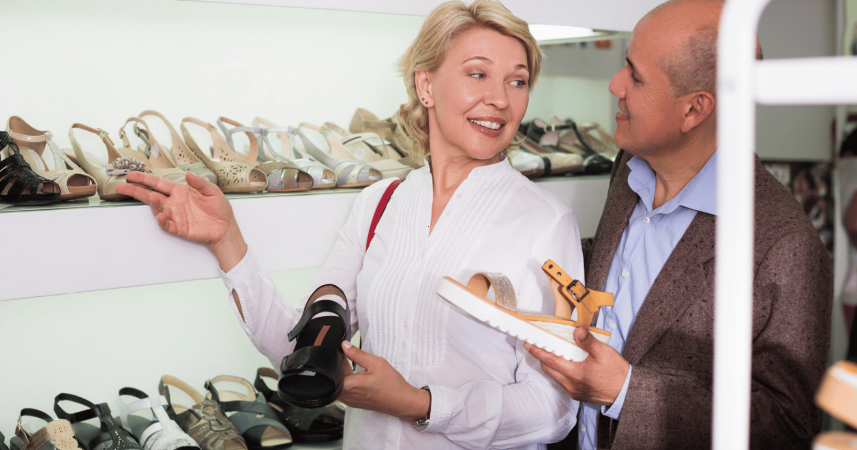
While that designer pair of ballet flats or those cloud-soft memory foam slip-ons might feel like heaven now, podiatrists are alarmed by the permanent damage these "comfortable" shoes are quietly inflicting on women over 60.
Have you ever watched a woman in her 60s stride confidently past you in what looks like the most comfortable shoes ever, only to later hear her complaining about foot pain?
I see this all the time at the farmers' market where I volunteer. These elegant women show up in shoes that look both stylish and sensible, yet many are unknowingly causing long-term damage to their feet. The disconnect between what we think is comfortable and what actually supports our feet properly is wider than most of us realize.
Recently, I had coffee with a podiatrist friend who shared something that stuck with me. She said the most heartbreaking part of her job is seeing women who've worn "comfortable" shoes for decades, only to develop painful conditions that could have been prevented.
These aren't cheap, poorly made shoes either. Many are expensive, well-known brands that market themselves as the perfect blend of comfort and class.
The truth is, our perception of comfort can be deceiving. A shoe might feel good for the first hour or two, but that doesn't mean it's providing the support, stability, and alignment our feet need, especially as we age. And when you're over 60, proper foot health becomes even more crucial for maintaining mobility and independence.
Let me share what podiatrists are really seeing when it comes to these seemingly perfect shoe choices.
1. Ballet flats
Ballet flats seem like the obvious choice when you want something dressier than sneakers but more comfortable than heels, right? They're lightweight, easy to slip on, and go with everything from jeans to dresses.
But here's what podiatrists want you to know: ballet flats offer virtually zero arch support. When I was caring for my mother after her surgery, she lived in her ballet flats because they were easy to put on without bending down much.
Her podiatrist practically begged her to stop, explaining that the complete lack of cushioning means every step sends shock waves straight up through your joints.
The thin, flexible sole provides no protection from uneven surfaces, and without any heel counter or ankle support, your feet have to work overtime just to keep the shoes on. This leads to plantar fasciitis, hammertoes, and even stress fractures.
If you love the look, podiatrists suggest finding versions with removable insoles so you can add orthotics, or choosing mary jane styles with a strap for better stability.
2. Mules and backless slip-ons
The convenience factor of mules is undeniable. No bending, no laces, just slide your foot in and go. Many women over 60 gravitate toward them because they eliminate the struggle of reaching down to fasten shoes.
Yet podiatrists see a different story. Without a back strap, your toes have to grip constantly to keep the shoe from flying off. This gripping action, repeated thousands of times a day, creates a domino effect of problems. It alters your natural gait, strains the muscles in your feet and calves, and can lead to painful conditions like Morton's neuroma.
I learned this lesson myself during my morning trail runs. Even with proper running shoes, if they're not secured well, my form suffers and I feel it in my knees later. The same principle applies to everyday walking in backless shoes, except the effects accumulate over years rather than miles.
3. Pointed-toe pumps with any heel
"But they're only one-inch heels!" I hear this defense constantly. Many women believe that as long as the heel is low, pointed-toe shoes are perfectly fine.
Podiatrists disagree, and for good reason. The pointed toe box squeezes your toes into an unnatural position, regardless of heel height. Over time, this compression leads to bunions, corns, and nerve damage. Add even a small heel, and you're shifting your body weight forward onto the balls of your feet, increasing pressure on already compromised toes.
One podiatrist told me she can spot women who've worn pointed-toe shoes for decades just by looking at their X-rays. The bone deformities are that distinctive. If you need a dressier shoe, look for ones with a rounded or square toe box that allows your toes to spread naturally.
4. Worn-out walking shoes
This one might surprise you. Walking shoes are supposed to be good for you, right? They are, until they're not.
Many women over 60 have favorite walking shoes they've worn for years. These shoes feel broken in and comfortable, like old friends. But shoes lose their supportive properties long before they look worn out. The midsole compression, tread wear, and upper stretching all compromise the shoe's ability to protect your feet.
Podiatrists recommend replacing walking shoes every 300-500 miles, or about every six months if you walk regularly. I track my running shoes religiously because I log 20-30 miles weekly, and the difference between fresh shoes and worn ones is dramatic. Your walking shoes deserve the same attention.
5. Platform sandals
Platform sandals seem like a smart compromise. You get height without the angle of a traditional heel, plus the comfort of a sandal. Many women see them as the perfect summer solution for looking put-together while staying comfortable.
Unfortunately, platforms create their own set of problems. The thick, rigid sole prevents your foot from flexing naturally when you walk. This interferes with your proprioception - your body's ability to sense where it is in space. The result? An increased risk of trips, falls, and ankle rolls, especially concerning for women over 60 when bone density might already be a concern.
The lack of adjustability in most platform sandals means they're either too loose, causing your foot to slide around, or too tight, restricting circulation.
6. Memory foam slip-ons
Memory foam sounds so appealing, doesn't it? Like walking on clouds. These shoes have become incredibly popular among older women seeking ultimate comfort.
But memory foam is actually problematic for foot health. It compresses under pressure but doesn't provide pushback or support. Your foot sinks in and stays there, which means no shock absorption and no energy return when you step. Podiatrists compare it to walking on sand - it might feel soft, but your muscles have to work harder with each step.
The excessive cushioning also masks pain signals that would normally tell you something's wrong. You might not notice you're developing a problem until significant damage has occurred.
7. Flip-flops for daily wear
Yes, even the "supportive" ones. Flip-flops have evolved from beach-only footwear to everyday shoes, with many brands marketing orthopedic or comfort versions.
No matter how they're marketed, flip-flops force an unnatural gait. Your toes must grip to keep them on, your heel strikes the ground with more force, and there's zero ankle stability. Podiatrists see a surge in plantar fasciitis, shin splints, and Achilles tendonitis cases every summer, largely attributed to flip-flop wear.
Reserve flip-flops for the pool, beach, or spa. For everyday wear, choose sandals with a back strap and proper arch support.
Final thoughts
Reading this might feel frustrating. If all these comfortable-seeming shoes are problematic, what can you wear?
The good news is that truly supportive, healthy shoes have come a long way in style. Look for shoes with a firm heel counter, adequate arch support, a toe box that allows natural toe spread, and a flexible sole at the ball of the foot only. Many brands now make genuinely attractive shoes that meet these criteria.
Your feet have carried you through six decades or more. They deserve footwear that supports them properly, not just shoes that seem comfortable at first wear. Making the switch might feel strange initially, but your future self will thank you when you're still walking pain-free in years to come.
If You Were a Healing Herb, Which Would You Be?
Each herb holds a unique kind of magic — soothing, awakening, grounding, or clarifying.
This 9-question quiz reveals the healing plant that mirrors your energy right now and what it says about your natural rhythm.
✨ Instant results. Deeply insightful.

Avery White
Formerly a financial analyst, Avery translates complex research into clear, informative narratives. Her evidence-based approach provides readers with reliable insights, presented with clarity and warmth. Outside of work, Avery enjoys trail running, gardening, and volunteering at local farmers’ markets.
More Articles by Avery