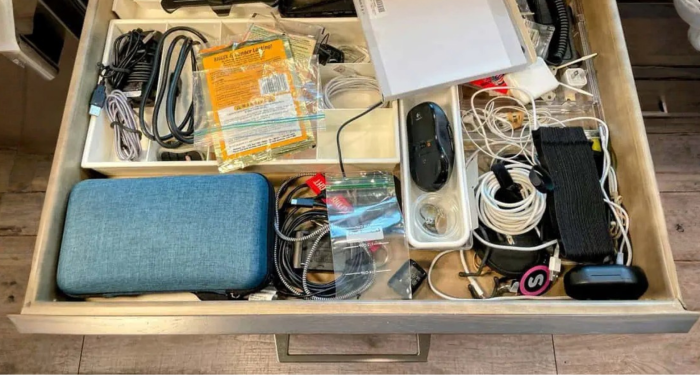
It’s often the invisible choices—what stays hidden, what gets let go—that make a space feel naturally uncluttered.
I’ve always admired how minimalists manage to keep their homes looking effortlessly put together. It’s not that they spend hours scrubbing and polishing every day—it’s that they’ve built habits and systems that make tidiness almost automatic.
The good news? You don’t have to be a full-blown minimalist to adopt these strategies. Even small tweaks can make your home feel calmer, cleaner, and easier to manage.
Let’s dive into the eight ways minimalists keep their homes looking clean without exhausting themselves.
1. They own less in the first place
Here’s the simple truth: the fewer items you own, the less there is to clean, put away, or trip over.
Minimalists don’t just organize their clutter—they prevent it by not buying in excess. Think about it: ten pairs of shoes mean ten pairs to manage, store, and clean. Three pairs you love and wear regularly? Much easier.
I learned this firsthand when I downsized my own closet a few years ago. I realized I was rotating between the same handful of outfits while the rest sat untouched. Once I let go of the excess, I not only had less laundry but getting dressed in the morning became quicker and more enjoyable.
As Joshua Becker, author of The More of Less, notes: “The first step in crafting the life you want is to get rid of everything you don’t.”
It’s not about deprivation—it’s about making space for what you actually use and enjoy.
2. They give everything a home
Do you ever feel like your stuff just kind of floats around your house with no clear place to land? That’s where mess creeps in.
Minimalists solve this by giving every item—from remote controls to reusable bags—a designated spot. When something has a home, putting it back takes seconds, and your surfaces stay clear.
I used to leave my gardening gloves wherever I last used them—sometimes on the porch, sometimes in the mudroom, sometimes on a kitchen counter (don’t ask).
Not surprisingly, my home looked scattered, and I wasted time searching for them. Once I set up a bin just for garden tools, I stopped losing things—and the clutter disappeared.
It sounds small, but it makes all the difference between a space that looks perpetually “in progress” and one that looks polished.
3. They practice the one-minute rule
A trick I picked up from Gretchen Rubin (author of The Happiness Project) is what she calls the “one-minute rule.” If a task takes less than a minute, do it right away.
That could mean hanging your jacket instead of dropping it on a chair, rinsing a dish instead of leaving it in the sink, or folding the blanket after your Netflix binge. Minimalists live by this principle—it keeps small messes from snowballing into overwhelming ones.
I started applying this to mail: if I can recycle, shred, or file a piece of paper in less than a minute, I don’t let it sit on the counter. Within a week, I noticed how much clearer my kitchen looked.
The truth is, clutter isn’t usually about one big mess—it’s the slow build of dozens of tiny, undone tasks. The one-minute rule stops them in their tracks.
4. They limit surfaces for clutter to land
Flat surfaces are clutter magnets. Dining tables, kitchen counters, nightstands—if it’s empty, it’s easy to drop things there.
Minimalists cut down on this by having fewer open surfaces in the first place—or by keeping them intentionally styled. A table with a small vase or bowl is less likely to collect mail and random knick-knacks.
I tested this with my entryway. Instead of leaving it bare, I added a small dish for keys and a plant. Suddenly, the space stopped attracting piles of junk mail and rogue receipts. The visual cue of a styled surface reminded me: this isn’t a dumping ground.
It’s not about being rigid, it’s about guiding your environment to work with you instead of against you.
5. They clean as they go
This one has saved me so much time in the kitchen: minimalists tidy while they’re doing other things.
Cooking? They wipe the counter while the pasta water boils. Brushing their teeth? They wipe down the sink afterward. These tiny “in the moment” cleanups add up to a home that never gets too far behind.
It reminds me of trail running: if I pause to catch my breath on a climb, I’ll pick up a piece of litter someone left behind. It doesn’t slow me down much, but it keeps the path cleaner for everyone. The same logic applies at home—those tiny pauses are opportunities to reset the space.
It’s not about multi-tasking in a stressful way—it’s about weaving micro-habits into daily routines.
6. They use the “one in, one out” rule
Have you ever noticed how stuff seems to multiply when you’re not looking? Minimalists keep this in check with a simple system: for every new item that comes in, one old item goes out.
Bought a new pair of jeans? An old pair gets donated. Got a new coffee mug as a gift? Pass along one you rarely use.
This keeps accumulation from spiraling and ensures your home doesn’t get overloaded.
I once tried this with books. As someone who adores reading, I tend to hang onto every novel I’ve ever finished. But when I challenged myself to donate one book for every new one I bought, something shifted.
I realized I wasn’t just decluttering—I was curating a personal library that actually reflected who I am now, not who I was ten years ago.
It’s not about perfection—it’s about balance.
7. They prioritize invisible storage
Minimalists don’t necessarily own fewer things than everyone else—they just store them smarter.
They lean on baskets, cabinets, drawers, and bins to tuck things out of sight. Not in a “shove everything in the closet” kind of way, but in a thoughtful way that keeps essentials accessible without visual clutter.
This is where design psychology comes in. Research has shown that visual clutter can raise cortisol levels, making us feel stressed even if we’re not aware of it. That’s why a clean surface feels so calming—it literally eases your nervous system.
A space can actually be fairly full—books, board games, blankets—but if it’s stored in a way that hides the chaos, the room still feels calm and clean.
8. They reset at the end of the day
One habit I’ve borrowed from minimalists is the nightly reset. Before bed, they spend 10–15 minutes returning the house to baseline: dishes washed, counters cleared, items back in their spots.
It’s not a deep clean, it’s a quick tidy. And the payoff is huge—you wake up to a home that feels fresh, not chaotic.
I think of it like charging your phone overnight. Just as your phone is ready for the next day because you plugged it in, your home is ready because you gave it a reset. Minimalists know that maintenance is easier than overhaul. By resetting daily, they prevent big messes from ever piling up.
Final thoughts
Minimalists don’t have magic cleaning skills. They’ve just mastered the art of prevention, small daily habits, and creating homes that naturally resist clutter.
You don’t need to label yourself a minimalist to try these strategies. Start with one or two, experiment, and notice how much calmer your space feels.
Because here’s the thing: a home that looks clean without constant effort isn’t really about cleaning—it’s about living with intention.
Just launched: Laughing in the Face of Chaos by Rudá Iandê
Exhausted from trying to hold it all together?
You show up. You smile. You say the right things. But under the surface, something’s tightening. Maybe you don’t want to “stay positive” anymore. Maybe you’re done pretending everything’s fine.
This book is your permission slip to stop performing. To understand chaos at its root and all of your emotional layers.
In Laughing in the Face of Chaos, Brazilian shaman Rudá Iandê brings over 30 years of deep, one-on-one work helping people untangle from the roles they’ve been stuck in—so they can return to something real. He exposes the quiet pressure to be good, be successful, be spiritual—and shows how freedom often lives on the other side of that pressure.
This isn’t a book about becoming your best self. It’s about becoming your real self.