The smallest choices we once overlooked might hold the blueprint for living smarter, simpler, and a lot more intentionally today.
It’s funny how the older I get, the more I realize our parents and grandparents were onto something.
Back then, “sustainability” wasn’t a buzzword; it was survival. They didn’t have stainless-steel straws or minimalist storage solutions, and yet, they were living the original eco-friendly lifestyle.
They reused, repurposed, and reinvented everyday items long before we had Pinterest boards telling us how.
What looked like frugality back then feels like quiet genius now.
Let’s explore eight ways Boomers reused packaging that, looking back, actually make a ton of sense.
1) Using glass jars for everything
If you grew up in a Boomer household, you probably remember at least one cabinet filled with old jam or pickle jars.
Except they weren’t filled with jam or pickles anymore.
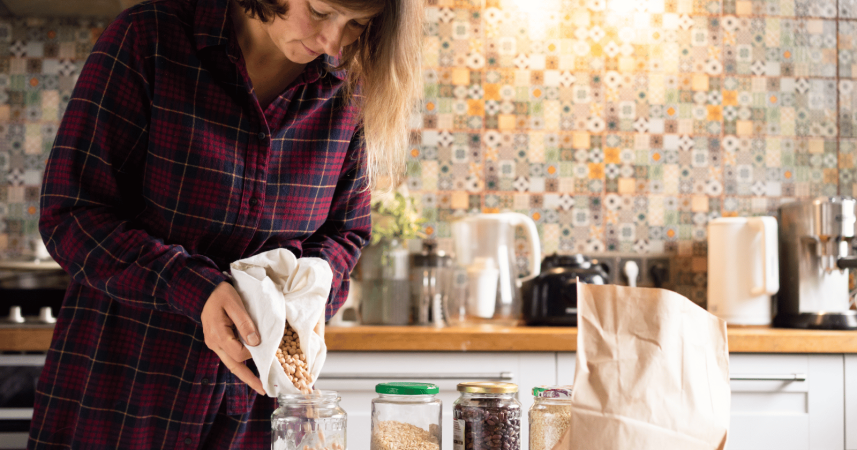
They were full of rice, lentils, nails, spare buttons, coins, or maybe a single serving of leftover soup that had seen better days.
It was practical, sure, but it was also oddly beautiful. Those mismatched jars created a kind of living collage of resourcefulness.
Now we buy expensive glass containers with bamboo lids to achieve that same “pantry aesthetic.” My grandmother did it without spending a dime.
Glass jars were the original zero-waste solution: airtight, endlessly reusable, and surprisingly aesthetic when lined up neatly on a shelf.
And there’s something mindful about that habit. Every reused jar was a small act of resistance against the idea that everything must be new.
2) Turning butter tubs into Tupperware
You know this one.
Every child of the 70s, 80s, or even 90s remembers opening a Country Crock container expecting butter and finding leftover stew.
It was a national tradition at this point.
And honestly, it’s kind of brilliant. Why buy Tupperware when you already have containers with perfectly fitting lids?
I used to think it was a bit chaotic, but the logic is unbeatable. These tubs were durable, stackable, and basically free.
Now we spend good money on branded “eco” storage containers, and the irony is hard to ignore.
The butter-tub trick wasn’t just frugal; it was sustainable design before sustainability had branding.
Plus, it made the fridge a little more exciting. Every meal was a game of chance.
3) Refilling soda bottles
Before recycling bins became standard, returning bottles for refills was just part of life.
You’d drink your soda, rinse the glass bottle, and bring it back for a few cents. The company would wash, refill, and reuse it.
No guilt, no landfill, no endless debates about whether glass or plastic is better for the environment.
It was just efficient.
When I was in Germany a few years ago, I saw the same system still in place, a deposit refund for every returned bottle. It made me think: we had this figured out decades ago and somehow lost it.
That simple exchange, use, return, refill, embodied everything modern sustainability advocates preach. It wasn’t idealism; it was habit.
And it worked.
Imagine if every company today built that mindset into their packaging. We’d be swimming in a lot fewer microplastics.
4) Reusing paper bags for lunches and wrapping gifts
Paper grocery bags were once pure gold.
Boomers would flatten them out, stack them under the sink, and reuse them for school lunches, book covers, or even wrapping paper.
There was no shame in showing up to a birthday party with a gift wrapped in a brown grocery bag, especially if it was tied up neatly with twine. It had a kind of earthy honesty to it.
I’ve done this myself when I’ve run out of wrapping paper, and honestly, people love it. There’s something charming about simplicity.
And practically speaking, paper bags were strong, biodegradable, and multipurpose. One bag could have three or four different lives before it hit the trash.
It’s a small reminder that not every solution needs to be new or high-tech. Sometimes the smartest move is just to make the most of what’s in front of you.
5) Washing and reusing aluminum foil
This one still makes me smile.
My mom used to wash foil. I mean, actually wash it. She’d peel it off the baking tray, rinse it gently under the faucet, then lay it flat to dry before folding it neatly in a drawer.
At the time, I thought it was a little eccentric. Now, I think she was way ahead of the curve.
Aluminum production is incredibly energy-intensive, yet foil is one of the easiest materials to reuse if you take care of it.
Boomers just did it because wasting it seemed wrong.
I remember reading once that the average American throws away enough foil each year to build an entire fleet of airplanes. My mom would be horrified.
Reusing foil wasn’t glamorous, but it was genius. A perfect example of how mindfulness doesn’t need to look fancy; it just needs to make sense.
6) Saving boxes for storage or crafts
Every Boomer home had the box closet.
You know the one: a mysterious collection of shoe boxes, cereal boxes, cookie tins, and cardboard of every shape and size.
As a kid, it looked like clutter. As an adult, I realize it was an inventory of future solutions.
Shoe boxes stored family photos, receipts, and holiday cards. Cookie tins held sewing kits and buttons. Cereal boxes were cut into drawer dividers or homemade organizers.
It wasn’t just thrifty; it was deeply creative.
When I moved into my first apartment, I caught myself doing the same thing. Saving boxes just in case.
It turns out, there’s a psychological comfort in keeping useful things around. It’s preparedness mixed with optimism, the quiet belief that we’ll find a use for something down the line.
That kind of resourcefulness might be one of the most underrated skills our parents passed down.
7) Repurposing jars and tins as planters
Before urban gardening was trending on Instagram, Boomers were already doing it with coffee cans, soup tins, and old jelly jars.
They’d poke holes in the bottom for drainage, fill them with soil, and place them on windowsills where the sunlight hit just right.
I still remember visiting a neighbor’s yard as a kid and seeing a jungle of reused containers, every one a different size, every one sprouting life.
No matching ceramic pots, no sleek plant shelves. Just raw ingenuity and care.
There’s something poetic about growing life out of what once held waste.
As someone who writes about psychology and decision-making, I think that’s part of what makes this practice so powerful. It teaches resilience and creativity, finding purpose in what’s been used up.
And it’s a lesson I carry into how I live now. Even my herbs grow in old glass jars, a nod to those who made do beautifully.
8) Using packaging for play and imagination
Before we had tablets and endless cartoons, we had boxes.
Big boxes became rocket ships, castles, and forts. Small boxes became houses for toy animals or treasure chests for imaginary pirates.
I once turned a refrigerator box into a spaceship with nothing but markers and tape. I remember the feeling, total freedom to imagine anything.
Boomers didn’t see waste; they saw opportunity.
That’s what creativity looks like before consumerism gets involved.
Today, we buy sensory play kits and craft sets that basically recreate what our parents gave us for free. It’s a strange full circle.
I’ve mentioned this before, but creativity thrives under constraints. When we have fewer options, we invent more.
Maybe that’s the quiet magic of reusing things. It forces us to think differently, to connect the dots between trash and possibility.
And maybe that’s what we’re missing in all this convenience.
The bigger lesson
When I think about these habits, what strikes me most isn’t the practicality; it’s the philosophy behind them.
Boomers reused because it made sense. Not because it was a lifestyle trend or an identity statement, but because they understood value.
They valued effort, time, and the simple idea that throwing something away too soon was wasteful.
As a vegan and someone who tries (imperfectly) to live sustainably, I find it humbling. We’re surrounded by green products and sustainability hacks, but often the most impactful habits are the oldest ones.
The truth is, reusing packaging wasn’t about being eco-conscious; it was about being conscious, period.
And that’s something worth bringing back.
The takeaway
Sometimes the best ideas aren’t new at all.
Maybe the genius of the Boomer generation wasn’t just in their inventions, but in their quiet, everyday wisdom.
In a world obsessed with convenience, they remind us that innovation doesn’t always mean creating something new; sometimes it means refusing to throw away what still works.
Because the real genius isn’t in buying better.
It’s in using what we already have, smarter, longer, and with a little imagination.
If You Were a Healing Herb, Which Would You Be?
Each herb holds a unique kind of magic — soothing, awakening, grounding, or clarifying.
This 9-question quiz reveals the healing plant that mirrors your energy right now and what it says about your natural rhythm.
✨ Instant results. Deeply insightful.