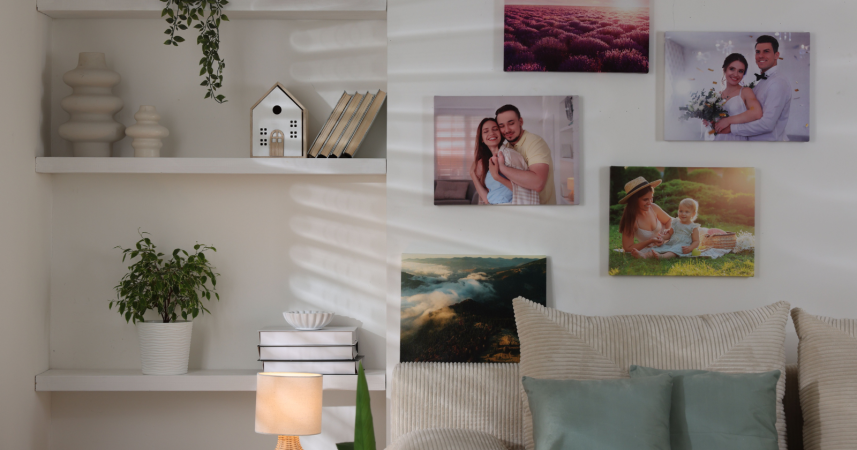
What we choose to hang on our walls quietly exposes the dreams, struggles, and unspoken truths of who we are.
Walk into someone’s home, and you’ll notice it: the walls tell stories.
Sometimes those stories are about style. Sometimes about wealth. And other times, they quietly reveal the class background of the people who live there.
I grew up in a working-to-lower-middle-class neighborhood, and I’ve noticed the patterns. The décor wasn’t random—it was cultural shorthand. Families expressed their values, aspirations, and even their struggles in what they chose to hang up.
Let’s get into the details.
1. Inspirational quotes in decorative frames
You know the ones. A faux-distressed wooden frame that says things like “Live, Laugh, Love” or “Family is Everything.”
These wall hangings are often bought at discount chains, not high-end art galleries. And while they’re meant to uplift, they also signal a certain affordability-driven approach to home décor.
Psychologists have noted that visual cues like these serve as identity markers. As Dr. Jonathan Haidt once wrote, “We don’t just decorate for beauty—we decorate to announce who we are.” For lower-middle-class families, those quotes aren’t just filler. They’re reminders of resilience and optimism in the face of limited resources.
I remember visiting a friend’s house as a teenager and seeing one above the TV that said, “When life gives you lemons, make lemonade.” At the time, I rolled my eyes. But looking back, I realize those words weren’t there for me—they were there for her mom, who worked double shifts and needed that visual pep talk every morning.
2. Graduation photos
This one is personal. I still remember my parents proudly hanging my high school graduation portrait in the center of our living room.
For many families, especially those in the lower-middle class, education is the ticket to a better life. A graduation photo isn’t just a snapshot—it’s a declaration: We did it. One step closer to upward mobility.
Unlike wealthier families, who might tuck graduation photos into albums or private offices, here they’re front and center. The wall becomes a stage where milestones are celebrated openly.
And it doesn’t stop at high school or college. I’ve seen families proudly frame GED certificates or even preschool “graduation” photos with tiny caps and gowns. To some, it might look excessive. But to families striving to move forward, every educational step is worth showcasing.
As researcher Annette Lareau noted in her work on class and child-rearing, “Working-class and lower-middle-class families highlight visible accomplishments as a form of cultural capital.” In other words, those photos aren’t just decoration. They’re proof of progress.
3. Religious icons
Have you ever walked into a home and immediately spotted a cross, a framed Bible verse, or a picture of a saint?
Religious imagery often holds a permanent place on the walls of lower-middle-class families. It’s not just about faith—it’s about protection, hope, and a sense of stability when other parts of life feel uncertain.
When money feels tight, belief offers comfort. A framed Psalm or rosary beads hanging near the door become more than décor. They become armor against the unknown.
Sociologists explain this through the lens of existential insecurity theory: when economic and social security falter, people turn toward religion for comfort and meaning. Religious symbols serve as daily reminders that there's something dependable larger than our worries.
4. Family portraits taken at department stores
You know the classic: stiff poses, matching sweaters, sometimes awkward backdrops of forests or beaches.
Lower-middle-class families often invest in these sessions because they’re affordable, accessible, and still feel special. Walmart, JCPenney, and Sears portrait studios became cultural touchstones because they offered families a way to immortalize togetherness without breaking the bank.
I remember standing under the hot lights of one of those studios as a kid, itchy in my “fancy” outfit, while the photographer tried to coax out a smile. We hung those photos proudly, even though deep down we knew they looked a little staged.
And here’s the truth: those pictures mattered. They weren’t Instagram selfies or candid lifestyle shoots. They were symbols of unity, a physical manifestation of “we’re in this together.”
Families may not have had the money for luxury vacations or professional photojournalists, but they had one formal family photo that told the world, This is us.
5. Certificates and awards
Perfect attendance. Employee of the Month. A certificate from church youth group.
If you grew up in a lower-middle-class household, chances are you saw walls dotted with these framed achievements. They may not have been Pulitzer Prizes, but they mattered.
Psychologists explain that visible awards—like certificates and trophies—aren’t just court trophies; they're powerful tools of positive reinforcement. Research in educational psychology shows that recognizing effort—even in small ways—helps build confidence, perseverance, and a mindset that values growth over perfection.
I once saw a family kitchen where the walls were lined with laminated “Most Improved” and “Spelling Bee Participant” awards. Some might dismiss them as small. But in that home, they represented perseverance. They reminded everyone that progress—no matter how modest—is still progress.
This echoes what researcher Carol Dweck has written about growth mindset: “Effort is the path to mastery.” Framing those certificates is a way of saying, We see your effort. We value it.
6. Scenic posters or bargain art prints
Think sunsets over oceans, a wolf howling at the moon, or maybe a Van Gogh print bought at a clearance sale.
Art in lower-middle-class homes isn’t usually about originality or investment. It’s about aspiration. Families want their spaces to feel cultured and elevated, but they do it in a way that fits within a modest budget.
My aunt had a giant poster of the Eiffel Tower in her living room. She had never been to Paris and probably never would. But the image gave her space a sense of sophistication, a touch of the wider world beyond her small-town reality.
As noted by cultural critic Pierre Bourdieu, taste in art often mirrors class standing. And yes, while wealthier families might hang original paintings, others make do with affordable reproductions—still signaling refinement, but on a different scale.
7. Wedding photos
In many homes, a wedding portrait holds the place of honor—sometimes larger than life, framed in gold or silver-colored plastic, taking center stage above the couch.
The wedding photo isn’t just romantic. It’s symbolic. It shows commitment, stability, and a sense of arrival into adulthood. For many lower-middle-class families, the wedding day is one of the biggest formal occasions of their lives, so the photo becomes a permanent marker of success and belonging.
I’ve visited homes where the wedding portrait was decades old, faded from sunlight, but still displayed proudly. That tells you something about the weight of tradition. The picture wasn’t about flawless photography—it was about capturing the start of something they’d worked hard to build.
Even when marriages didn’t last, I’ve seen those photos linger on walls. Almost as if removing them would erase not just a relationship, but a whole era of meaning.
8. Calendars with scenic or branded themes
Last but not least: the humble wall calendar. Sometimes it’s a freebie from a local auto shop or bank. Other times, it’s one of those oversized scenic calendars from the dollar store.
Calendars do double duty. They’re functional—keeping track of appointments, shifts, and bills—and decorative, filling empty wall space cheaply.
Growing up, my family always had one in the kitchen, covered with handwritten notes and circled dates. It was a wall-sized planner before Google Calendar existed. And it told visitors, without saying a word, that our household ran on practicality.
I can still picture my mom circling payday in red marker. That calendar wasn’t just about remembering birthdays. It was about survival—keeping track of when the check would hit and when bills were due.
In wealthier homes, calendars were often tucked into drawers or replaced by digital planners. But in lower-middle-class homes, the calendar was public, a shared system of accountability.
Final thoughts
Walls are more than decoration—they’re a mirror. They reflect not just what a family can afford, but what they value, what they dream about, and what they want the world to see.
For lower-middle-class families, those walls often carry a mix of pride, faith, aspiration, and resourcefulness. Some might see it as cliché. I see it as storytelling.
So next time you step into someone’s home, pay attention to what’s hanging up. The walls may be whispering more than you realize.
If You Were a Healing Herb, Which Would You Be?
Each herb holds a unique kind of magic — soothing, awakening, grounding, or clarifying.
This 9-question quiz reveals the healing plant that mirrors your energy right now and what it says about your natural rhythm.
✨ Instant results. Deeply insightful.

Avery White
Formerly a financial analyst, Avery translates complex research into clear, informative narratives. Her evidence-based approach provides readers with reliable insights, presented with clarity and warmth. Outside of work, Avery enjoys trail running, gardening, and volunteering at local farmers’ markets.
More Articles by Avery