A 70-year-old woman stands alone with a flat tire for an hour after sending her son away, revealing a generation's devastating secret: they'd rather suffer in isolation than admit they need the very children they spent their lives nurturing.
I was at the hardware store last Saturday when I watched a woman about my age struggling to load a bag of mulch into her trunk. Her son, clearly her son, stood a few feet away with his hands half-raised, waiting. She shook her head without looking at him. He lowered his hands. She kept lifting.
I've done the same thing. Most of us have. And watching it happen from the outside, I realized I wasn't seeing stubbornness. I was seeing something closer to grief.
It's the quiet unraveling of an identity built over decades. One where being the helper, not the helped, defined almost everything.
When your worth was measured in what you gave
Think about the last time someone truly needed you. That feeling of purpose, of mattering, of having something essential to offer. For many in the boomer generation, this wasn't just an occasional experience. It was the architecture of daily life.
Research examining help-seeking behaviors found that older adults' reluctance to seek help is influenced by factors such as a desire to maintain independence, fear of losing control, and concerns about being a burden to others. But these clinical terms don't capture the raw emotion of watching yourself transform from the family problem-solver to someone who might need solving.
Growing up in the shadow of parents who survived the Depression, many boomers absorbed a particular gospel: you handle your own problems. You don't burden others. You're the one who shows up with casseroles, not the one who receives them. This wasn't just a preference. It became the very skeleton of selfhood.
The invisible contract of family roles
There's an unspoken agreement in families about who does what. Mom organizes holidays. Dad fixes things. Adult children receive wisdom, support, guidance. But what happens when arthritis makes holiday cooking impossible? When Dad can no longer safely climb a ladder?
Gina Radice-Vella, Psy.D., chief psychologist at Jersey Shore University Medical Center, observes: "It's not uncommon for a parent-adult child relationship to suffer when one person becomes stuck in their previous role within the relationship."
That word, stuck, carries a lot of weight. It suggests the problem isn't change itself but the inability to evolve with it. Though I'm not sure evolve is the right verb when what's being asked of you feels less like growth and more like subtraction.
I remember my neighbor Ellen, who taught fifth grade for 32 years. Every September, she transformed nervous ten-year-olds into confident learners. After retirement, when her daughter suggested she might enjoy being driven to her doctor's appointments instead of navigating city traffic, Ellen's response was swift: "I've been driving since before you were born." What her daughter heard was stubbornness. What Ellen felt was the ground shifting beneath her feet.
The mathematics of reciprocity
For generations, the equation was simple: parents give, children receive. Then children grow up, have their own children, and the cycle continues. But modern longevity has introduced a variable nobody planned for. Decades of life after the official "giving" years end.
Studies indicate that older adults often resist accepting help due to fears of losing independence and concerns about being perceived as a burden, which can lead to underutilization of available support services. But perhaps what's really being underutilized is the opportunity for connection that comes with allowing ourselves to need.
When we insist on maintaining the giver role past the point of comfort or even safety, are we protecting our children from burden, or are we protecting ourselves from a reality we're not ready to face?
Beyond the mythology of self-reliance
The American dream sold to the boomer generation came with fine print nobody read: self-reliance was supposed to be forever. The same generation that invented the term "helicopter parent" now finds themselves trying to fly solo with increasingly tired wings.
But here's where the mythology got it wrong. Humans have never been truly self-reliant. We've always existed in webs of mutual support. The pioneer woman praised for her independence was part of barn-raising communities and quilting circles. The self-made businessman had mentors, partners, and probably a spouse managing the entire domestic sphere.
What changed wasn't our need for each other but our willingness to acknowledge it.
The courage to be vulnerable
Sometimes the bravest thing isn't pushing through pain to maintain independence. It's admitting you need a hand. But when you've spent 50 years being the hand everyone else reaches for, this reversal can feel like a betrayal of everything you've built.
Research has found that older adults' reluctance to seek mental health support is linked to a background of stoicism and a general reluctance to take medications, with older adults feeling they should 'muscle through' depression and anxiety, viewing asking for help as weakness.
That phrase, "muscle through," reveals something. It suggests life is meant to be conquered through force of will rather than navigated with support. And I think that framing is wrong, frankly. Not because force of will has no place, but because it stops working long before we're ready to admit it does.
Rewriting the story of strength
Here's a thought worth sitting with: allowing your adult children to help you isn't taking from them. It's giving them something. The chance to express love through action, the same way you did for so many years. Teaching them, by example, that aging isn't about maintaining an impossible standard but about adapting with whatever grace you can find.
When my second husband finally accepted help with his computer problems instead of spending hours frustrated and alone, something shifted. Our weekly tech support sessions became opportunities for connection we'd never had when he was busy being invulnerable. He shared stories while I updated software. We laughed at his creative file naming systems. The help was just the vehicle. The destination was each other.
The gift of letting others give
Consider this: every time you refuse help, you deny someone else the satisfaction of being needed. That warm feeling you got from bringing soup to a sick friend, driving someone to an appointment, or helping with a house project. You're hoarding that feeling when you won't let others experience it through helping you.
Adult children often struggle with feeling useful to parents who seem to have everything under control. They want to reciprocate decades of care but find no opening. When you finally say yes to their offers, you're not just receiving help. You're validating their desire to contribute, to matter, to be part of the essential fabric of your life.
Finding identity beyond independence
Who are you if you're not the one everyone needs? This question haunts many boomers as they navigate the transition from caregiver to care receiver. But perhaps the question itself is flawed. Perhaps identity was never meant to be so rigid, so dependent on a single role.
You're still the person who raised children, built careers, sustained marriages, created communities. Needing help with groceries doesn't erase the thousands of meals you cooked. Accepting a ride doesn't negate the countless times you were the driver. Your worth isn't a bank account that depletes with each withdrawal. It's a story that continues to be written.
In one of my previous posts about finding purpose after retirement, I explored how identity can expand rather than shrink with age. The same principle might apply here, though I hold it more loosely than I used to. You may not be losing yourself by accepting help. You may be discovering something. Or you may simply be adjusting to a smaller version of the life you had. I'm honestly not sure which it is, and I suspect it varies by the day.
Final thoughts
The flat tire will eventually be changed, whether by you, AAA, or the adult child you finally allow to help. Whether that moment represents a reimagining of strength or just the first small concession in a longer series of them, I can't say.
I want to believe the reframing matters. That calling vulnerability a form of courage changes something real, and not just the language we use to soften what's actually happening. But I notice how badly I want to believe it, and that makes me suspicious of the belief itself.
Maybe the distinction between pride and identity loss is the thing we're meant to resolve. Or maybe it's a distinction we invent to keep from looking directly at what we're actually afraid of. The next time help is offered, before the automatic "I'm fine" escapes your lips, you could pause. I don't know what you'll find in the pause. Neither, I suspect, will you.
If You Were a Healing Herb, Which Would You Be?
Each herb holds a unique kind of magic — soothing, awakening, grounding, or clarifying.
This 9-question quiz reveals the healing plant that mirrors your energy right now and what it says about your natural rhythm.
✨ Instant results. Deeply insightful.
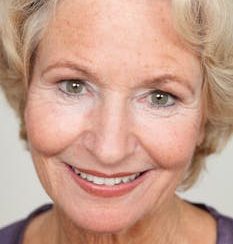
Marlene Martin
Marlene Martin is a retired high school English teacher who spent 38 years in the classroom before discovering plant-based eating in her late sixties. When her daughter first introduced her to the idea of removing animal products from her diet, Marlene was skeptical. But curiosity won out over habit, and what started as a reluctant experiment became a genuine transformation in how she thinks about food, health, and aging.
At VegOut, Marlene writes about nutrition, wellness, and the experience of embracing new ways of eating later in life. She brings a teacher’s instinct for clarity and patience to topics that can feel overwhelming, especially for readers who are just beginning to explore plant-based living. Her writing is informed by personal experience, careful research, and a belief that it is never too late to change.
Marlene lives in Portland, Oregon, where she spends her mornings reading research papers, her afternoons tending a modest vegetable garden, and her evenings knitting while listening to audiobooks. She has three adult children and two grandchildren who keep her honest about staying current.
More Articles by Marlene