The museum of economic anxiety hiding in your junk drawer.
Last week, I found myself defending a mason jar full of twist ties to my partner. "We might need them," I said, holding the jar like a relic. That's when I realized: my house is a shrine to the possibility of future scarcity, decorated with things I'll never use but can't throw away.
Growing up lower-middle-class leaves fingerprints on your brain that no amount of stability can fully erase. These items aren't hoarding—they're insurance policies against a poverty that might return. Every saved bag, every hoarded container whispers the same prayer: what if we need this when we can't afford to buy it?
1. Plastic bags inside plastic bags inside plastic bags
That bag hanging on your doorknob, pregnant with its plastic children. You've got hundreds, maybe thousands, breeding in corners of your house. Each one saved because "good bags" cost money at the store now.
Our parents saved them when plastic was fancy. Now we save them because five cents feels like theft. The day you throw them out is the day you'll need exactly 47 plastic bags for something. The universe guarantees it.
2. Butter containers that haven't held butter since 2003
Open the fridge: Country Crock containers full of last night's spaghetti, last week's soup, last month's mystery. Your Tupperware is actually butterware. Real Tupperware is for people who don't know Country Crock containers are free Tupperware.
These containers are economic creativity made visible—why buy storage when butter already comes in it? They stack perfectly, survive dishwashers, and remind you that your grandmother was right: everything has a second purpose if you're smart enough to see it.
3. Condiment packets from every takeout order since 2015
The drawer. You know the one. Soy sauce from 2018, ketchup from restaurants that closed, hot sauce from places you can't remember. A graveyard of sodium packets awaiting resurrection.
You paid for this food; these packets are part of the deal. Throwing them away feels like burning money, even though you've never once remembered to grab them when you actually need ketchup. They're loss aversion in miniature—proof that wealth isn't about having things but about not wasting anything.
4. Boxes from every electronic device you've ever owned
The iPhone box from three phones ago. The blender box in case you need to return it (you won't). TV boxes so large they have their own zip code in your basement. All saved because "it's the original packaging."
This comes from knowing that "like new" means "with box" on resale sites. Even for things you'll never sell, that box represents potential value, future money. The psychology of perceived value means the box makes the item worth more, even sitting in your closet forever.
5. Twist ties and rubber bands in quantities suggesting you're planning something
The jar of twist ties. The ball of rubber bands that's gained sentience. Bread clips arranged like you're cataloging them for science. You're not crafty. You have no plans for these things.
But they're useful. Theoretically. Someday. These collections represent infinite possibility—every saved tie is a future problem solved without spending money. It's the lower-middle-class confidence that ingenuity can replace income if you just save enough small things.
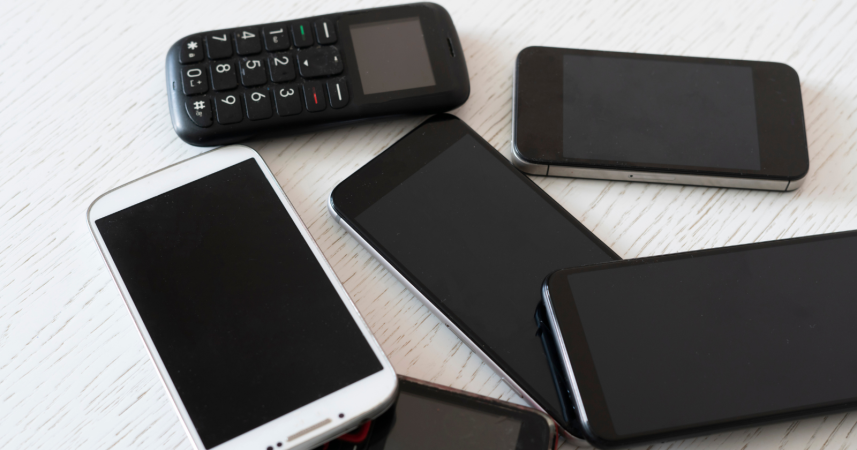
6. Old phones that "definitely still work"
The Nokia from 2008. The flip phone from college. The smartphone with the cracked screen. A museum of communication history in your junk drawer, each one "perfectly good" despite being functionally useless.
These aren't just phones—they're backup plans for catastrophe. What if your current phone breaks? What if you need a burner? What if society collapses but somehow cell towers survive? That Nokia could be currency in the apocalypse. You're basically a survivalist.
7. Instruction manuals for appliances you no longer own
The manual for the microwave you left in your last apartment. Instructions for a coffee maker that died in 2019. Warranties for companies that no longer exist. A filing system for ghosts.
You keep these because throwing away documentation feels irresponsible, even when it's useless. Instructions equal competence. Manuals mean you're an adult who keeps important papers. Never mind that everything's online now—paper feels permanent in a way PDFs never will.
8. Gift bags and tissue paper from every occasion
The gift bag economy in your hall closet. Birthday bags rewrapped in Christmas bags hiding inside wedding bags. Tissue paper smoothed and refolded like sacred texts. You haven't bought a gift bag since 2012.
This is reciprocal economics at its finest. Every saved bag is $4 not spent, multiplied by every future gift. Rich people buy new bags because they can afford to treat packaging as disposable. You know better—the bag is part of the gift.
9. Medicine cabinet archaeology
Expired Advil that probably still works. Antibiotics from that thing in 2017. Prescription bottles for conditions you no longer have. Your medicine cabinet is a pharmaceutical time capsule.
This hoarding stems from America's healthcare lottery system. That expired antibiotic might save you a $200 urgent care visit. Those pain pills from your wisdom teeth might handle the next emergency. When healthcare is luxury, expired medicine becomes insurance.
Final thoughts
These items aren't about the items. They're about scarcity mindset—when you've lived without, your brain permanently rewires against future lack.
My house of "just in case" is really a museum of fears: waste, want, the temporary nature of stability. Every saved bag insists poverty has a long memory. Every hoarded container knows good times don't last.
But here's the beauty: this isn't pathology—it's genius. Lower-middle-class households are masterclasses in resource maximization. We see value where others see trash. We find solutions in saved twist ties. We've made scarcity an art form.
So yes, I'll keep my mason jar of twist ties. Not because I need them, but because they remind me I come from people who could make something from nothing. That's not poverty. That's power.
Even if it does make my junk drawer impossible to close.
If You Were a Healing Herb, Which Would You Be?
Each herb holds a unique kind of magic — soothing, awakening, grounding, or clarifying.
This 9-question quiz reveals the healing plant that mirrors your energy right now and what it says about your natural rhythm.
✨ Instant results. Deeply insightful.

Avery White
Avery White is a writer and researcher who came to food and sustainability journalism through an unusual path. She spent a decade working as a financial analyst on Wall Street, where she learned to read systems, spot patterns, and think in terms of incentives and consequences. When she left finance, it was to apply those same analytical skills to something that mattered to her more deeply: the food system and its environmental impact.
At VegOut, Avery writes about the economics and politics of food, plant-based industry trends, and the intersection of personal health and systemic change. She brings a data-informed perspective to topics that are often discussed in purely emotional terms, while remaining deeply committed to the idea that how we eat is one of the most powerful levers individuals have for environmental impact.
Avery is based in Brooklyn, New York. Outside of writing, she reads voraciously across economics, environmental science, and behavioral psychology. She runs most mornings and considers a well-organized spreadsheet a thing of genuine beauty.
More Articles by Avery