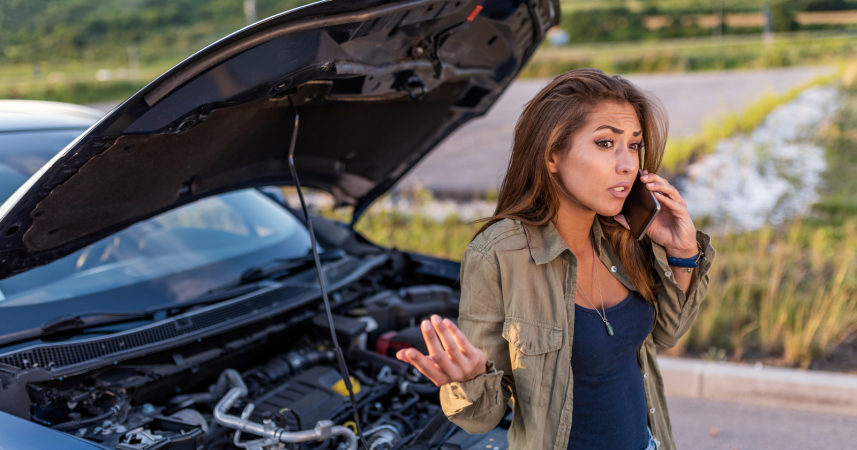
After years of observing breakdowns on the highway, I discovered that whether someone makes a frantic call to their boss or casually phones their regular mechanic reveals an entire hidden history of security or survival that most of us never realize we're broadcasting.

Add VegOut to your Google News feed. 
Imagine you're driving down the highway when you see a car pulled over on the shoulder, hood up, hazard lights blinking. What's your first thought?
If you're like me a few years ago, you might have assumed everyone would react the same way.
But after witnessing this exact scenario play out dozens of times during my years as a financial analyst, I started noticing patterns that fascinated me. The way people respond to a broken-down vehicle reveals so much about their upbringing and relationship with security.
I've spent years observing these differences, both professionally and personally. Working through the 2008 financial crisis showed me how fear drives decision-making in ways we rarely acknowledge.
And confronting my own privilege in my late thirties forced me to see how differently people navigate the world based on their early experiences with stability.
Here's what I've learned about the subtle but profound differences between those who grew up with a safety net and those who didn't.
The immediate emotional response tells you everything
Someone who grew up with security sees a broken-down car and feels inconvenienced. Someone who didn't sees potential catastrophe.
I remember calling AAA once while a colleague waited with me. She kept checking her phone, calculating how late she'd be to dinner. Meanwhile, the driver behind us was pacing, making frantic calls, his voice getting higher with each conversation.
Later, he told me this breakdown meant he might not make his shift, which meant losing hours, which meant choosing between gas and groceries next week.
That's when it clicked for me. For some, a breakdown is a scheduling problem. For others, it's the first domino in a chain that could upend everything.
The phone call reveals their network
Watch who someone calls first when their car breaks down, and you'll understand their support system.
People with safety nets call their partner, parent, or close friend. They're calling for comfort, advice, maybe a ride. People without that cushion?
They're calling their boss first, explaining why they might be late, protecting their job before anything else. Or they're calling that one mechanically-inclined acquaintance they barely know, hoping for free help.
During my student loan years, when every dollar was allocated months in advance, I understood this deeply. A surprise expense meant recalculating everything. The stress wasn't just about the immediate problem but about all the careful planning that would unravel.
Their relationship with mechanics shows their history
Here's something subtle but telling: how does someone talk about finding a mechanic?
Those with safety nets often say things like "my mechanic" or "the shop my family uses." They have established relationships, trusted professionals they've built over years.
Those without? They're Googling desperately, reading reviews, trying to figure out who won't overcharge them. They've learned the hard way that desperation makes you a target.
I've been on both sides of this. Growing up, we had "our guy" for everything. But during those lean years after my career change, I learned what it's like to sit in a waiting room, wondering if the quote you're about to receive will destroy your budget for the month.
The tow truck conversation is revealing
Listen to how someone talks to the tow truck driver. People with safety nets often barely engage, seeing it as a simple transaction. People without? They're building rapport, asking questions about costs, trying to establish trust quickly.
Why? Because when you can't afford to be taken advantage of, you become an expert at reading people. You learn to be charming, to make connections fast, because that human connection might be the difference between a fair price and exploitation.
Their solution strategy exposes their resources
Someone with a safety net thinks in terms of convenience: "Should I get this fixed today or wait until Monday when my regular shop opens?" Someone without thinks in terms of survival: "Can I drive this another week until payday? What's the absolute minimum repair that will keep it running?"
This difference in thinking extends beyond car trouble. It's about whether you can afford to solve problems properly or if you're always putting band-aids on bullet wounds.
The rental car question settles it
"Will you need a rental?" This simple question from the repair shop reveals everything.
For some, it's an obvious yes. For others, it's not even a consideration. They'll figure it out: borrow cars, take buses, walk, bike, anything but add another expense. I've watched people calculate in real-time whether Uber costs for a week would be cheaper than a rental, factoring in every single trip they'd need to make.
Watch their stress response patterns
People who grew up secure often get angry at the situation. They're frustrated by the inconvenience, maybe they vent about the car's reliability or the manufacturer. People who grew up without safety nets? They go quiet. They're not wasting energy on anger; they're calculating, problem-solving, figuring out how to survive this.
That silence isn't calm. It's the silence of someone who's learned that panicking is a luxury they can't afford.
The payment moment is the most telling
When it comes time to pay, watch closely. Someone with a safety net pulls out a credit card without thinking twice. Someone without might ask about payment plans, or you'll see them doing mental math, maybe making a phone call to check an account balance.
I still remember the first time I could pay for a major car repair without checking my balance first. The relief was overwhelming. That's when I truly understood that financial security isn't just about money; it's about the mental space to not constantly calculate.
Their timeline reveals their flexibility
Ask someone when they need their car back, and you'll learn about their entire life structure.
People with safety nets can be flexible. They have options, backup plans, the ability to work from home or take a day off. People without need their car back NOW. Not because they're impatient, but because without it, they can't work. Without work, they can't pay rent. The dominoes are always one tap away from falling.
Final thoughts
These differences aren't about character or capability. They're about the invisible scaffolding that some of us grew up with and others didn't. Recognizing these patterns helped me understand my own privilege in ways I'd never considered before.
Next time you see someone broken down on the roadside, remember that their response isn't just about a car problem. It's about every experience that shaped their relationship with crisis, security, and survival.
And maybe, understanding these differences can help us build a world where a broken-down car is just an inconvenience for everyone, not a potential catastrophe for some.