It shows you where you still feel unsafe, where you’re still bracing for loss, and where abundance hasn’t reached your nervous system yet.
There’s a drawer in every lower-middle-class home that tells a quiet story.
You know the one. It sticks a little when you pull it open.
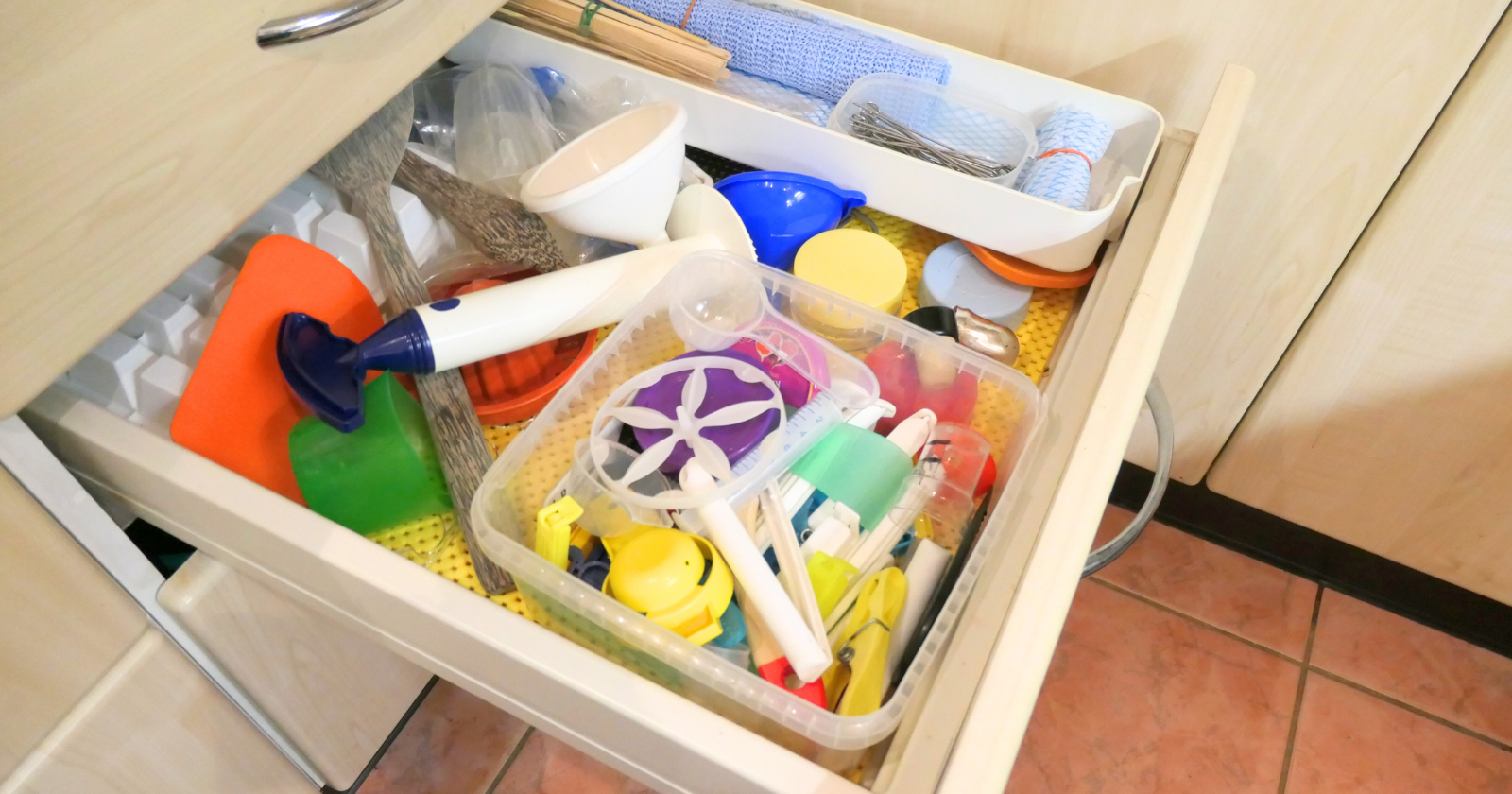
Inside are old rubber bands, mismatched batteries, a mystery remote, expired coupons, random screws, a phone charger for a device you no longer own, and maybe a few instruction manuals for things that broke years ago.
We joke about it.
We call it the junk drawer.
But I think that name lets us off the hook too easily.
Because that drawer is not about junk.
It is about class, scarcity, memory, and the invisible habits we inherit without ever choosing them.
I have lived in houses with that drawer.
I have lived in houses without it.
And the difference between those two experiences taught me more about money psychology than any spreadsheet ever did.
The drawer is not about clutter
Let me start here, because this is where most people go wrong.
This is not a minimalism argument.
This is not about tidying up or buying matching storage containers or shaming anyone for having stuff.
The drawer exists for a reason.
And that reason is not laziness or messiness.
It is emotional insurance.
When you grow up in a household where money is tight, but pride is intact, nothing gets thrown away until it is absolutely, undeniably useless.
Even then, it might hang around just in case.
Just in case you need it later.
Just in case it becomes useful again.
Just in case buying a replacement is harder than keeping this thing forever.
That drawer is a physical manifestation of a belief system that says waste is dangerous.
And once you understand that, it becomes harder to judge it and easier to see it for what it is.
A survival strategy.
What wealthy households do differently
Here is something I noticed early in my career, back when I was working as a financial analyst and spending time in homes that did not look like mine growing up.
Wealthy households also have clutter.
They are not magically immune to owning too much stuff.
But they do not store uncertainty in drawers.
They discard faster.
They replace without ceremony.
They do not keep broken things on the off chance they might someday matter.
If a charger stops working, it goes.
If a remote is missing its mate, it disappears.
If something requires effort to maintain its future usefulness, it quietly exits the home.
That is not because wealthy people are careless.
It is because their nervous systems are not trained to equate holding on with staying safe.
When replacement is easy, retention loses its emotional charge.
So what ends up in the drawer in lower-middle-class homes is often the leftovers of someone else’s abundance.
Items that were cheap enough to toss for one person but valuable enough to save for another.
That is not a moral failing.
It is a rational response to lived experience.
But it does have consequences.
The emotional weight of “just in case”
 Have you ever noticed how heavy that drawer feels, even though none of the items individually matter?
That weight is not physical.
It is cognitive.
Every object in that drawer represents an unresolved decision. A postponed choice. A maybe.
Maybe I will need this.
Maybe throwing this out would be a mistake.
Maybe wasting this says something bad about me.
Multiply that by a few dozen objects, and you get low-grade mental noise that never fully shuts off.
I see this all the time with money behaviors, too.
People who grew up with financial instability often struggle to let money flow, even when they objectively have enough.
They hoard cash, overresearch purchases, delay decisions, and keep subscriptions they no longer use because canceling feels risky.
The drawer is just the most visible version of that pattern.
It is not about the stuff. It is about the fear of future regret.
Scarcity teaches you to trust objects more than systems
One of the biggest psychological differences between lower middle class and wealthy upbringings is where trust lives.
In scarcity environments, you learn to trust objects.
You trust the drawer because it is tangible.
You can see it. You can open it. It will not disappear overnight.
Systems, on the other hand, feel unreliable.
Jobs end. Bills increase. Promises get broken.
So you hedge your bets with things.
This is why people keep old cables, extra jars, worn-out tools, and half-working appliances.
Objects feel like allies against uncertainty.
Wealthy environments teach the opposite lesson.
They teach you to trust systems. Income streams. Networks. Access.
When you trust systems, you do not need objects to carry emotional security.
You can let them go because you believe replacements will be available when needed.
Neither approach is inherently wrong.
But one becomes limiting when your external reality changes and your internal habits do not catch up.
Why the drawer follows you even when your income changes
Here is the part that surprises people.
You can out earn your childhood. You can move to a nicer place. You can shop at different stores.
And that drawer still shows up.
I have seen it in apartments with granite countertops and open shelving.
I have felt the urge myself, long after my financial situation stabilized.
Because the drawer is not about money.
It is about memory.
Your nervous system remembers what it felt like to need something and not have it.
It remembers the embarrassment of asking.
The anxiety of waiting.
The relief of finding exactly the right thing at the bottom of a pile.
Those memories do not disappear just because your bank balance improves.
So the drawer becomes a quiet attempt to stay prepared for a version of life you no longer live but do not fully trust will stay gone.
When practicality turns into identity
There is a subtle shift that happens when keeping things becomes part of how you see yourself.
You are not just someone who saves stuff.
You are someone who is resourceful. Responsible. Not wasteful.
Those are good traits.
But they can harden into an identity that resists change.
I have worked with people who felt deep guilt at the idea of throwing away something they once paid for, even if keeping it cost them time, space, or peace of mind.
The object becomes proof of virtue.
And letting it go feels like a moral failure rather than a neutral choice.
This is where the drawer stops being practical and start being psychological baggage.
The cost we rarely talk about
 Keeping everything has a cost, even when nothing is expensive.
It costs attention. It costs time. It costs energy.
Every time you open that drawer and dig around, you are spending mental bandwidth.
Every time you reorganize it instead of emptying it, you are reinforcing the belief that holding on is safer than releasing.
On a larger scale, this habit can spill into relationships, careers, and self-image.
People stay in situations that no longer serve them because letting go feels reckless.
They keep emotional junk for the same reason they keep physical junk.
What if I need this later.
What if I regret throwing it away.
What if this is as good as it gets.
The drawer becomes a metaphor for a life lived defensively instead of deliberately.
Letting go without disrespecting your past
I want to be very clear about something.
Clearing the drawer is not about rejecting where you came from.
It is about updating your strategies.
The habits that kept you safe in one season of life are not automatically wrong just because they are no longer necessary.
They deserve respect, not shame.
But respect does not mean eternal loyalty.
One exercise I often suggest is this.
Take everything out of the drawer. Lay it on the counter. Look at it without judgment.
Ask yourself which items genuinely serve your current life, not a hypothetical future version of you.
Not the you who might one day need a random adapter.
The you who exists right now.
Then thank the rest. Seriously.
Acknowledge what those items represented.
Security. Preparedness. Carefulness.
And let them go.
This is not about minimalism.
It is about aligning your environment with your present reality.
Building trust in something other than stuff
Ultimately, the drawer fades when trust shifts.
When you begin to trust yourself more than objects.
When you trust your ability to solve problems as they arise rather than pre-storing solutions in advance.
When you trust that needing something later does not mean you have failed now.
This is a slow process. It does not happen because you read one article or clean one drawer.
It happens when you repeatedly show yourself that you can handle inconvenience without catastrophe.
That you can replace instead of retain.
That you can choose ease without becoming careless.
The drawer as a quiet teacher
I no longer see that drawer as something to eliminate at all costs.
I see it as a diagnostic tool.
It shows you where you still feel unsafe.
Where you are still bracing for loss.
Where abundance has not yet reached your nervous system.
And that is useful information.
You do not need to become someone who throws everything away.
You just need to become someone who chooses consciously instead of reflexively.
The goal is not to live like wealthy people.
The goal is to stop living like you are one small mistake away from collapse if that is no longer true.
So the next time you open that drawer, pause.
Not to judge it. Not to organize it.
But to ask yourself a simple question.
What am I really holding onto here?
The answer has very little to do with batteries and everything to do with how safe you feel in your own life.
What’s Your Plant-Powered Archetype?
Ever wonder what your everyday habits say about your deeper purpose—and how they ripple out to impact the planet?
This 90-second quiz reveals the plant-powered role you’re here to play, and the tiny shift that makes it even more powerful.
12 fun questions. Instant results. Surprisingly accurate.