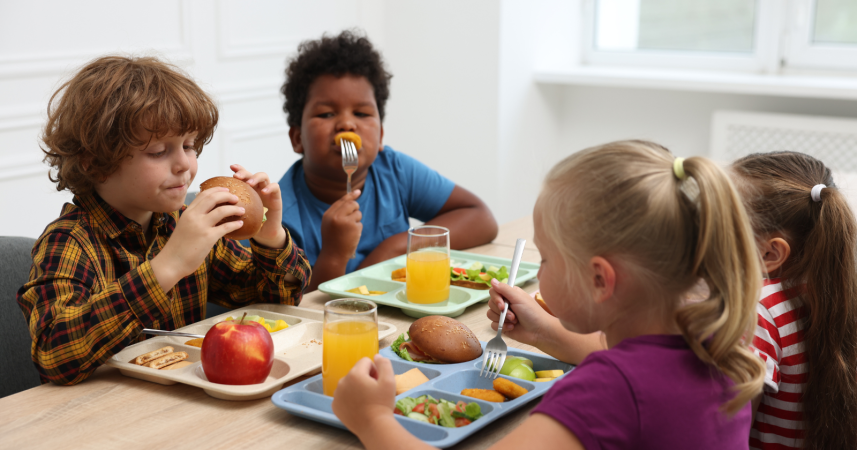
Some kids found each other at lunch without ever talking about why. We didn’t discuss money or hunger, but we understood each other through silence, small gestures, and shared restraint. That table taught us empathy long before we had words for it.
Some memories don’t feel important when they’re happening.
They don’t announce themselves as formative or meaningful, they just repeat quietly until they become part of your nervous system.
For me, one of those memories is the lunch table we always ended up at. It sat slightly off to the side, close enough to be in the room but far enough to be ignored.
No one ever said this was where we belonged. We simply arrived there each day without discussion, as if the choice had already been made for us.
At the time, I thought it was random. Looking back now, I can see how intentional it really was.
That table wasn’t just a place to eat. It was a place where we learned how to read each other without language.
We didn’t talk about money, but money was always present.
It hovered in the background, shaping our behavior, our silence, and our understanding of one another.
Here are eight things we all knew, even though none of us ever said them out loud.
1) Hunger wasn’t something you explained or announced
Hunger showed up in many forms at that table, and we recognized all of them immediately.
Sometimes it looked like eating very fast, sometimes like saving half a sandwich for later, sometimes like pretending not to be hungry at all.
No one commented on how much anyone ate. No one asked if someone wanted more unless the offer could be framed casually.
Food was shared without ceremony or attention. A bag of chips might slide across the table as if it were no big deal, even when it clearly was.
We understood that hunger came bundled with embarrassment. Calling attention to it would have felt like stripping someone of their dignity.
Even now, I notice how sensitive I am to this dynamic in adult spaces. I still believe that protecting someone’s pride matters more than satisfying curiosity.
2) Money shaped experiences long before we had language for it
We didn’t know the words for financial stress, but we felt it in our bodies.
It showed up the moment a teacher mentioned a fee, a fundraiser, or a permission slip that needed money attached.
There was always a subtle shift at our table when those topics came up.
A pause in conversation, a look exchanged, a shared understanding that something had just changed.
We knew which events would quietly disappear from our lives. We knew why someone suddenly “forgot” a form or decided they didn’t feel like going.
No explanations were necessary. We understood that money conversations didn’t just involve numbers, they involved tension at home.
That awareness followed me into adulthood. Even after years working with spreadsheets and budgets, I’ve never been able to see numbers as neutral.
3) Repetition wasn’t laziness, it was necessity
Clothes repeated themselves often at our table, and no one made a spectacle of it. We noticed, but we never commented.
We understood that having fewer options meant wearing the same things more often. It wasn’t about effort or care, it was about logistics.
If something was clean and functional, it had done its job. Fashion trends felt irrelevant when durability mattered more.
That shared understanding removed a layer of social pressure. It allowed us to show up without constantly scanning for judgment.
As an adult, I still gravitate toward simplicity. That preference was shaped long before I had the words to explain it.
4) Silence could be an act of kindness
There were questions we learned not to ask. Not because we didn’t care, but because caring sometimes meant restraint.
Why someone never invited friends over. Why their stories about weekends were vague or nonexistent.
Silence wasn’t avoidance. It was a way of saying, I see you, and I won’t put you on the spot.
We learned that curiosity can feel invasive when someone already feels exposed. Sometimes the most compassionate response is to let a story remain unfinished.
That lesson has stayed with me. Even now, I try to let people offer information rather than pulling it from them.
5) Blending in was a form of protection
Standing out felt risky when you didn’t have much margin. Attention could lead to questions, and questions could lead to explanations you weren’t ready to give.
We became skilled at being present without being noticeable. We participated just enough to belong, but not enough to draw scrutiny.
This wasn’t about insecurity. It was about accurately reading the environment.
Even today, I sometimes catch myself doing this automatically. Then I pause and remind myself that I no longer need to stay small to stay safe.
6) Generosity had to look accidental
Kindness at our table was subtle by design. Direct offers could feel humiliating, so generosity learned to wear disguises.
Someone would say they were full when they clearly weren’t. Someone else would leave food untouched on purpose.
The language mattered. “You can have it if you want” landed differently than “Do you need this.”
That understanding shaped how I give as an adult. I believe generosity should never make the receiver feel smaller.
True kindness protects dignity first. Everything else is secondary.
7) Emotional reactions carried hidden context
We noticed when someone snapped over something minor. A joke taken the wrong way, a comment that landed too hard, a seat taken without asking.
Instead of escalating, we often let it go. We understood that frustration didn’t always belong to the moment it appeared in.
Stress leaks out sideways when it has nowhere else to go. Even as kids, we sensed that.
That emotional literacy has stayed with me. Behavior almost always has a backstory.
8) Resilience wasn’t innate, it was learned early
People like to say kids are resilient, as if resilience is a personality trait. What they often miss is that resilience is a response to pressure.
We adapted because adaptation was required. We learned how to stretch resources, manage disappointment, and keep going quietly.
That lunch table wasn’t just where we ate. It was where we practiced navigating a world that didn’t always meet us halfway.
Resilience doesn’t mean nothing hurt. It means you learned how to move forward while carrying it.
Final thoughts
I don’t remember every face at that table, but I remember the feeling of it clearly. The relief of not having to explain yourself.
If you were one of those kids, you might recognize parts of yourself here. Perhaps you’re observant, resourceful, or deeply attuned to other people’s needs.
Those traits didn’t come from nowhere. They were shaped in quiet moments that required awareness long before adulthood.
I wouldn’t wish that kind of early understanding on any child. But I do honor what it created.
Some of the deepest connections and most lasting lessons are formed in silence, shared across a table no one else wanted.