That seemingly worthless object you'd rescue from your parents' burning house—maybe a coffee-stained notebook, a chipped serving dish, or an ugly clay ashtray you made in second grade—holds the key to understanding your deepest fears about losing connection, belonging, and the last evidence that you were once loved without having to earn it.
Picture this: Your parents' house is on fire. You have thirty seconds to grab one thing that has no monetary value. What do you take?
Not the family jewelry. Not the vintage coins. Not even the old photos that could be digitized anyway. I'm talking about that one seemingly worthless object that your gut tells you to save.
For me, it was my dad's old coffee-stained engineering notebook from 1978. Half the pages were blank, the other half filled with calculations I'll never understand. When I helped my parents downsize last year, I could have tossed it without a second thought. Instead, it sits in my desk drawer, and I'd grab it before anything else I own.
That choice taught me something profound about what I'm really afraid of losing. And yours will too.
The object you'd save isn't random. It's a window into your deepest fears about loss, connection, and what truly matters to you. Here are seven things that seemingly worthless item reveals about what you're most terrified of losing forever.
1) Your connection to who you were before the world told you who to be
That ratty concert t-shirt from your mom's college days? The one she wore to see a band you've never heard of? You're not saving fabric. You're saving proof that your parents were once young, uncertain, and figuring things out just like you are now.
When I found my mother's teaching certificate from her first job, complete with a photo of her at 22, I saw someone who hadn't yet learned to worry about mortgage rates or college funds. She was just a young woman excited about her classroom. That certificate reminds me that before my parents became the people who expressed love through concern about financial security, they were dreamers too.
We're afraid of losing the reminder that our parents were whole people with desires, fears, and adventures that had nothing to do with us. Because if we lose that, we lose permission to be more than what others expect of us too.
2) The last traces of unconditional acceptance
You know that broken clay ashtray you made in second grade that your mom still keeps on her dresser? She doesn't smoke. Never has. But there it sits, ugly and useless, displayed like a Smithsonian artifact.
These objects represent the last place on earth where we were celebrated for simply trying. No performance review. No comparison to others. Just pure, unfiltered pride in our existence and effort.
I found boxes of my old report cards when helping my parents move, and while they showed my lifelong perfectionism, what struck me more were the handwritten notes my dad had added in the margins: "Great job!" next to a B+, "So proud!" next to average test scores. We're terrified of losing evidence that once upon a time, we were enough just as we were.
3) The blueprint for love you didn't know you were following
That wooden spoon your mom used to make Sunday sauce. Your dad's old toolbox with the squeaky hinge. These aren't just objects. They're instruction manuals for how love looks, sounds, and acts.
My father's engineering notebook isn't valuable because of the calculations inside. It's valuable because I watched him hunched over similar notebooks my entire childhood, working late to provide for us. Every coffee stain represents a morning he got up early to solve problems that would pay for my education.
When we save these items, we're admitting we're afraid of losing the template for how to show up for the people we love. Because deep down, we know we're still following those blueprints, whether we realize it or not.
4) Proof that imperfect things can be treasured
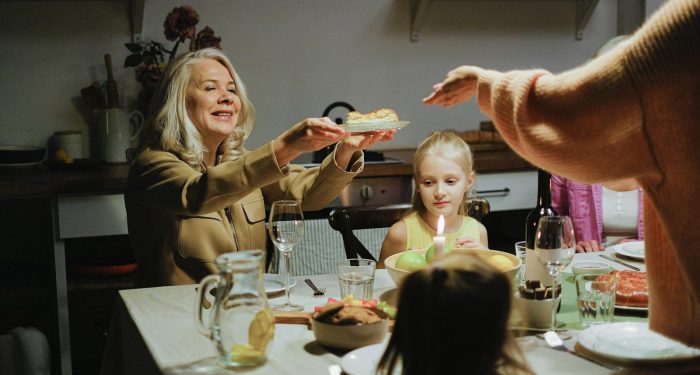
That chipped serving dish that comes out every holiday. The Christmas ornament held together with glue and prayer. Your parents kept them not despite their flaws, but almost because of them.
In our Instagram-perfect world, these objects are radical. They whisper that things don't have to be flawless to be cherished. That broken doesn't mean worthless. That history and heart matter more than appearance.
We save them because we're afraid of losing permission to be imperfect ourselves. In a world that demands we constantly upgrade, optimize, and improve, that faded velvet pillow on your mom's couch says it's okay to just exist, worn edges and all.
5) The evidence of being witnessed
Found an old VHS tape of your terrible middle school band concert? A program from your one-line performance in the school play? These aren't achievements worth noting, yet your parents saved them like historical documents.
This is about more than pride. It's about being seen. Really seen. Every kept program, every saved drawing, every preserved participation trophy is proof that someone was paying attention to your life as it unfolded.
We fear losing these because we fear losing evidence that our small moments mattered to someone. That someone bore witness to our becoming, even when that becoming was awkward, uncertain, or unremarkable.
6) The anchor to a time before everything accelerated
Your dad's old radio that only gets three stations. Your mom's address book with numbers crossed out and rewritten. These objects come from a time when things moved slower, lasted longer, and didn't demand constant updates.
When my father had his health scare, I realized how much I craved that slower pace. His old notebook represents a time when problems were solved with pencil and paper, when thinking happened without notifications, when work had clearer boundaries.
We're afraid of losing these tokens of a slower world because we're afraid we've already lost the ability to slow down ourselves. They're proof that life doesn't have to move at breakneck speed, even if we can't figure out how to pump the brakes.
7) The last link to your original tribe
Here's what that worthless object really represents: your first and most fundamental belonging. Before you found your people, chose your family, or built your community, you belonged somewhere simply by being born.
That needlepoint pillow with the cheesy saying, that ancient coffee mug with the bad joke, that garage sale painting your parents inexplicably love. These objects are flags of your original tribe. They're inside jokes you didn't have to earn your way into.
We save them because we're terrified of becoming untethered, of floating through life without that primal connection to where we started. Even if we've traveled far from home, physically or philosophically, these objects are breadcrumbs back to our beginning.
Final thoughts
So what did you choose? What's the worthless thing you'd save?
Whatever it is, honor what it's telling you. If it reveals a fear of losing connection, reach out to your parents today. If it shows a longing for a slower pace, maybe it's time to create some boundaries with technology. If it represents unconditional acceptance, perhaps it's time to offer that same grace to yourself.
That engineering notebook in my drawer isn't just paper and coffee stains. It's my reminder that love looks like dedication, that problems can be solved with patience, and that some things are worth keeping not for what they're worth, but for what they witness.
Your saved object isn't worthless at all. It's priceless. It's just that its value can't be measured in dollars. Only in the deep, aching, beautiful fear of losing what can never be replaced: the proof that you were loved, that you belonged, and that your story started somewhere specific, with people who kept ugly ashtrays and broken ornaments because they were yours.