The silence is information; it’s your mind telling you something important or it’s the part of you that’s been waiting for permission.
The question landed softly: “So, when did you last do something just for fun?”
I froze.
Just imagine me sitting there as I looked at the rug, at the plant in the corner, and anywhere but at the part of me that clearly knew the answer and also did not want to say it out loud.
At first I thought I was simply searching my calendar, like fun was an appointment I had misplaced, then three, full minutes passed.
Three minutes is a painfully long time to be quiet with someone whose job is to notice what your quiet means.
My face got warm, my chest felt tight, and I had this urge to laugh because that’s what I do when something hits too close.
Eventually I said, “I don’t know,” and the worst part was that I meant it.
The three minutes that told the truth
If you’ve ever stared at a question and felt your brain turn into a blank wall, you know that moment is about avoidance.
I could tell you what I ate yesterday, the last time I followed up on an email, how many hours I slept, and how many steps I got and how many little tasks I squeezed into the cracks of my day.
But “fun” felt vague, untrackable, and suspiciously unproductive.
Also, and this is the part that took me a while to admit, I didn’t fully trust it.
Fun can feel like a trap when you’ve been running your life on performance.
If I’m being honest, I failed to recognize it as something I was allowed to prioritize.
So, let me ask you a question that might make you squirm a little too: If someone asked you when you last did something purely for enjoyment, with no outcome attached, how fast could you answer?
When “busy” becomes a personality
I used to work as a financial analyst, and that job trained my brain to treat everything like a system.
Inputs, outputs, efficiency, forecasting; those skills are useful, until you accidentally apply them to your entire existence.
Somewhere along the way, I started managing myself like a quarterly report.
If I wasn’t improving something, I felt like I was slipping; if I wasn’t productive, I felt oddly guilty, like I’d gotten away with something.
Maybe you know this feeling: The one where rest is only allowed if you’ve earned it, and even then you keep checking the invisible scoreboard in your head.
The cultural messaging doesn’t help as we get rewarded for being “on it,” and we get praised for being the person who never stops.
However, there’s a quiet cost to all that capability.
When you don’t play, your life shrinks to responsibilities; when you don’t have fun, your days start to feel like they’re made of the same gray material, just cut into different shapes.
Then, one day, someone asks you a simple question in a calm voice, and you realize your calendar is full but your spirit is bored out of its mind.
The sneaky ways we trade play for control
Here’s what surprised me: I felt like I was being responsible.
I wasn’t skipping joy on purpose, and I was just constantly choosing the thing that felt safer:
- Cleaning the kitchen instead of painting.
- Answering messages instead of reading a novel.
- Planning the weekend instead of wandering through it.
Even my “breaks” were suspiciously structured.
A podcast while I walk, a YouTube video while I fold laundry, and a scroll through social media that somehow leaves me more tired than before.
None of those things are evil, but sometimes we use busyness to avoid being with ourselves and use control as a substitute for aliveness.
There are also time when we mistake numbness for normal, because numbness doesn’t interrupt the schedule.
When my therapist asked about fun, what she was really asking was something like this: When was the last time you let yourself be a human and not a project?
Fun is a nutrient
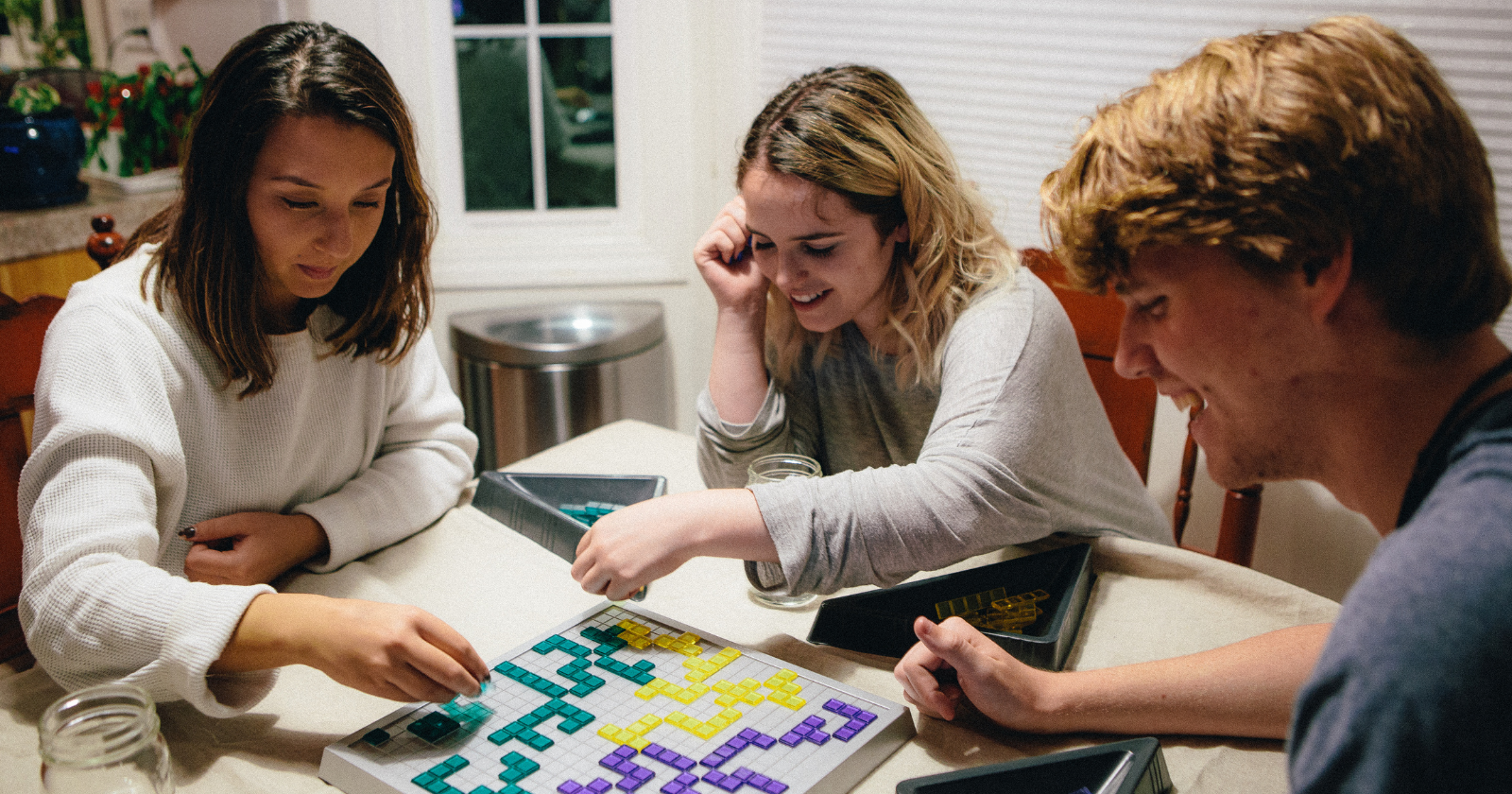
I used to think fun was a luxury, something you sprinkle on top of life when you’ve handled the important stuff.
The more I sat with that three-minute silence, however, the more I realized I had it backwards.
Fun is part of the meal.
It’s one of the ways your nervous system learns that it’s safe, how your brain practices flexibility, and how you remember that you are more than what you produce.
You don’t need to be a psychologist to notice what happens when you never play.
Small inconveniences feel huge because you haven’t had any real emotional release.
You start living like you’re bracing for impact, even on days when nothing is actually wrong.
Then, when you finally do have free time, you don’t know what to do with it.
It feels too open, too quiet, and too big.
That’s a system that’s been trained to equate “not working” with “not worthy.”
Fun, in that context, can feel almost threatening.
Which is why rebuilding it is about giving yourself permission to be spacious again.
How I rebuilt my fun muscle without forcing it
After that therapy session, I didn’t go home and suddenly become a whimsical person who frolics through fields.
I went home and did what I usually do: I made a plan, that’s my default, and I plan things when I’m uncomfortable.
This time, though, the plan was “get curious.”
I started by lowering the bar and I stopped looking for the perfect fun activity, the one that would justify the time.
Instead, I asked what was the smallest thing that feels even slightly lighter?
For me, it was sensory stuff.
A trail run with no pace goal, just moving because it feels good to move.
Getting dirt under my nails in the garden and letting the plants tell me what they need instead of trying to control everything.
Volunteering at a local farmers’ market and actually chatting with people because it makes the world feel more human.
Also, since I’m vegan, food can be a weirdly effective door back into play.
I started choosing one unfamiliar fruit or vegetable at the market and building a meal around it with no pressure for it to be amazing.
The point was experimentation, which is basically play with a shopping bag.
I also noticed something important: Fun didn’t always feel like fun at first.
At first it felt like restlessness, like, shouldn’t I be doing something useful?
That’s when I realized I was lacking tolerance for unstructured enjoyment.
So, I practiced.
I’d set aside fifteen minutes and do something with no outcome: Sketch badly, dance to one song, read a few pages of something purely entertaining, and water my plants slowly instead of rushing.
Fifteen minutes is small enough that my inner critic doesn’t panic.
Once I could handle fifteen, I could handle a little more.
What to do when fun feels unsafe or pointless
This matters, because for some of us, the issue isn’t just busyness.
Sometimes fun feels inaccessible because you’re burned out, depressed, grieving, or you’ve spent years in survival mode and play feels like a foreign language.
If that’s you, I want to say this clearly: You are not broken for struggling to enjoy things.
There’s even a word for that flattened feeling of pleasure: Anhedonia.
It can show up with depression, chronic stress, trauma, and plain old exhaustion.
In those seasons, the advice to “just have more fun” can feel insulting.
Instead of asking yourself to feel joy on demand, try a different angle: Find feels 2% better.
Maybe that’s sitting in the sun for a few minutes, taking a slow shower, or listening to music that used to matter to you, even if it doesn’t hit the same yet.
If you notice that fun brings up anxiety, shame, or a sense of danger, that’s worth exploring with support.
Sometimes our brains learned that letting our guard down wasn’t safe.
In that case, play is healing work; gentle, real, human work.
A question to take into your own three minutes
A few weeks after that session, my therapist asked again: “So, what have you done for fun lately?”
This time I didn’t freeze:
- I told her about a trail run where I stopped to look at a ridiculous mushroom because it looked like something from a fantasy movie.
- I told her about making a messy vegan dessert that didn’t set properly but still tasted like comfort.
- I told her about laughing with a stranger at the farmers’ market over a pile of misshapen tomatoes that were somehow perfect.
None of it was impressive, but that’s what made it real.
It says, “I’m here. I’m alive. I’m not just getting through the day.”
If you're in the same situation as I was, you can always bring it back with a willingness to let your life be more than a checklist, even if it starts with three minutes of awkward silence and a single honest sentence.