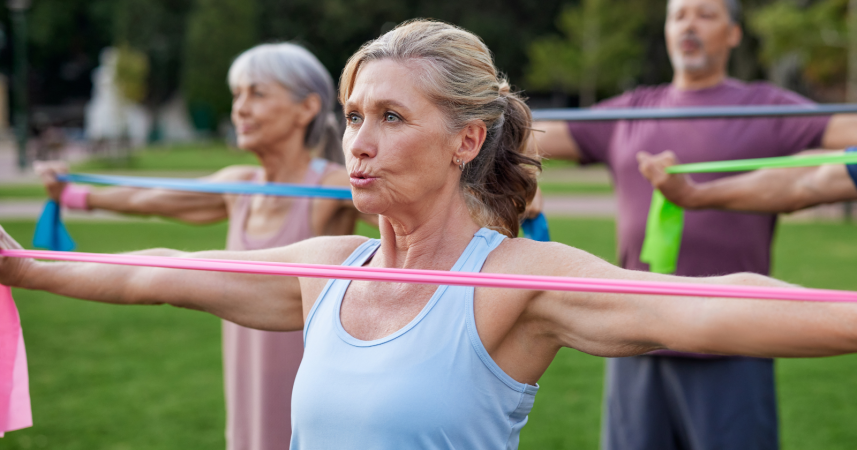
Add not just years to your life, but life to your years.

Add VegOut to your Google News feed. 
We all want to grow older without feeling old, right?
When doctors talk about “functional longevity,” they’re really asking a simple question: can your body still do the everyday moves that keep you independent and adventurous?
Research keeps pointing to a handful of surprisingly simple tasks that predict who tends to live longer and better.
I like these because they meet you where you are.
Below are six tasks I want you to try or train toward; if you can still do these at 65, you’ve probably stacked the deck in your favor for the decade ahead:
1) Stand on one leg for 10 seconds
Can you hold a single-leg stance for a clean 10 count without your foot touching down or your arms windmilling?
Balance quietly fades in our 50s, and poor balance raises the risk of falls, fractures, and cascades of health issues.
In a large study of adults ages 51 to 75, those who could not hold a 10-second one-leg stance had nearly double the risk of death over the next decade compared to those who could.
That’s a big signal from a tiny test.
I practice this while brushing my teeth.
Some mornings are wobbly, some are rock solid.
Progress sneaks up on you when you tuck balance into daily habits.
Training tip: Barefoot balance near a counter for safety, heel-to-toe walking, and yoga tree pose.
If 10 seconds feels far away, start with three and earn your way up.
2) Sit down on the floor and stand back up without using your hands
This “sit-rise” test looks playful, but it captures strength, mobility, and coordination in one move.
In research tracking more than 2,000 adults for over a decade, poorer sit-rise scores were linked to markedly higher mortality risk, even after adjusting for age and other factors.
Each point higher on the 10-point score corresponded to substantially better survival.
Translation: The easier you can get off the floor, the more resilient your system tends to be.
I learned this one after a muddy trail run when I had to pop up from tying a shoe… and realized my hips had opinions.
Ten minutes a week of hip mobility and deep squats turned that around.
Training tip: Practice from a yoga mat.
Lower with control and stand with as little assistance as possible.
3) Walk 400 meters without stopping at a brisk, comfortable pace
Could you circle a standard track once without resting? The 400-meter walk test is a powerful lens on endurance and mobility.
Difficulty completing it, or needing to stop, predicts later disability and worse health outcomes in older adults.
Even short, measured gait speed over a few meters is telling.
Every 0.1 m/s slower walking speed is associated with higher mortality risk in large analyses.
Faster, steady walkers generally live longer.
Simple? Yes, but deceptively rich.
Pace reflects heart health, leg strength, balance, and confidence.
Training tip: Time your lap and repeat it weekly and nudge the pace.
If a track isn’t available, measure a quarter mile in your neighborhood.
4) Climb two flights of stairs without stopping
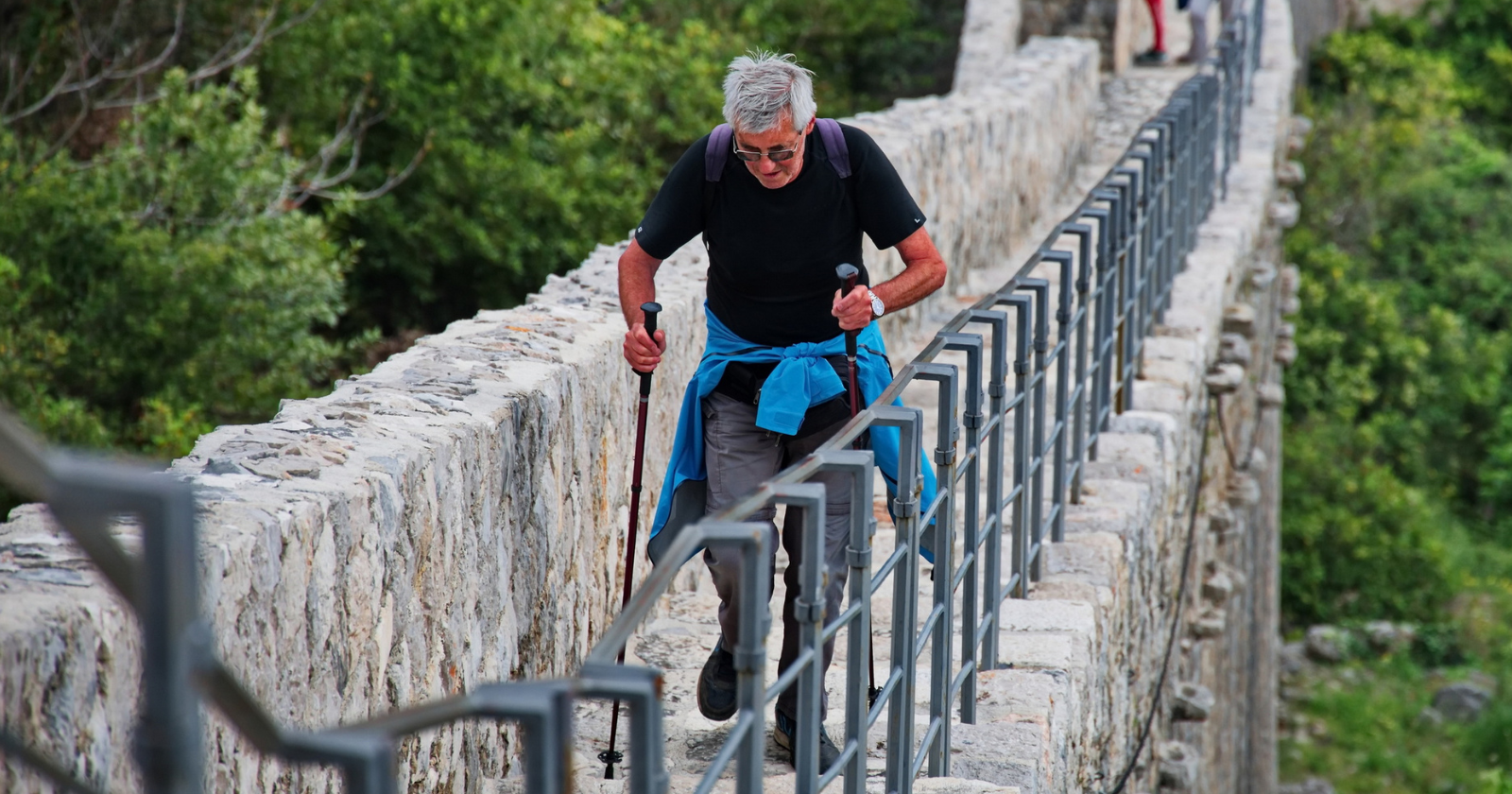
Stairs are free cardio, and they also mirror real life.
Being able to climb two flights steadily, without chest pain, dizziness, or the need to pause, correlates with stronger cardiovascular fitness and lower disease risk in big population cohorts.
In UK Biobank data, people who routinely climbed more flights had significantly lower risk of atherosclerotic cardiovascular disease over 12.5 years of follow-up.
Your heart loves this simple challenge.
I volunteer at a farmers’ market that lives on a hill; early on, lugging boxes up the back stairs felt like an event.
Curious what changed it? Tiny, consistent “stair snacks” during the week.
No heroics.
Training tip: Start with one flight, hands light on the rail.
Add a second as breathing and leg burn become manageable.
5) Stand up from a chair 5 times in under about 12 seconds
The five-times sit-to-stand test from a standard chair measures leg power and functional strength.
Slower times point to higher risk of frailty, falls, and poorer outcomes, while better times are associated with more robust aging.
It is quick, safe to do at home, and responds beautifully to practice.
Set a timer, cross your arms over your chest, and stand up and sit down five times, as fast as you can with control.
Feel your quads and glutes do their job.
Training tip: Repeat for two or three sets, resting between, then add resistance with a weighted backpack when 12 seconds becomes easy.
6) Squeeze with purpose: Maintain solid handgrip strength
Grip strength is an overall vitality marker that tracks with muscle mass, nerve function, and even cardiovascular health.
Large studies show that lower grip is linked to higher all-cause and disease-specific mortality, independent of other risk factors.
Stronger hands often signal a stronger system.
You can test this with a dynamometer, but you can also use real-world clues: Heavy grocery bags, farmer carries, and opening a stubborn bottle without recruiting the nearest neighbor.
Training tip: Carry weights for distance, do hangs from a sturdy bar, and use a towel-wring drill.
Your forearms will sing.
The deeper “why”
These tasks don’t prolong life by magic.
They are proxies for systems working together: heart, lungs, muscles, nerves, and the brain.
Better performance usually means better cardiorespiratory fitness, stronger legs, steadier reflexes, and more daily activity.
Across studies, those qualities consistently map to lower mortality and healthier years.
Even pre-surgery, something as basic as a 5-meter walk speed independently predicted outcomes, highlighting how foundational gait is.
Ask yourself: Which task is your keystone right now?
The science backs the direction, and your day-to-day practice supplies the momentum.
I’ll be cheering for you from the trail, probably with dirt on my shins and a basket of greens waiting at home.
What’s Your Plant-Powered Archetype?
Ever wonder what your everyday habits say about your deeper purpose—and how they ripple out to impact the planet?
This 90-second quiz reveals the plant-powered role you’re here to play, and the tiny shift that makes it even more powerful.
12 fun questions. Instant results. Surprisingly accurate.