Sometimes the habits we swore we’d never repeat turn out to be quiet wisdom stitched into us, revealing where we came from and what we learned about care, survival, and dignity.
I’ve always believed the kitchen reveals more about our upbringing than any family photo album ever could.
It’s where habits settle into us quietly, long before we ever think to question them.
If you grew up in a lower-middle-class household like I did, you probably know exactly what I mean.
There were certain kitchen habits we watched our mothers carry out with unshakeable consistency.
Back then, we might have rolled our eyes or promised ourselves we’d be different when we had our own places.
And yet, here we are, catching ourselves doing the very same things without even thinking.
It’s funny how these patterns live in our bones.
Sometimes they were about stretching a dollar.
Other times they were about keeping chaos at bay.
And sometimes they were about creating small pockets of dignity, even when resources were tight.
Here are eight habits many of us swore off, only to find ourselves doing them on autopilot.
1) Saving every container “just in case”
Have you ever opened your pantry and realized you’ve accidentally created a community of empty pasta sauce jars?
Or found a precarious tower of plastic tubs that once held vegan yogurt or hummus?
Same. And I remember watching my mom wash and stack containers like they were precious heirlooms.
Back then, I wondered why she wouldn’t just recycle them. It felt like unnecessary clutter.
But growing up with limited means means you learn not to waste what might still be useful. Now I get it.
Those jars become leftover soup holders, seed containers for my gardening hobby, and sometimes even vases when I’m in a pinch.
I used to tease her. Now I’m her.
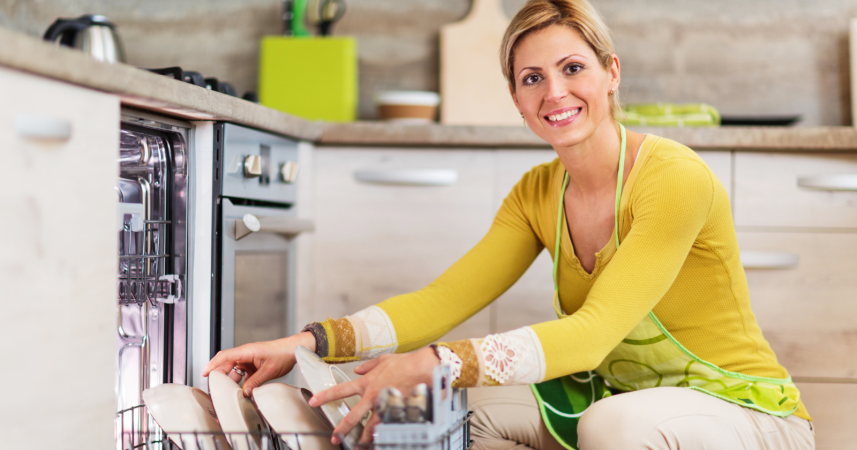
2) Running the dishwasher only when it’s really full
There was a very specific look my mom would give if someone dared run the dishwasher before it was packed to maximum capacity.
It was the same expression she used when one of us wasted food or left a light on unnecessarily.
It said: “Money doesn’t grow on trees.”
Even today, I can’t bring myself to run a half-empty dishwasher without feeling a pang of guilt.
I’ll shuffle bowls and cups around like a Tetris master, determined to make everything fit.
And sure, part of this is about saving water and energy, which my adult self appreciates environmentally.
But deep down, I know I’m echoing the rhythm of the house I grew up in.
The message was simple: don’t squander what you can stretch.
3) Refrigerating things that don’t technically need to be refrigerated
This one makes me laugh now.
Bread? Fridge. Apples? Fridge. Tortillas? Fridge.
Crackers? Somehow also fridge-adjacent.
When I was a kid, I thought every family had a “cold storage lifestyle.”
But as an adult, I quickly realized many people leave bread on the counter without fear of it immediately molding.
My mom didn’t take chances, though. Food was money, and spoilage was unacceptable.
Even now, I catch myself automatically sliding things into the fridge, whispering a quiet apology to texture and flavor.
And honestly, I don’t always love the chilled bread situation, but the habit is stubborn.
It sneaks in on autopilot.
4) Reusing foil, zip bags, and parchment paper
I can still hear the sound of foil being gently smoothed out on the kitchen table so it could be folded and tucked into a drawer to be used again.
As a kid, this baffled me.
Foil was so cheap. Why bother?
Now, as an adult who’s both vegan and eco-conscious, I see the wisdom behind it.
My mom wasn’t just reducing waste.
She was stretching every household supply to its fullest potential.
I’ve become the same way, especially during my weekly meal-prepping ritual.
I’ll rinse out a zip bag with a sense of satisfaction that younger me definitely wouldn’t understand.
There’s something deeply grounding about it.
Like you’re refusing to let resources slip through your fingers.
5) Keeping a “scrap bowl” while cooking
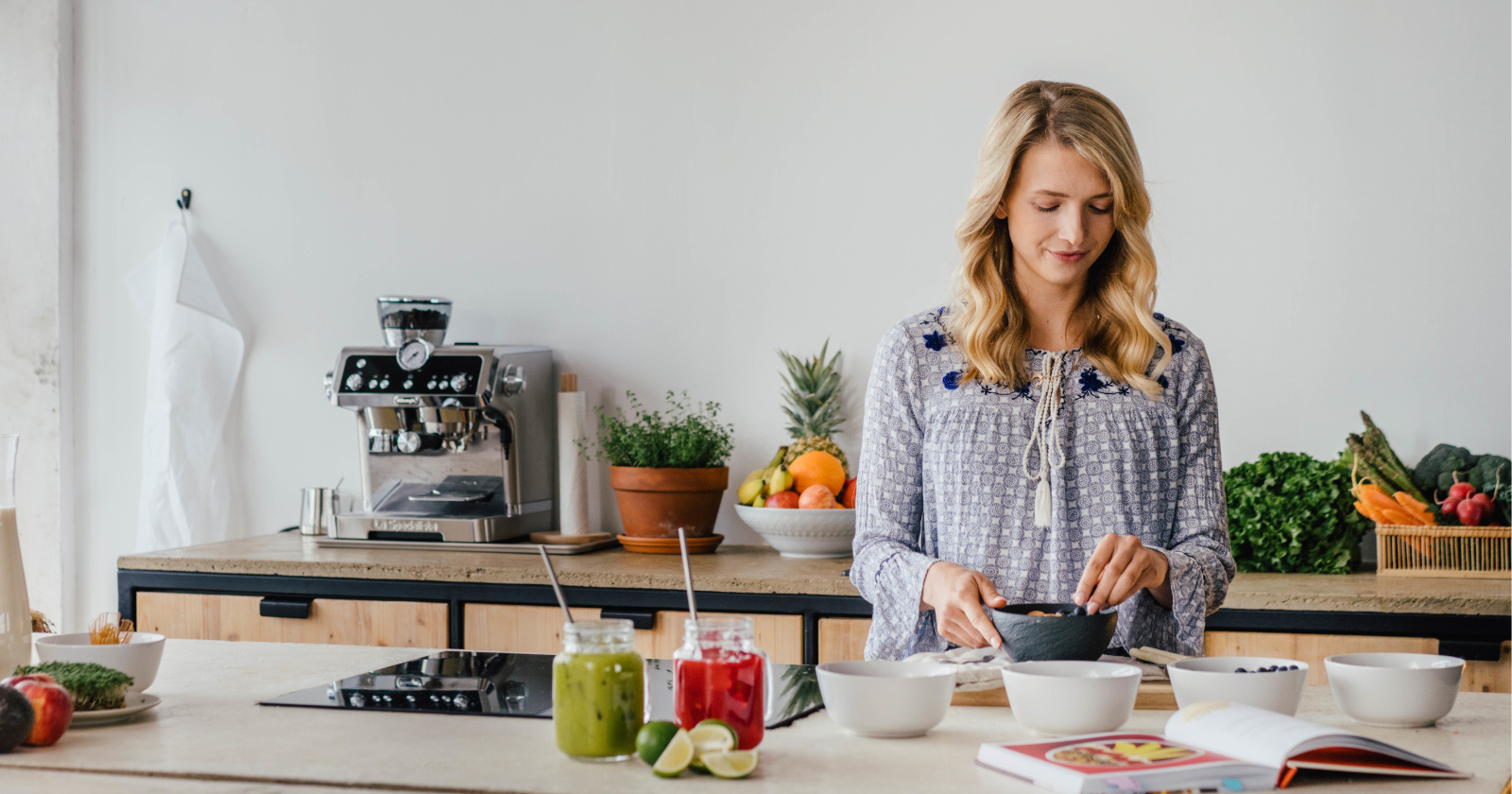 I didn’t realize until adulthood how unusual it was to keep a small bowl beside the cutting board for veggie ends, onion skins, and stray peelings.
At our house, this was standard.
My mom used it to minimize mess, and sometimes she’d even save certain scraps for broth.
When I started cooking in my own home, I swore I wouldn’t bother.
Why use an extra bowl? Why take up counter space?
Well, guess who now instinctively sets one out every time she chops vegetables?
It’s become part of my cooking rhythm.
The kitchen stays cleaner, and my compost bin gets great material.
It’s one of those habits that once annoyed me but now makes me feel oddly competent.
6) Turning leftovers into new meals even when it requires creative gymnastics
My mom could turn last night’s dinner into something unrecognizable in the best possible way.
Rice became fried rice.
Chili became nacho topping.
Half a baked potato? Suddenly it was the filling of tomorrow’s burrito.
Back then, it sometimes felt like leftovers were a never-ending loop.
I remember promising myself I’d cook fresh meals constantly as an adult.
After all, who wants reheated food five ways?
Me, apparently.
Between work, volunteering at the farmers’ market, and training runs, I now lean on this skill every week. Turning leftover veggies into a stir fry or yesterday’s quinoa into a salad bowl isn’t just thrifty.
It’s efficient. It’s satisfying. And it makes me feel connected to the resourcefulness that shaped me.
Funny how the things we resist end up becoming our survival tools.
7) Keeping an “emergency stash” of staple foods
When money was tight, my mom kept backups of everything: rice, beans, pasta, canned tomatoes.
There was always a shelf of “just in case” foods that we weren’t allowed to touch unless absolutely necessary.
I used to think this was overkill.
Why store so much when we could easily shop again next week?
But adulthood has a way of teaching you that stability is fragile.
Supply shortages, busy schedules, tight months… life happens.
Now my pantry looks suspiciously like hers did.
I keep shelf-stable basics tucked away, and even though I tell myself it’s about convenience, I know the deeper truth.
Growing up with financial uncertainty leaves its fingerprints on you.
The emergency stash is less about food and more about feeling secure.
8) Wiping down and “resetting” the kitchen before bed
My mother would not sleep if the kitchen counters weren’t wiped, the sink wasn’t empty, and the stove wasn’t at least pretending to be spotless.
As a kid, I couldn’t understand why she cared so much.
She worked tiring jobs, and yet the kitchen had to be reset every single night.
I swore I wouldn’t fall into that routine. I pictured myself as a breezy adult who let dishes “soak” overnight and didn’t obsess about tidiness.
Cut to present-day me, who cannot rest if there’s a rogue pan in the sink.
There’s something deeply comforting about waking up to a clean kitchen.
It feels like giving your future self a gift.
Maybe that’s what my mom was doing all along.
Maybe she knew how chaotic life could feel and wanted at least one room to be a soft landing.
Final thoughts
When I catch myself repeating these habits, I don’t roll my eyes anymore.
I smile.
These small routines aren’t just frugal or practical.
They’re stitched with meaning.
They tell the story of where we came from and what we learned about care, survival, and dignity.
Maybe you see your younger self in some of these habits.
Maybe you see your mother.
Maybe you see both.
And honestly, isn’t it strangely reassuring?
To realize that despite our childhood vows to be different, we’ve grown into people who appreciate the invisible labor that held our households together?
If anything, these inherited habits remind me that personal growth isn’t always about unlearning.
Sometimes it’s about recognizing the quiet wisdom in what we once dismissed.
What’s Your Plant-Powered Archetype?
Ever wonder what your everyday habits say about your deeper purpose—and how they ripple out to impact the planet?
This 90-second quiz reveals the plant-powered role you’re here to play, and the tiny shift that makes it even more powerful.
12 fun questions. Instant results. Surprisingly accurate.