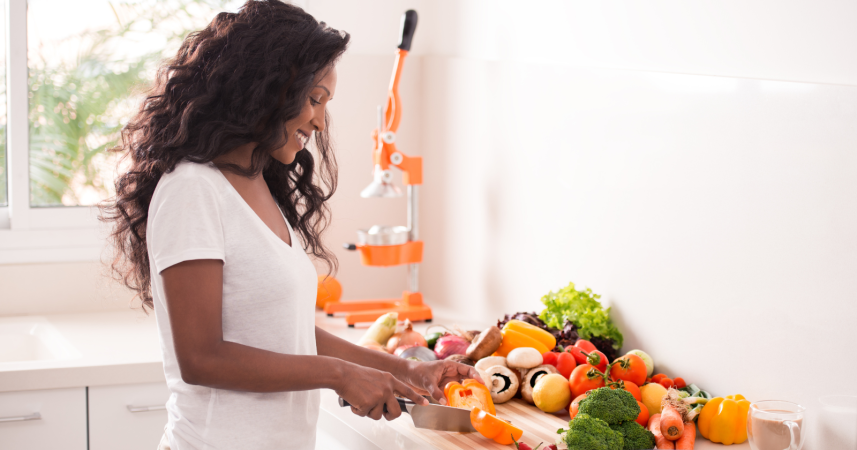
After years of wilted greens and forgotten containers, I discovered that sustainable meal prep isn't about perfection on Sunday—it's about building flexibility into every step.

Add VegOut to your Google News feed. 
For three years, I was the queen of Sunday meal prep. I'd spend four hours chopping, roasting, and portioning beautiful Buddha bowls into glass containers.
By Monday lunch, I felt like a wellness influencer. By Wednesday dinner, I was ordering Thai takeout while those same containers sat untouched, their contents slowly transforming into something unrecognizable.
The problem wasn't my recipes or my motivation. It was my entire approach. I was treating meal prep like a finance spreadsheet: rigid, predetermined, optimized for efficiency rather than real life. When I finally stopped fighting my own nature and started working with it, everything changed.
The myth of the perfect prep day
Here's what nobody tells you about those gorgeous meal prep photos on social media: they represent a single moment in time, not a sustainable system.
Real life includes unexpected dinner invitations, days when you crave something different, and the simple fact that human beings aren't designed to eat the same thing repeatedly.
I used to batch-cook five identical lunches every Sunday. By Thursday, I'd rather skip eating than face another chickpea curry. Sound familiar?
The research backs this up. Studies on food variety and dietary adherence show that monotony is one of the biggest predictors of diet abandonment. Our brains are wired to seek novelty, especially with food.
What if the goal wasn't identical meals, but flexible components that could become different meals?
Components over complete meals
The shift that saved my meal prep was embarrassingly simple: I stopped making finished dishes and started prepping building blocks. A batch of roasted sweet potatoes can become Tuesday's grain bowl, Wednesday's tacos, and Thursday's curry. Marinated tofu works in a stir-fry, a sandwich, or crumbled over a salad.
My Sunday prep now looks like this: two proteins (usually baked tofu and a batch of seasoned lentils or beans), two roasted vegetables, one raw vegetable prepped for quick assembly, one grain, and two sauces. That's it. From these seven elements, I can create dozens of different meals without any additional cooking.
The mental load drops dramatically when you're not deciding what to eat from scratch every night, but you're also not locked into a predetermined menu that might not match your mood.
The Wednesday pivot point
Wednesday is when most meal prep systems fail. It's far enough from Sunday that your initial enthusiasm has faded, but not close enough to the weekend to push through. I started calling it my "pivot point" and building a specific strategy around it.
On Wednesday, I do a quick 15-minute refresh. I assess what's left, what needs to be used immediately, and what can wait. Sometimes this means quickly pickling some vegetables that are getting soft. Sometimes it means freezing half of Thursday's planned dinner because I know I won't get to it.
This mid-week check-in prevents the Friday guilt spiral of throwing away food you prepped with good intentions. It also gives you permission to adjust based on how your week is actually going, not how you imagined it would go on Sunday.
Texture and temperature matter more than you think
One reason meal prep food often feels disappointing is that we ignore the sensory experience. A Buddha bowl that was crisp and vibrant on Sunday becomes a soggy, room-temperature disappointment by Tuesday. Research on food perception confirms that texture significantly impacts our enjoyment and satisfaction with meals.
I now prep components with their final texture in mind. Anything that needs to stay crispy gets stored separately and added at the last minute. Grains get slightly undercooked so they don't turn mushy when reheated. Dressings always stay in separate containers until serving.
These small adjustments take maybe five extra minutes during prep but make the difference between food you tolerate and food you actually look forward to eating.
The freezer is your secret weapon
I resisted freezer cooking for years because it felt like admitting defeat. Fresh was better, right? But after one too many weeks of watching beautiful produce wilt while life got complicated, I changed my mind.
Now, every prep session includes at least one freezer-friendly item: a soup, a batch of veggie burgers, some marinated tempeh, or portioned smoothie packs. These aren't for the current week. They're insurance for the weeks when everything falls apart.
Last month, Marcus and I both got sick mid-week. Instead of ordering delivery for five days straight, we worked through our freezer stash. It felt like a gift from past-me to present-me, and that's exactly what good meal prep should be.
Final thoughts
The meal prep system that finally worked for me isn't really a system at all. It's a set of principles: flexibility over rigidity, components over complete meals, and self-compassion over perfection. Some weeks I prep for three hours. Some weeks I barely manage to wash and chop some vegetables. Both count.
What would happen if you stopped trying to control every meal and started creating options instead? Your future self, standing in front of the refrigerator on a tired Wednesday night, will thank you for the freedom to choose.
What’s Your Plant-Powered Archetype?
Ever wonder what your everyday habits say about your deeper purpose—and how they ripple out to impact the planet?
This 90-second quiz reveals the plant-powered role you’re here to play, and the tiny shift that makes it even more powerful.
12 fun questions. Instant results. Surprisingly accurate.