
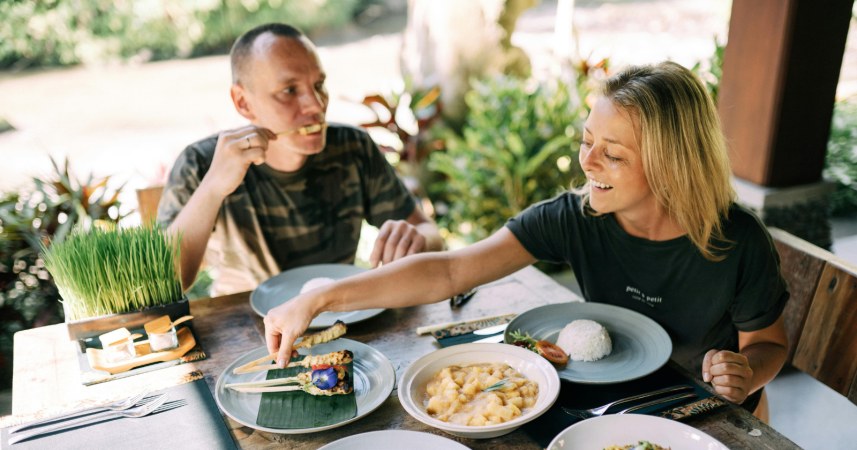
Navigating dinner parties, family gatherings, and work lunches as a vegan doesn't have to mean choosing between your values and your relationships.

Add VegOut to your Google News feed. 
Five years into being vegan, I've learned something that took me way too long to figure out: the hardest part of this lifestyle has nothing to do with food.
It's the social navigation. The split-second decisions about when to speak up and when to let it go. The delicate dance of staying true to your values while also staying connected to the people you love.
I spent my first year as a vegan getting it wrong constantly. I was either too quiet, picking at side dishes while seething internally, or too loud, turning casual dinners into ethical debates nobody asked for. Neither felt good.
So I started paying attention to what actually worked, both for me and for the relationships I wanted to protect. Here's what I've learned about handling those inevitable awkward moments with grace.
1. The dinner party with nothing you can eat
You arrive at a friend's home, and despite mentioning you're vegan, the main course is a butter-basted chicken. The sides are creamed spinach and cheesy potatoes. There's bread, but you're pretty sure it's brioche.
First, take a breath. This probably wasn't malicious. Many people genuinely don't understand what veganism means, or they panicked and forgot. Eat what you can, even if it's just salad and bread.
Then, after dinner, offer to bring a dish next time. Frame it as wanting to share something you love, not as criticism of their hosting. And yes, eat something before you go next time. A hungry vegan is a cranky vegan.
2. The interrogation disguised as curiosity
"But where do you get your protein?" "What about plants feeling pain?" "Isn't it expensive?" Sometimes these questions come from genuine interest. Sometimes they're a setup for an argument the other person has already decided to win.
I've learned to read the room. Genuine curiosity usually comes with open body language and follow-up questions. Gotcha energy comes with crossed arms and a smirk. For the former, I engage warmly.
For the latter, I've developed a few exit phrases: "It's working really well for me" or "I'm happy to share resources if you're ever curious." Then I change the subject. You don't owe anyone a debate over appetizers.
3. The family member who takes it personally
This one cuts deep because it usually involves someone who fed you for years. Your grandmother's meatballs. Your dad's barbecue. When you decline, they don't just hear "no thank you." They hear rejection of their love, their traditions, their identity.
Acknowledge what they're really offering. "Grandma, I know how much love goes into your cooking, and that means everything to me." Ask if you can learn to make a vegan version together. Or bring a dish that honors the tradition in a new way.
Research suggests that food choices are deeply tied to identity and belonging, so approach these conversations knowing there's more at stake than dinner.
4. The work lunch with limited options
Your team picks a steakhouse for the quarterly lunch. The menu has exactly one vegan option: a sad house salad. Everyone's ordering ribeyes and you're staring at iceberg lettuce wondering if this is your life now.
Speak up early when you can. A quick "Hey, could we consider somewhere with a few more options?" before the reservation is made goes a long way.
If you're already there, own it with humor. Order the salad, ask for extra toppings, and don't make it weird. I've found that my attitude sets the tone. If I'm relaxed about it, everyone else relaxes too.
And honestly? Sometimes the side dishes are the best part anyway.
5. The date who thinks veganism is a red flag
You mention being vegan and watch their face shift. Maybe they joke about "rabbit food" or ask if you're going to judge them for ordering a burger. The subtext is clear: they're wondering if you're going to be difficult.
This is actually useful information. How someone responds to a simple lifestyle difference tells you a lot about their flexibility and curiosity. I'm not saying write them off immediately, but pay attention. A good match will be interested, not defensive.
My partner Marcus was skeptical at first, but his willingness to try new restaurants and cook plant-based meals with me told me everything I needed to know about his character.
6. The friend who keeps "forgetting"
They've known you for three years. You've explained it multiple times. And yet, every gathering, they seem surprised that you can't eat the queso. At some point, forgetting starts to feel like a choice.
This requires a direct but kind conversation. "Hey, I've noticed vegan options don't usually make it onto the menu when we get together. It would mean a lot if you could keep that in mind."
If nothing changes, you have information about where you stand in this friendship. Sometimes people show us who they are through these small moments. It's okay to adjust your expectations accordingly.
7. The "just this once" pressure
"Come on, one bite won't kill you." "It's a special occasion!" "You're being so rigid." The pressure to make an exception can come from anywhere, and it often comes wrapped in the language of fun and flexibility.
Here's what I've learned: you don't need to justify your boundaries. "No thanks, I'm good" is a complete sentence. If pressed, "This is important to me" usually ends the conversation. The people who respect you will drop it.
The ones who keep pushing are telling you something about how they view your autonomy. Studies on social pressure and conformity show that standing firm actually gets easier with practice, and people eventually stop testing you.
8. The moment you want to say something but probably shouldn't
Someone at the table is going on about how much they love bacon. Or making jokes about vegans. Or describing factory farming practices like they're funny. Every cell in your body wants to respond.
Pick your battles. Not every comment requires a rebuttal. Sometimes the most powerful thing you can do is simply exist as a healthy, happy, non-preachy vegan.
Let your life be the argument. Save your energy for conversations where someone is genuinely open, where your words might actually plant a seed. The dinner table rarely changes minds, but relationships built over time absolutely can.
Final thoughts
Being vegan in a non-vegan world requires a skill set nobody tells you about: the ability to hold your values firmly while also holding space for connection.
It's not about being perfect or having the right response every time. It's about staying grounded in why you made this choice while remembering that the people around you are on their own journeys.
What helps me most is remembering that I wasn't always vegan either. Someone was patient with me once. Someone answered my skeptical questions without judgment.
We change minds not by winning arguments, but by being the kind of person others want to understand. That's the long game, and it's the one worth playing.












