
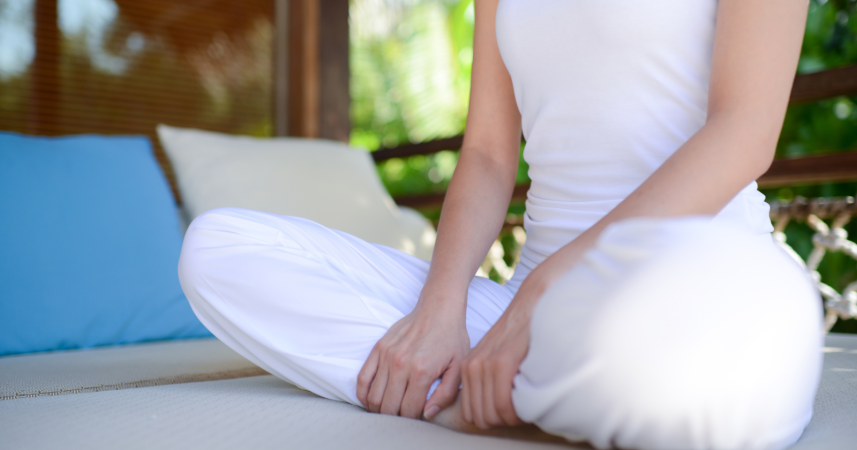
The way you fold yourself reveals more about your mind than you'd think...

Add VegOut to your Google News feed. 
Watch someone settle cross-legged into any situation—floor, couch, somehow managing it in an office chair—and you're seeing more than a seating preference. This particular fold speaks volumes about how they navigate life.
Body language experts know that posture shapes both perception and self-concept. But cross-legged sitting reveals something specific. It's not just comfort or habit. People who default to this position share psychological patterns that set them apart from the ankle-crossers, leg-bouncers, and feet-firmly-planted crowd.
1. They're naturally open to new experiences
Sitting cross-legged means your knees splay outward, creating physical openness that mirrors mental receptivity. This isn't coincidence—research shows body positions directly influence psychological states.
People who sit this way score higher on openness to experience, one of psychology's Big Five traits. They'll try the weird menu item, take the scenic route for curiosity's sake, accept unexpected invitations. Their default is curiosity over caution. The physical opening seems to reinforce mental openness—or maybe it's reversed. Either way, the connection is real.
2. They have remarkable psychological flexibility
Cross-legged sitting demands physical flexibility, reflecting something deeper: psychological flexibility—the ability to adapt thinking and behavior to situations rather than following rigid rules. These folks don't get stuck in one perspective.
Plans change? They adjust. Conversations veer unexpectedly? They follow. They rarely dig into positions just because they committed yesterday. This mental agility appears everywhere—holding opposing ideas without discomfort, changing minds with new evidence, navigating ambiguity without anxiety. Their minds bend like their bodies do.
3. They signal comfort and trust unconsciously
Unlike crossed arms or tightly crossed ankles, sitting cross-legged is vulnerable. You can't spring up quickly. You're opening your core to the world. Body language studies consistently show this posture emerges when people feel safe.
These individuals create environments where guards can drop. They make others feel at ease because they're genuinely comfortable themselves. It's not naivety—it's choosing to approach the world from trust rather than defense. They understand that openness invites openness.
4. They lean toward mindfulness naturally
There's a reason meditation instructors suggest this position. Cross-legged sitting encourages present-moment awareness—you feel grounded, centered, connected to your foundation. People who sit this way show higher trait mindfulness, that ability to observe thoughts without drowning in them.
They're less likely to spiral into future anxiety or past rumination. Not because they're zen masters, but because their habitual posture reinforces a present-focused mind. The body teaches the brain, session by session, how to stay here.
5. They choose comfort over convention
Cross-legged sitting in professional settings or formal gatherings is quietly rebellious. These people prioritize authentic comfort over conventional appropriateness. Not defiantly—they've just decided being genuine matters more than unwritten rules.
They wear sneakers to the office, suggest walking meetings, arrange workspaces for comfort over appearances. This isn't sloppiness; it's deliberately honoring personal needs over external expectations. They know sustainable performance comes from being comfortable in your own skin—literally.
6. They show emotional flexibility and resilience
Maintaining balance while cross-legged mirrors emotional equilibrium. Studies on psychological flexibility link it to emotional resilience—experiencing difficult emotions without being controlled by them.
Cross-legged sitters process emotions fluidly. They feel deeply but don't get stuck. Disappointment doesn't become despair; excitement doesn't spiral into anxiety. They've developed internal flexibility matching their physical flexibility, letting emotions move through rather than setting up camp.
7. They're comfortable with vulnerability
Sitting cross-legged is inherently exposed—stable but not defensive, grounded but not rigid. People who default here have embraced vulnerability as strength. They understand openness and emotional flexibility create deeper connections.
These folks admit when they're lost, share struggles alongside successes, know authenticity requires dropping armor. They've learned true strength comes from accepting both power and limitations. Their physical openness reflects emotional availability.
8. They maintain a youthful approach to life
Cross-legged sitting is associated with youth—children naturally fold this way. Adults maintaining this flexibility, physical and psychological, approach life with what researchers call cognitive flexibility across the lifespan. They haven't let age rigidify thinking or bodies.
They're the 60-year-olds sitting on floors with grandkids, taking up new hobbies, remaining curious rather than certain. This isn't denying age—it's maintaining flexibility that keeps life interesting regardless of birthdays passed.
Final thoughts
Not everyone who sits cross-legged embodies these traits, and plenty of flexible, open people prefer solid armrests. Body language is complex, contextual, culturally variable. Sometimes it's just about tight hamstrings or bad backs.
But our default postures—those unconscious positions when relaxed and unguarded—reveal something. Those naturally folding cross-legged carry a certain openness through life, flexibility beyond yoga-class limberness.
They've discovered something important: rigidity exhausts. Whether learned through meditation, experience, or body wisdom, they understand flexibility keeps options open. In a world demanding we pick sides, choose lanes, defend positions, they remain open, grounded, surprisingly comfortable with ambiguity.
Next time you spot someone casually folding cross-legged in a board meeting or coffee shop, notice what else seems fluid about them. The body rarely lies about what the mind has learned. These people have figured out that staying flexible—literally and mentally—is how you keep life interesting, relationships genuine, and possibilities endless. They're not just sitting differently; they're approaching everything with a kind of openness that most of us could use more of.












