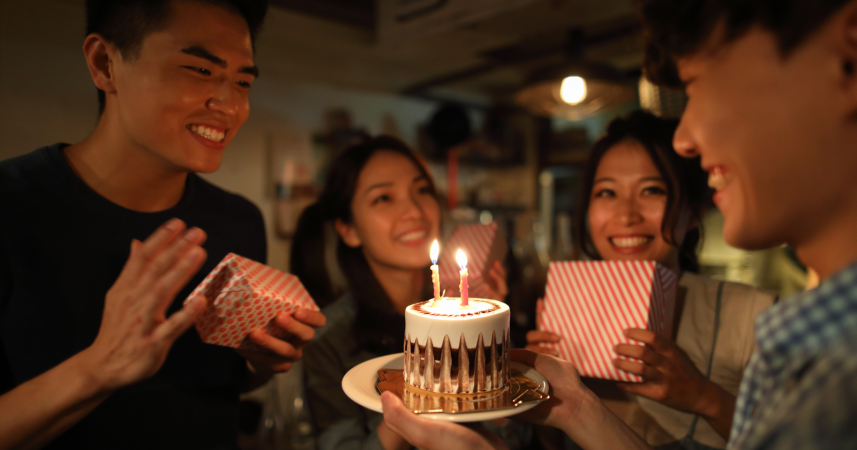
In an age of digital reminders, they choose the inefficient path of genuine attention.

Add VegOut to your Google News feed. 
The text arrived at 7:42 AM on a Tuesday morning: "Happy birthday month! 🎂 Hope 32 treats you well!" The sender wasn't Facebook, which had been helpfully reminding people of my upcoming birthday for the past week. It was from a former colleague who'd left the company two years ago, someone who somehow still remembered not just my birthday but that I always joke about celebrating the entire month.
In an age where technology handles our memory work—where phones ping us about anniversaries and social media broadcasts birthdays like a town crier—there exists a particular breed of person who still remembers these dates without digital assistance. They're the ones who send cards that arrive exactly on time, who text you at midnight with inside jokes about your "birthday month," who remember not just the date but the flavor of cake you prefer.
These people move through the world with an internal calendar tracking everyone they've ever met. They remember the receptionist's birthday from a job they left five years ago. They know their neighbor's kid turns seven next Thursday. They carry these dates like a mental collection of small treasures, each one representing a connection maintained against the current of modern forgetfulness.
After years of observing these people in offices, friend groups, and family gatherings, certain patterns emerge. They share qualities that go far beyond having a good memory. Their ability to remember birthdays reveals something deeper about how they navigate relationships and attention in an increasingly distracted world.
1. They treat small details as significant data
Birthday rememberers collect information differently than the rest of us. Where others might hear "my birthday's in October" and immediately forget, they file it away with the same importance someone else might reserve for a work deadline. They understand that remembering someone's birthday isn't really about the date—it's about signaling that the person matters enough to occupy permanent space in their memory.
These individuals often remember accompanying details too: the birthday person's favorite restaurant, their feelings about surprise parties, that story about their worst birthday ever. They build complete files rather than isolated facts, treating personal information as interconnected rather than discrete data points.
2. They possess exceptional emotional granularity
People who remember birthdays demonstrate high emotional intelligence and empathy. These individuals don't just remember dates; they understand the emotional weight birthdays carry for different people. They know who dreads aging, who loves elaborate celebrations, who prefers to let the day pass unmentioned.
This emotional attunement extends beyond birthdays. They're often the ones who remember that you hate cilantro, that your mother is allergic to roses, that you get anxious in crowds. They map the emotional landscape of the people around them with the same precision others reserve for driving directions.
3. They maintain active mental models of their social network
While most people's mental address book grows fuzzy at the edges, birthday rememberers maintain surprisingly current records. They hold active files on people they haven't seen in years, updating them with new information gleaned from chance encounters or mutual friends.
This isn't nosiness. It's a fundamentally different way of understanding social connections—seeing relationships not as binary categories but as a complex web of past, present, and potential future connections, each worth maintaining.
4. They understand the compound interest of small gestures
Birthday rememberers grasp something that relationship researchers confirm: small, consistent gestures of remembrance build stronger bonds than grand but infrequent displays. Remembering someone's birthday every year for a decade creates a different kind of connection than sporadic contact.
They apply this principle broadly—checking in after your job interview, asking about your sick pet weeks later, sending you the link when that book you mentioned goes on sale. They understand that relationships are built through accumulated small attentions.
5. They resist the outsourcing of emotional labor
In an era where we've delegated phone numbers to our contacts list and navigation to GPS, birthday rememberers maintain a quiet independence. They often know these dates even when they're in their phone's calendar. The remembering itself is the point, not just the reminder.
This resistance extends to other areas. They handwrite certain notes, remember phone numbers, navigate without GPS to familiar places. They maintain cognitive muscles that others have let atrophy, understanding that the effort of remembering is itself a form of care.
6. They choose inefficiency as a form of care
Birthday texts could be automated, but these individuals resist such efficiency. They craft specific messages, reference shared memories, deploy inside jokes. The inefficiency is the point—taking time to compose a personal message communicates care in a way that "HBD!" never could.
Memory research shows that people naturally remember birthdays closer to their own more easily, but true birthday rememberers overcome this bias. They remember dates throughout the calendar with equal clarity, suggesting deliberate practice rather than natural tendency.
This extends to their whole approach to relationships. They think about upcoming birthdays weeks in advance, plan cards to arrive on time, remember gift ideas mentioned months ago. They live slightly ahead of the present moment, always considering what others might need or appreciate. In choosing the inefficient path, they create meaning through effort itself.
Final words
The birthday rememberer in my former office left three years ago, but cards still arrive from her like clockwork—always three days early to account for mail delays, always with a specific memory from our shared time, always in her distinctive purple ink. In our last conversation, she mentioned keeping a physical notebook of birthdays, transferred and updated by hand each year.
"Doesn't that take forever?" someone asked.
"About two hours every January," she replied. "But thinking about each person as I write their name—that's the whole point."
In a world optimized for efficiency, these individuals choose the inefficient path of sustained attention. They understand something our digital tools obscure: that remembering isn't just about data storage but about the act of holding someone in your thoughts. In an attention economy where everyone competes for mindshare, the gift of being remembered—really remembered, not by an algorithm but by another human—has become increasingly rare.
These people navigate life with a different kind of presence, carrying an awareness of the constellation of lives surrounding their own. Each birthday they remember is a small rebellion against the forgetting that modern life encourages. They remind us that memory, carefully tended, is one of the last truly personal gifts we can give.
By Avery White