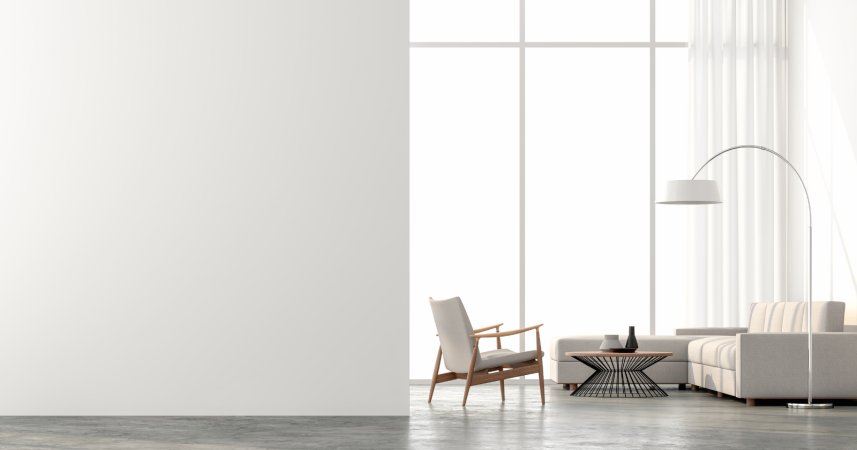
These subtle details signal luxury more than any designer furniture could.
I learned this lesson the hard way when I invited my new boss over for dinner. My living room was packed with furniture—a massive sectional from a Memorial Day sale, a glass coffee table, matching end tables, wall-to-wall decorations. I thought it looked successful. She walked in, smiled politely, and later her assistant mentioned she was surprised I lived in such a "cozy" space. Cozy was code for cramped, cluttered, trying too hard.
A month later, I visited her brownstone. Her living room had maybe half the furniture mine did, but it looked like money. Not because everything was expensive—I later learned her sofa was from CB2—but because of specific aesthetic choices that whispered wealth rather than shouted it.
After years of paying attention to homes that read as expensive (and learning to fake it myself), I've identified the seven details that make people assume you have money, even if your entire living room cost less than their car payment.
1. Breathing room between furniture
The wealthiest-looking living rooms have this in common: space between pieces. The sofa doesn't touch the wall. There's three feet between the armchair and side table. You can walk around the coffee table without turning sideways.
This signals wealth because it suggests you have room to waste. Middle-class homes maximize every inch—furniture pushed against walls, ottomans doubling as storage, every corner filled. But wealthy homes can afford emptiness. When I finally pulled my sofa 18 inches from the wall and removed two chairs, the same furniture suddenly looked twice as expensive. The room could breathe, and that breathing room reads as luxury.
2. One large piece of art instead of a gallery wall
Gallery walls scream "I collected these prints from HomeGoods over five years." One substantial piece of art—even if it's a budget print in a good frame—says "I could afford to make a decision."
The key is scale. A large 30x40 inch piece makes more impact than fifteen 8x10s. It doesn't have to be expensive. You can print a high-resolution photo at a print shop for under $100, put it in a simple black frame, and it reads as gallery art. The confidence of one large statement beats the anxiety of arranged clutter every time.
3. Matching lamp heights
This one's subtle but powerful. When your lamps create different pools of light at varying heights, it signals "bought separately on sale." Wealthy rooms have lighting at consistent heights—table lamps typically reaching 26-30 inches tall, creating an even sight line around the room.
You don't need expensive lamps. You need lamps that create visual harmony. Two matching table lamps from Target and strategic use of lamp risers can fix this for under $100. Suddenly your room looks planned instead of accumulated. The eye reads consistency as intentional design.
4. Hidden cords and technology
Nothing disrupts the wealthy aesthetic faster than visible cables snaking across floors or TVs with dangling cords. Wealthy-looking living rooms hide all evidence of technology. The TV might be there, but you don't see a single cable. The lamps seem to glow without visible plugs.
This costs almost nothing to fix—cord covers painted to match walls, furniture placed strategically to hide outlets, power strips tucked behind sofas. A friend spent one afternoon and $30 on cord management, and her living room went from "college apartment" to "design blog." The absence of visual chaos reads as expensive.
5. Curtains that hit the ceiling and floor
Standard curtains that hang just above your window and end at the sill immediately date a room. Wealthy rooms have curtains mounted just below the ceiling that puddle slightly on the floor, even if the window is modest.
This trick makes ceilings look higher and windows look grand. Buy the longest curtains you can find, mount the rod high, and let them pool. IKEA sells 98-inch curtains for $30 that can transform a room. The visual impact is dramatic—suddenly your standard windows look architectural.
6. Fresh flowers or a large houseplant, never fake
One real orchid beats ten fake succulents. A single fiddle leaf fig tree trumps all the silk flowers in the world. Wealthy homes have living things that require care, not plastic that requires dusting.
If you can't keep plants alive, choose one hardy variety—a snake plant, pothos, or ZZ plant—and keep it pristine. Or commit to a $10 grocery store bouquet weekly. The presence of something living suggests you have the time and resources for non-essentials. The apartment I toured last month had a single monstera in a corner, nothing else. It made the whole room feel expensive.
7. Curated book collections with intentional display
Wealthy homes never have random accumulations of different-sized books shoved into shelves. Everything looks intentional—all hardcovers with removed dust jackets for a uniform look, books arranged by height or color, or carefully styled horizontal stacks with a small object on top.
Some designers even recommend displaying beautiful coffee table books cover-out, or creating negative space between book groupings. The point isn't the books themselves but the curation. Hide the paperbacks, remove the dust jackets from hardcovers, and suddenly your basic bookshelf looks like a design element rather than storage.
Final thoughts
Here's the truth about making your living room look wealthy: it's mostly about subtraction and discipline. Remove the clutter, create space, choose one good thing over five mediocre things. It's about what you don't do as much as what you do.
The wealthy aesthetic isn't really about wealth—it's about the confidence to leave space empty, to choose one piece of art, to let a room breathe. It's the opposite of trying to prove something with stuff.
I've implemented all seven of these changes in my own living room, spending less than $500 total. The same boss who called my space "cozy" recently visited again. This time she said, "You've really elevated this space." I had actually removed about half my furniture and bought some longer curtains.
The irony is that making your living room look wealthy often means buying less, not more. It's about the restraint that actual wealth allows—the freedom from needing to fill every corner, cover every wall, maximize every inch. You're creating the illusion that you have so much space, so much resource, that you can afford to waste it on emptiness.
That's what people respond to: not the stuff you have, but the space you leave unfilled.