The surprising mental strengths of people who stick to pen and paper.
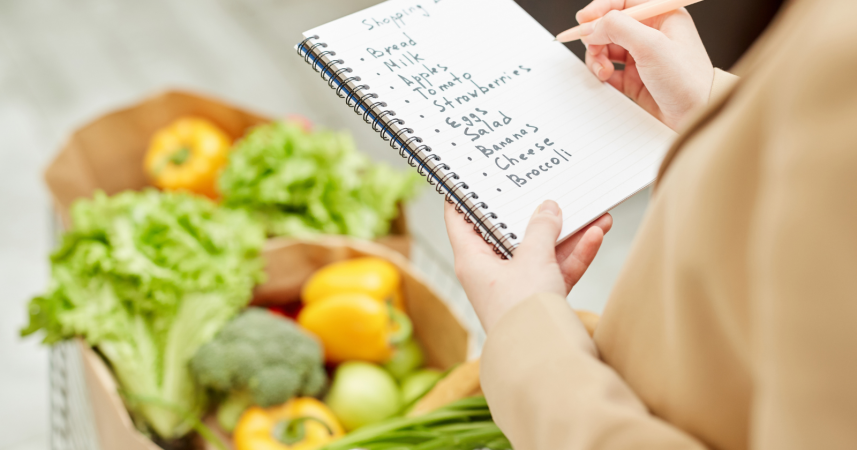
In the age of shared grocery apps and voice-activated shopping lists, you're still there with your pen and the back of an envelope, writing "eggs, bread, that cheese D likes" in handwriting only you can decode. Your friends mock your analog ways while simultaneously asking you to add things to your list because somehow, mysteriously, you never forget the important stuff. You're not a luddite—you have a smartphone, you use it constantly. You just know that some things work better when your hand moves across paper.
Turns out, this isn't just stubborn nostalgia or resistance to change. The act of handwriting engages your brain in ways that typing simply doesn't, activating neural pathways that connect memory, creativity, and intentionality in profound ways. Those of us still scribbling on paper aren't just making lists—we're participating in a cognitive process that reveals some surprisingly desirable psychological traits.
1. You have superior memory encoding abilities
When you write "tomatoes" by hand, your brain goes through an elaborate process that typing can't replicate. Each letter requires specific motor movements, spatial awareness, and visual processing. This multi-sensory engagement creates what neuroscientists call deeper encoding—your brain literally builds stronger memory traces when you write by hand.
This isn't just about remembering milk. People who habitually write by hand show better recall across all areas of life. You remember conversations more clearly, retain information from meetings better, and have an uncanny ability to recall details others forget. Your brain has been trained through thousands of handwritten lists to create robust memory pathways.
The act of physically forming words makes them stick in ways that tapping glass never could. You don't just remember what to buy—you remember writing it down, where on the page it was, what you were thinking when you added it.
2. You possess rare focus in a distracted world
Writing a list by hand requires something increasingly precious: sustained attention on a single task. No notifications pop up on paper. No suggested items appear. No algorithm tries to predict what you meant. Just you, the pen, and the gradual emergence of words that represent actual thoughts.
This practice of monotasking has trained your brain to resist the constant pull of digital distraction. While others bounce between apps, tabs, and notifications, you've maintained the ability to think in complete sentences, to follow thoughts to their conclusion, to be present with one thing at a time.
Your handwritten lists are evidence of a mind that can still focus, still be deliberate, still choose where to direct attention rather than having it constantly hijacked.
3. You're naturally mindful without trying to be
The physical act of writing forces presence. You can't write while doing something else—your hand won't cooperate. This built-in mindfulness means you're actually thinking about what you need, not just automatically adding items from an algorithm's suggestions.
People who write shopping lists by hand report a different relationship with consumption. They buy less impulsively, waste less food, and feel more connected to their choices. The mindful attention required to write each item creates intentionality that clicking "add to cart" never could.
You're not just making a list; you're having a conversation with yourself about what you actually need, what you actually want, what actually matters.
4. You have exceptional spatial intelligence
Your handwritten lists aren't just words—they're spatial maps. Items grouped by store location, little arrows pointing to related things, important items circled or starred. You're creating a visual-spatial representation of your shopping trip that engages parts of your brain that linear digital lists never touch.
This spatial thinking extends beyond grocery stores. People who regularly write by hand show enhanced spatial reasoning abilities, better navigation skills, and superior ability to visualize and manipulate objects mentally. Your brain has been trained to think in dimensions, not just lines.
The seemingly simple act of organizing thoughts on paper has developed sophisticated cognitive mapping abilities that serve you in countless other areas of life.
5. You understand the power of tangible commitment
There's something about physically writing something down that makes it real in a way typing doesn't. The effort required, however minimal, creates psychological commitment. You're more likely to follow through on handwritten intentions because the act of writing them created a physical contract with yourself.
This translates to greater follow-through in all areas. People who write by hand are more likely to achieve goals, complete tasks, and honor commitments. The physical act of writing creates accountability that digital notes, easily deleted or ignored, simply don't provide.
Your handwritten lists are small acts of commitment that train your brain to take your own intentions seriously.
6. You maintain crucial fine motor skills
In an age where most of us have lost the ability to write cursive and struggle to sign our names consistently, you're maintaining neural pathways that connect hand to brain in sophisticated ways. This isn't just about penmanship—it's about preserving cognitive-motor connections that deteriorate without use.
Regular handwriting maintains dexterity, hand-eye coordination, and the complex neural networks that control fine motor movements. These skills translate to everything from artistic ability to surgical precision to the simple pleasure of being able to write a thank-you note that doesn't look like a child's scrawl.
You're keeping alive neural pathways that millions of years of evolution developed and that a few decades of technology are rapidly erasing.
7. You process information more deeply
When you write your shopping list, you're not just recording items—you're processing them. The slower pace of handwriting forces your brain to think about each word, each item, each decision. This deeper processing leads to better understanding and retention of information.
Studies show that people who take handwritten notes understand concepts better than those who type. The act of writing forces synthesis and comprehension that typing simply bypasses.
Your shopping lists are training grounds for deeper thinking, teaching your brain to process rather than just record, to understand rather than just capture.
8. You value the process as much as the outcome
In a world obsessed with efficiency and optimization, you're choosing the slower path because something about it matters to you. The feel of pen on paper, the satisfaction of crossing items off, the personal artifact of your own handwriting—these things have value beyond mere function.
This appreciation for process over pure efficiency reveals someone who understands that not everything needs to be optimized. Some things are worth doing the "inefficient" way because the doing itself has value. This process-oriented mindset is associated with greater life satisfaction, reduced anxiety, and increased creativity.
You understand intuitively what our efficiency-obsessed culture forgets: sometimes the journey matters more than the destination, even if that journey is just to the grocery store.
Final thoughts
The handwritten shopping list might seem like a quaint anachronism, a stubborn refusal to embrace digital convenience. But it's actually a choice that reveals sophisticated cognitive abilities and increasingly rare psychological traits. In choosing pen over phone, you're not just making a list—you're engaging in a practice that enhances memory, focus, mindfulness, and deep processing.
These aren't just nostalgic preferences; they're evidence of brains that still know how to slow down, pay attention, and create meaning from simple acts. While the world races toward ever-greater digital efficiency, you've preserved something valuable: the understanding that some things work better when they take time, require effort, and leave a trace of your own hand.
Your handwritten lists are small acts of resistance against a world that wants to automate everything. They're proof that efficiency isn't always the highest value, that some analog processes are worth preserving not despite their inefficiency but because of it. In a world of predictive text and autocomplete, you're still finishing your own thoughts, one handwritten word at a time.