The rare traits that make you irreplaceable in a digital world.
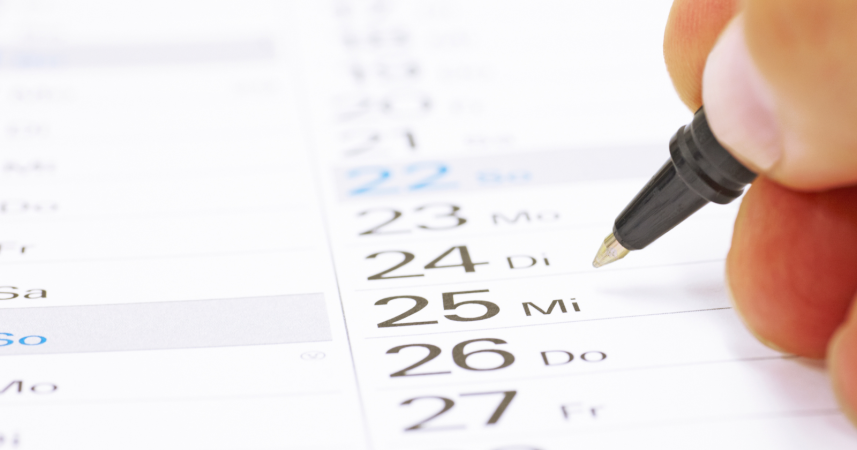
There it hangs on your kitchen wall or sits on your desk—that physical calendar with actual pages, handwritten notes, and coffee stains from hurried morning planning. While everyone else asks Siri to remind them about dentist appointments, you're still putting pen to paper, marking squares with cryptic abbreviations only you understand.
You might feel antiquated, watching others sync their lives across seven devices while you flip actual pages. But here's what the digital natives don't realize: your "outdated" method reveals cognitive strengths and character traits that have become surprisingly rare—and increasingly valuable—in our hyperconnected world.
1. You have exceptional spatial memory
You don't just remember dates—you remember where they live on the page. Tuesday's meeting isn't just "June 4th" in your mind; it's "upper left corner, third row, next to Mom's birthday." Your brain has mapped time onto physical space, creating a three-dimensional memory palace that no app can replicate.
This spatial-temporal processing is linked to stronger overall memory and better problem-solving abilities. While others lose appointments in the digital void, you can close your eyes and see your entire month laid out like a landscape. You've turned time into geography, and your brain navigates it like familiar territory.
2. You understand commitment viscerally
Writing something in pen on paper feels different than typing it into a phone. There's weight to it, permanence, consequence. When you write "Sarah's wedding" in that square, you're making a physical commitment that leaves a trace. Erasing requires effort, white-out, or crossing out—all leaving evidence of change.
This physical commitment translates to reliability. You're less likely to double-book, cancel casually, or forget obligations because they exist in the physical world, not the ethereal cloud. Your yes means yes because changing it requires more than swiping left.
3. You process information through multiple channels
When you write on your calendar, you're not just recording—you're encoding through multiple pathways. The physical act of writing, the spatial placement, the visual result, even the sound of pen on paper all create rich, multi-sensory memories that stick differently than typed text.
This multi-channel processing creates what researchers call "embodied cognition"—understanding through physical interaction. You don't just know your schedule; you've physically built it. Your body remembers what your mind might forget.
4. You resist digital overwhelm instinctively
You've maintained boundaries that others struggle to create. Your calendar doesn't buzz, ping, or flash. It doesn't interrupt dinner with notifications or tempt you with infinite scrolling. It exists quietly, consulted when needed, ignored when not.
This isn't techno-phobia—it's selective engagement. You've intuited what research is now proving: constant digital connection fractures attention and increases anxiety. Your physical calendar is a small act of resistance against attention capitalism, a declaration that your time belongs to you.
5. You think in concrete rather than abstract terms
Digital calendars encourage thinking of time as infinite scroll—there's always another month to swipe to, another year to tap forward. Physical calendars make time finite and visible. December ends at a page edge. The year has weight you can hold.
This concrete thinking about time makes you better at long-term planning and realistic about limitations. You see time as a resource with edges, not an endless stream. This leads to better prioritization and more thoughtful commitment to what actually matters.
6. You maintain ritual and routine
Checking your wall calendar with morning coffee, sitting down Sunday night to plan the week, flipping the page on the first—these aren't just habits but rituals that create structure and meaning. You've built contemplative practices around time management that phone-checkers miss.
These rituals provide what psychologists call "cognitive anchoring"—regular moments of orientation that reduce anxiety and increase sense of control. While others frantically scroll through overlapping notifications, you have designated moments for temporal awareness.
7. You preserve and value tangible history
Your old calendars aren't just deleted data—they're artifacts. That 2019 calendar still has your grandmother's last birthday marked, your child's first day of school, the week you got that promotion. These aren't just dates but physical evidence of life lived.
This preservation instinct indicates someone who values continuity, who understands that history isn't just information but physical traces. You can flip back through years and see your handwriting change, your priorities shift, your life unfold in real ink on real paper.
Final thoughts
Using a physical calendar in 2024 isn't about rejecting progress—it's about choosing what kind of progress serves you. It reveals someone who thinks spatially, commits thoughtfully, processes deeply, and maintains boundaries in an increasingly boundless world.
These qualities—spatial intelligence, embodied cognition, concrete thinking, ritual practice—aren't just quaint throwbacks. They're increasingly rare cognitive skills that employers seek, relationships need, and mental health requires.
Your wall calendar isn't a sign you're behind the times. It's evidence you understand something others are forgetting: that time isn't just data to be managed but life to be lived, and sometimes the best technology for that is paper, pen, and the satisfying flip of a page that says: that month is done, this one begins now.
The 8% of us still using physical calendars aren't the ones who couldn't adapt to digital life. We're the ones who chose not to, and that choice reveals more strength than any app ever could.
If You Were a Healing Herb, Which Would You Be?
Each herb holds a unique kind of magic — soothing, awakening, grounding, or clarifying.
This 9-question quiz reveals the healing plant that mirrors your energy right now and what it says about your natural rhythm.
✨ Instant results. Deeply insightful.