From the way you devour leftovers at midnight to the guilt that floods in after every secret snack, your private eating rituals are actually encrypted messages from your childhood that your adult self hasn't learned to decode yet.
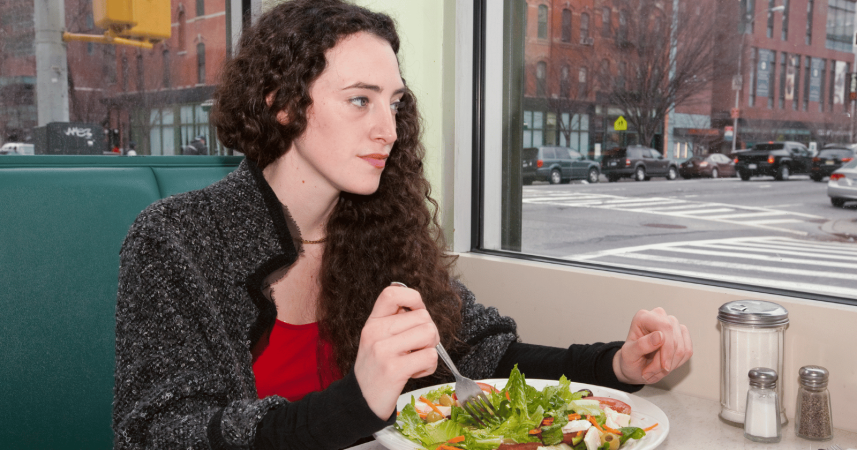
Picture this: It's 10 PM, you're alone in your kitchen, and you're standing at the counter eating cold leftovers straight from the container. Maybe you're scrolling through your phone, barely tasting what you're putting in your mouth. Or perhaps you're savoring every bite in peaceful solitude, finally able to eat without anyone commenting on your choices.
How we eat when nobody's watching tells a story we might not even realize we're writing. These private moments with food often reveal patterns that started long before we could choose our own meals.
After years of working through my own complicated relationship with food (including a transition to veganism that forced me to examine every eating habit I had), I've learned that our solo eating behaviors are like breadcrumbs leading back to childhood experiences. The way food and emotions got tangled up in our early years shows up decades later in the most unexpected ways.
Ready to decode what your private eating habits might be telling you? Let's explore what those midnight snacks and secret meals really mean.
1. Eating in secret means food was probably controlled or criticized
If you find yourself hiding food, eating in your car, or waiting until everyone's asleep to enjoy certain foods, there's likely a childhood story there. Maybe your parents commented on every bite you took. Perhaps certain foods were forbidden or used as rewards you had to earn.
When kids grow up with food being monitored, judged, or restricted, they learn that eating certain things requires privacy. Even as adults with complete food freedom, that programming runs deep. You might still feel like someone's going to catch you or judge you, even when you live alone.
I once worked with someone who kept a secret stash of chocolate in her home office. She'd been put on diets since age eight, and forty years later, she still felt like eating sweets required secrecy. The shame wasn't about the chocolate itself but about the decades-old voice saying she shouldn't have it.
2. Speed eating suggests mealtimes were chaotic or competitive
Do you inhale your food like someone's about to steal your plate? This often traces back to rushed family dinners, competing with siblings for seconds, or chaotic households where peaceful meals didn't exist.
Some families treat dinner like a race. Others had such busy schedules that eating became something to squeeze in between activities. If your childhood meals were eaten standing up, in the car, or while parents argued, your nervous system learned that eating quickly meant safety or survival.
The fascinating thing is how this shows up later. You might find yourself scarfing down lunch at your desk, even though you have a full hour break. Your body still operates on that old programming that says meals need to be finished fast.
3. Mindless eating often stems from food being used as a distraction
Were you given snacks to keep you quiet? Did stressed parents hand you cookies instead of attention? If food was regularly used to manage your emotions or behavior as a kid, you probably learned to eat without really experiencing it.
This creates adults who eat while completely zoned out. You might go through an entire bag of chips while watching TV and not remember tasting them. Food becomes background noise rather than an experience.
Before my own therapy journey at 36, I realized I couldn't remember the last meal I'd eaten without doing something else simultaneously. It took serious practice to learn to sit with food and actually taste it, because sitting still with just my thoughts felt unbearable.
4. Extreme portion sizes reflect early food insecurity or abundance messages
Take a look at your plate when you're alone. Is it overflowing because you grew up hearing "clean your plate" or "think of the starving children"? Or do you barely eat enough because food was scarce or you learned that wanting seconds was greedy?
Both extremes often come from childhood experiences around scarcity and abundance. Families who struggled financially might have created feast-or-famine patterns. Others might have used large portions to show love or small portions to teach restraint.
Your adult portion sizes when eating alone reveal which messages stuck. Without the social pressure of others watching, you default to what feels safe or familiar from those early years.
5. Specific comfort foods connect to emotional caregiving patterns
What do you reach for when you're stressed and alone? The foods we crave in private often link directly to how emotions were handled in our childhood homes.
Mac and cheese might mean mom's solution to a bad day. Ice cream could represent the only sweetness in a difficult household. Crunchy foods might connect to anger that needed an outlet. These aren't just taste preferences; they're emotional time machines.
When I switched to veganism, I had to recreate all my comfort foods in plant-based versions. The process made me realize how much emotional weight these specific foods carried. It wasn't really about the dairy mac and cheese but about recreating that feeling of being soothed.
6. Rigid food rules reveal early experiences with control and chaos
Do you have strict rules about what you can eat, when, or how? Maybe you can't eat after 7 PM, or foods can't touch on your plate, or everything needs to be organic. While some structure is healthy, extreme rigidity often stems from childhood chaos or control.
If your early years felt unpredictable, controlling food might have been your way to create safety. Conversely, if everything was strictly controlled, you might rebel with no food rules at all or swing between extremes.
Notice your rules when you're alone. Without anyone to perform for or rebel against, what patterns emerge? That's your nervous system showing you what it learned about safety and food.
7. Guilt and shame cycles mirror early emotional associations
Pay attention to the mental commentary that runs while you eat alone. Do you negotiate with yourself? Feel guilty before you even finish? Promise to "be good" tomorrow?
This internal dialogue usually echoes things we heard or absorbed as children. Maybe food was moralized in your house as "good" or "bad." Perhaps eating was tied to deserving or earning. These messages burrow deep and replay for decades.
The shift happens when you catch yourself in these loops and ask whose voice you're really hearing. Is it truly your belief, or is it an old recording from someone else's food issues?
8. The inability to eat alone comfortably suggests food was always social currency
Some people can't eat alone without extreme discomfort. They'll skip meals rather than eat solo or only eat while distracted by screens. This often indicates that food was never just food in childhood but always carried social meaning.
Maybe meals were the only time your family connected. Perhaps eating alone meant loneliness or punishment. If food always came with social expectations, judgment, or performance, being alone with food feels incomplete or wrong.
Learning to eat alone peacefully is like learning a new language. It requires practice and patience to separate nourishment from social interaction.
Final thoughts
Our private eating habits are windows into stories we might not even remember consciously. They show us where food got tangled up with love, safety, control, or comfort in those early years.
The beauty is that once you see these patterns, you can start to untangle them. You don't have to keep eating according to a script written when you were five. Every meal alone is a chance to practice new patterns and write a different story.
Start by simply noticing. What happens when you're alone with food? What feelings come up? What old voices do you hear? Awareness is the first step toward creating a relationship with food that serves who you are now, not who you had to be then.
If You Were a Healing Herb, Which Would You Be?
Each herb holds a unique kind of magic — soothing, awakening, grounding, or clarifying.
This 9-question quiz reveals the healing plant that mirrors your energy right now and what it says about your natural rhythm.
✨ Instant results. Deeply insightful.