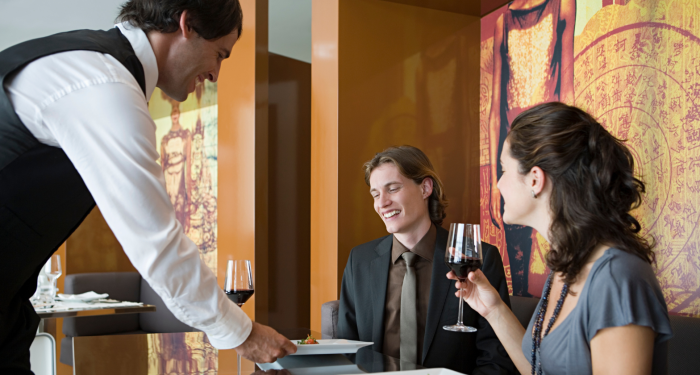
Growing up middle-class leaves invisible marks on how we behave at restaurants—from anxiously calculating exact tip percentages to reflexively ordering tap water—that reveal our deep-seated discomfort with spending money, even when we can finally afford to.
Ever notice how certain behaviors at restaurants seem perfectly normal until you realize they're telling a deeper story?
I'll never forget the evening I took my college roommate to dinner at a nice steakhouse to celebrate her promotion. When the waiter asked if we wanted to see the wine list, she immediately said, "No thanks, just water is fine." Later, when I suggested we split an appetizer, she quickly calculated the exact cost per person on her phone. At dessert time, she whispered, "Are you sure? That's like another meal's worth of money."
Nothing she did was wrong. In fact, these were habits I recognized from my own upbringing in a middle-class suburb. But working as a financial analyst for nearly two decades taught me to spot patterns in how people relate to money, and restaurants are where these patterns become crystal clear.
The truth is, many of us from middle-class backgrounds carry subtle behaviors that reveal we didn't grow up with financial abundance. We learned to be careful, practical, and sometimes apologetic about spending money on experiences. These habits served our families well, but they can also limit us from fully enjoying life's pleasures when we can afford them.
Let's explore nine common restaurant behaviors that might sound familiar if you grew up counting pennies rather than assuming plenty.
1. Immediately checking prices before reading descriptions
Do you scan the right side of the menu first, mentally cataloging what's "reasonable" before even considering what sounds good?
This was me for years. I'd automatically eliminate entire sections of the menu based on price alone, never giving myself permission to want something that cost more than my predetermined limit. Even when I could afford it, that internal calculator never stopped running.
Growing up, my parents taught me to be "smart" about money. My mother, a teacher, would praise me for choosing the cheaper option, reinforcing the idea that spending less was always virtuous. But here's what I learned after years of analyzing financial behaviors: constantly defaulting to the cheapest option can become a form of self-denial that has nothing to do with actual financial necessity.
2. Over-explaining or justifying your order to the server
"I'll have the salmon, but only because I haven't had fish in a while, and I know it's a bit pricey but..."
Sound familiar? This nervous explanation of why you "deserve" to order something is a classic middle-class tell. When you grow up in a household where every splurge needs justification, you carry that need for permission into adulthood.
The waiter doesn't care why you're ordering the salmon. They're not judging your choices. But that voice in your head, the one that sounds suspiciously like a parent reminding you that money doesn't grow on trees, makes you feel like you need to defend your decision to spend.
3. Doing complex mental math to split bills exactly
There's nothing wrong with fairness, but when you're pulling out your phone calculator to ensure everyone pays for exactly what they ordered down to the penny, including calculating individual tax and tip portions, you might be revealing more than just good math skills.
I once spent fifteen minutes after a birthday dinner helping divide a bill among eight people, making sure no one paid a cent more than necessary. A colleague who grew up differently simply said, "Let's just split it evenly and call it good." The ease with which she said it stunned me. Where was the anxiety about someone paying three dollars more than they should?
4. Feeling guilty about sending food back
Even when something is genuinely wrong with your meal, do you sit there debating whether it's worth "making a fuss"?
This guilt often stems from being taught not to waste food and not to be difficult. In middle-class families, restaurant meals were special occasions, not everyday occurrences. Sending something back felt like being ungrateful for the treat. You'd rather eat overcooked steak than risk seeming demanding or wasteful.
But restaurants factor these situations into their business model. They want you to enjoy your meal. Accepting less than what you're paying for isn't politeness, it's undervaluing yourself.
5. Always ordering tap water first, regardless of preference
"Just water for me" becomes an automatic response, even when you're genuinely thirsty for something else.
Growing up, sodas and juices at restaurants were considered unnecessary expenses. Two dollars for something that costs twenty cents at home? The mental math made it seem absurd. This programming runs so deep that even now, when that two dollars is meaningless to your budget, you still default to free tap water.
6. Anxiously watching others order to gauge appropriate spending
Before the server reaches you, you're carefully noting what everyone else orders, adjusting your choice to match the group's spending level.
This social calibration comes from years of not wanting to be the person who orders the most expensive item or makes others feel bad about their choices. It's considerate, sure, but it also reveals an deep discomfort with standing out financially, either by spending too much or too little.
7. Immediately boxing up half your meal "for later"
Before you've even tasted your food, you're already planning to stretch it into tomorrow's lunch.
While avoiding food waste is admirable, immediately viewing your restaurant meal as two meals reveals a scarcity mindset. You're already planning for future hunger before addressing present enjoyment. This habit of extreme frugality, even in moments meant for pleasure, shows how deeply ingrained these money-saving behaviors become.
8. Skipping appetizers and desserts reflexively
"No thanks, the main course will be plenty" becomes your standard response, even when others are ordering courses you'd actually enjoy.
In many middle-class families, appetizers and desserts were considered extravagant add-ons. The main course was the meal; everything else was unnecessary expense. This thinking becomes so automatic that you deny yourself these pleasures without even considering whether you want them or can afford them.
9. Leaving exactly 15-20% tip, calculated precisely
While there's nothing wrong with standard tipping, the anxiety around calculating the exact percentage, never rounding up generously when service was exceptional, reveals a rigid relationship with money.
I used to calculate tips to the penny, making sure I hit exactly 18%. It wasn't until a friend casually rounded up by ten dollars on a bill that I realized how much mental energy I was spending on precision that didn't really matter to my budget.
Final thoughts
Recognizing these behaviors in yourself isn't about shame or judgment. These habits served important purposes for our families and possibly for us at different life stages. The question is whether they're still serving you now.
After years of observing financial behaviors, both professionally and personally, I've learned that our relationship with money at restaurants mirrors our relationship with abundance in general. Do we allow ourselves to fully enjoy experiences? Can we spend without guilt when it's within our means? Are we able to be generous with ourselves and others?
Breaking these patterns doesn't mean becoming reckless with money. It means consciously choosing when frugality serves you and when it limits you. Sometimes the most valuable thing you can do is give yourself permission to order the appetizer, enjoy your full meal hot and fresh, and round up that tip without checking your math twice.
The next time you're at a restaurant, pay attention to these automatic behaviors. Ask yourself if they're choices or just old programming. You might discover that the real luxury isn't in what you can afford to order, but in the freedom to enjoy it without guilt.
What’s Your Plant-Powered Archetype?
Ever wonder what your everyday habits say about your deeper purpose—and how they ripple out to impact the planet?
This 90-second quiz reveals the plant-powered role you’re here to play, and the tiny shift that makes it even more powerful.
12 fun questions. Instant results. Surprisingly accurate.