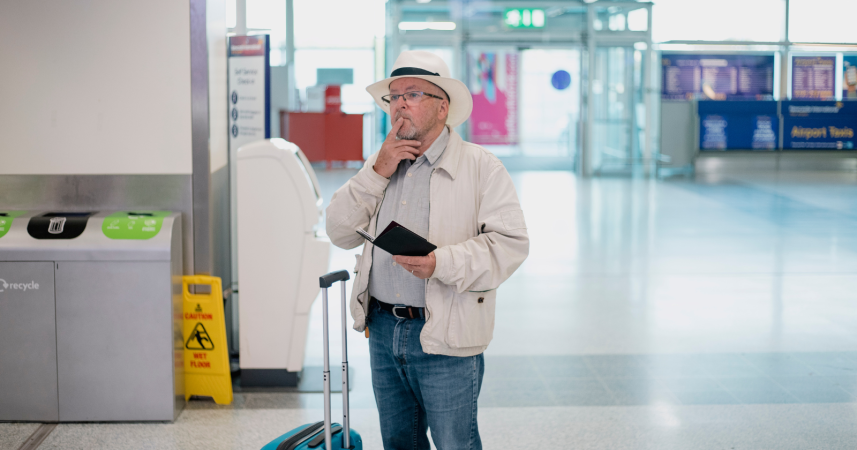
A study in generational airport anthropology.
The TSA line at LAX had ground to a complete halt. At the front, a man in his sixties was carefully removing his belt with the precision of a bomb disposal expert, folding it into a perfect coil before placing it in the bin. Behind him, his wife was decanting various liquids into plastic bags while discussing whether hand cream counted as a gel or a lotion. The collective blood pressure of everyone under thirty rose another notch as someone muttered, "It's been twenty years since 9/11. How do they not know this by now?"
Airports have become inadvertent theaters for generational collision. Every security checkpoint, gate area, and boarding queue showcases fundamentally different philosophies about how one should exist in transitional spaces. What Boomers approach with ceremony and preparation, Gen Z treats with the casual efficiency of people who've never known air travel without body scanners.
The clash isn't really about right or wrong ways to navigate airports. It's about two groups operating from entirely different travel scripts, each mystified by the other's choices. One generation treats flying like an occasion requiring formal protocols. The other treats it like riding a very expensive, very uncomfortable bus.
1. Arriving at the airport dressed for a different era
They show up in pressed khakis and blazers, pearls and pantyhose, treating the airport like it's still 1975 and they might run into someone important. The men wear ties. The women wear heels. They're dressed for the golden age of aviation that exists primarily in their memories.
Meanwhile, Gen Z flows past in sweatpants, slides, and oversized hoodies, dressed for the reality of modern air travel: cramped seats, temperature chaos, and the possibility of sleeping on airport floors. They've optimized for comfort over appearance, recognizing that nobody cares what you wear at 5 AM in Terminal B.
Of course, comfort means different things to different people. Some Boomers genuinely feel more comfortable in structured clothing. And some Gen Z-ers later regret their athleisure choices when they're freezing on a six-hour flight. But the generational divide is clear: formality versus function.
2. The sacred ritual of the printed boarding pass
They print them at home. Then at the airport kiosk, just to be safe. The boarding pass gets treated like a holy relic, carefully folded and stored in a dedicated travel wallet, checked every few minutes to ensure it hasn't vanished.
Watching them navigate mobile boarding passes triggers visible anxiety. They'll screenshot the QR code (breaking its functionality), panic when the screen dims, hold the phone wrong-side-up at the scanner. The backup printed pass emerges triumphantly when technology "fails" them.
Gen Z, having never printed anything voluntarily in their lives, watches this paper trail with fascination. Their boarding passes live in Apple Wallet, automatically updating with gate changes. Though they're not immune to their own anxieties—like when their phone hits 2% battery and they realize they have no backup plan.
3. Treating security like a delicate operation
The preparation begins fifty feet from the checkpoint. Pockets methodically emptied. Jackets removed and folded. Shoes unlaced with deliberate care. They approach the bins like they're preparing for surgery, each item placed with precision.
They'll use seven bins for what Gen Z fits in two. Wallet in its own bin. Phone in another. Keys segregated like they might contaminate the belt. Behind them, the line grows longer as they ensure everything is perfectly positioned.
Post-security is another production. They'll find a bench and spend ten minutes reassembling themselves, re-lacing shoes with care. Gen Z, having thrown everything in one bin and shuffled through in socks, is already at Starbucks—though sometimes regretting their haste when they realize they left their laptop out.
4. Gate camping hours before boarding
They arrive at the gate like settlers claiming territory, minimum two hours before departure. Prime seats facing the boarding door are secured and guarded vigilantly. They then proceed to create small homesteads with newspapers, snacks, and multiple beverages arranged just so.
When boarding begins, they're first to queue up, standing in line twenty minutes before their group is called. "We like to be ready," they explain to no one, boarding passes clutched like golden tickets.
Gen Z remains seated until final boarding call, knowing the plane won't leave without them. Though this casual approach occasionally backfires when overhead bins fill up—a lesson some learn the hard way on full flights.
5. The overhead bin optimization Olympics
They board with multiple carry-ons plus a "personal item" the size of a duffel bag, then act shocked that bin space is limited. The loading process becomes elaborate: standing in the aisle, trying different configurations while the boarding line backs up to the jetway.
Jackets must be folded just so. The roller bag orientation debated extensively. Other passengers' bags get rearranged without permission to optimize space. The personal item that should go under the seat gets crammed on top because "there's no legroom."
Meanwhile, Gen Z slides a single backpack under the seat and sits down. They've learned that checking bags is free and fighting for bin space isn't worth it—until they're waiting forty minutes at baggage claim, wondering if the Boomers had a point.
6. The deplaning rush to nowhere
The seatbelt sign dings off and they're up, yanking bags from overhead bins with urgency. They stand hunched in the aisle for ten minutes, bags balanced precariously, acting like those extra seconds of preparation will somehow speed their airport exit.
The rush continues through the terminal. Power-walking to baggage claim as if proximity to the belt affects bag arrival time. The whole deplaning process treated with an urgency that accomplishes nothing but stress.
Gen Z remains seated until the aisle clears, then strolls off the plane. They've learned airports operate on their own timeline, and rushing changes nothing. Though they sometimes miss tight connections with this zen approach, suddenly understanding why Boomers move with such purpose.
7. Technology resistance at every turn
Self-check kiosks sit empty while they wait in line for agents. Mobile boarding passes are met with suspicion. TSA PreCheck and Clear are viewed as unnecessary complications rather than time-savers. Every technological advancement designed to ease travel is approached like a trap.
They'll spend twenty minutes arguing with an automated kiosk rather than asking for help from Gen Z travelers who could solve the issue in seconds. The resistance extends to apps, online check-in, even basic flight tracking that could prevent unnecessary airport camping.
Gen Z glides through with digital everything, occasionally too confident in technology that fails at crucial moments. When systems crash or phones die, they're left helplessly analog, suddenly understanding the appeal of printed backups.
Final words
Here's what's actually happening in these airport clashes: two generations operating from entirely different travel paradigms. Boomers learned to fly when it was an occasion, when dressing up was required, when security meant a metal detector and a smile. Their airport behaviors are artifacts from an era when flying was special, not routine.
Gen Z grew up in post-9/11 aviation. They've never known airports without intensive security, flights without being packed like sardines, or air travel as anything but a necessary inconvenience. Their casual efficiency isn't disrespect—it's adaptation to a system that stripped away whatever glamour flying once had.
The printed boarding pass isn't really about technology fear—it's about control in an environment that feels increasingly unpredictable. The early arrival isn't about wasting time—it's about creating buffer zones in a system they've watched fail repeatedly. The formal dress isn't delusion—it's honoring what flying used to mean.
Similarly, Gen Z's sweatpants aren't laziness but pragmatism. Their last-minute boarding isn't carelessness but confidence in systems that, for all their flaws, generally work. Their digital-everything approach isn't showing off but simply using tools designed for modern travel.
Both generations have their airport wisdom. Boomers know which restaurants are hidden gems, how to sweet-talk gate agents, why certain connecting airports are worth avoiding. Gen Z knows which apps track flights better than airlines, how to maximize points across alliances, why TSA PreCheck is worth every penny.
The real comedy is that both groups think the other is doing it wrong, when they're just doing it differently. In twenty years, Gen Z will probably mortify their children with outdated airport behaviors while Gen Alpha moves through security via retinal scan.
Until then, the generational airport theater continues. Boomers will keep printing boarding passes. Gen Z will keep wearing pajamas on planes. And somehow, miraculously, everyone will still make their flights.
Well, unless they're flying Spirit. Then all bets are off for every generation.