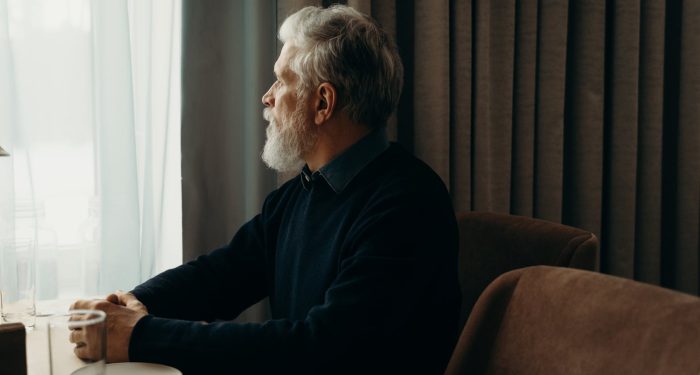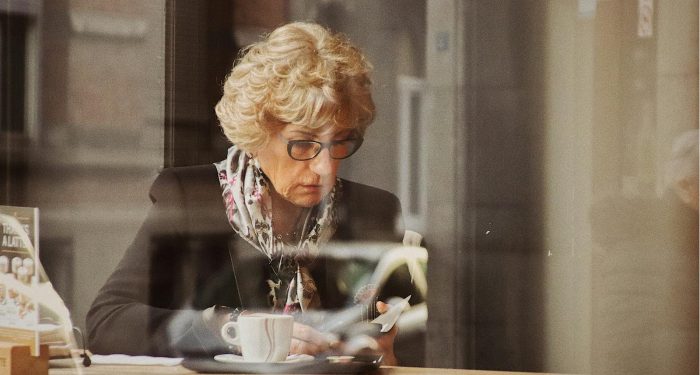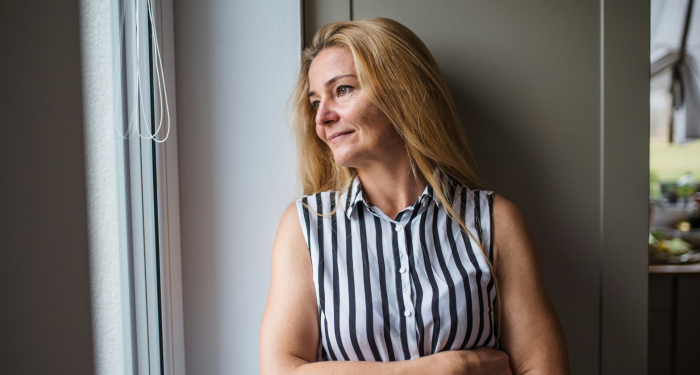
As we age, two people can face identical losses—a spouse, their health, their careers—yet one becomes softer and more giving while the other tightens their grip on everything, and the difference has nothing to do with how much they lost.
Have you ever noticed how some people seem to grow more generous and open-hearted with age, while others become increasingly rigid and controlling?
A longitudinal study out of Stanford found that older adults consistently show more willingness to help others than younger adults do. Meanwhile, separate research tracks a parallel pattern: a significant subset of aging adults become measurably more controlling, more rigid, more guarded with each passing year. Same demographic. Same general arc of loss — health, careers, spouses, independence. Completely opposite responses.
For a long time, the assumption was that this divergence tracked with what people had lost. More loss, more bitterness. Less loss, more generosity. But the data doesn't support that. The real variable isn't the loss itself.
It's the interpretation.
The psychology of loss and transformation
Here's what fascinates me: two people can experience nearly identical losses and emerge as completely different humans.
Both might lose a spouse, face health challenges, or watch their careers end. Yet one becomes more generous while the other becomes more controlling.
According to Laura L. Carstensen, Professor of Psychology at Stanford University, "Older adults are more willing than younger adults to offer a helping hand to others." But this isn't automatic. It depends on something deeper.
The key lies in perception. Those who see loss as something that diminished them tend to grasp tighter to what remains. They build walls, create rules, and try to control their shrinking world. Loss becomes proof that the world is taking from them, so they must protect what's left.
But those who see loss as something that opened them? They experience a kind of liberation. Each loss becomes a teacher, showing them what truly matters. They discover that losing things often means gaining perspective, wisdom, and surprisingly, freedom.
This sounds clean on paper. It isn't.
When loss becomes an opening
I learned this lesson the hard way during my warehouse job period, which was honestly my lowest point. Here I was with a psychology degree, loading boxes and feeling like my education was wasted, my potential squandered.
That loss of identity could have made me bitter. I could have become one of those people who tries to control everything else because I couldn't control my career trajectory.
Instead, something shifted. The Buddhist concept of impermanence, which I'd been studying, suddenly made visceral sense. This job, this feeling of failure, this loss of who I thought I was supposed to be - it would all pass.
And it did. But more importantly, losing that rigid idea of who I was "supposed to be" opened me to who I could become. It led me to writing, to founding Hack Spirit, and ultimately to a life I couldn't have imagined from inside that warehouse.
In my book Hidden Secrets of Buddhism: How To Live With Maximum Impact and Minimum Ego, I explore how letting go of our ego's need to control actually gives us more influence and impact in the world.
The control paradox
Here's something counterintuitive: the more we try to control, the less control we actually have.
Research indicates that a higher sense of perceived control in older adults is associated with better cognitive performance, mediated by increased physical activity. But here's the catch - perceived control isn't the same as actual control. Those who become more controlling with age often mistake grip for control. They think that by managing every detail, monitoring every relationship, and restricting every variable, they're maintaining control. But they're actually creating a prison - for themselves and everyone around them. And here's what rarely gets said plainly enough: this isn't just a different but equally valid response to loss. It's a defensive posture that costs people their relationships, their curiosity, and eventually their capacity for joy. The generous path isn't simply one option among two — it's the harder option, and it's harder precisely because it requires you to give up the one thing loss makes you desperate to keep: the feeling that you can prevent the next loss. Most people won't make that trade. Not because they're bad people, but because the cost is genuinely steep.
The generous ones? They've learned to control what they can (their responses, their choices, their attitudes) and release what they can't. This paradoxically gives them more actual influence in their world.
The generosity that comes from letting go
Assistant Professor Yu Rongjun at the National University of Singapore notes that "Older adults tend to become more generous as they age."
But why does letting go lead to generosity?
When you stop seeing loss as something that diminishes you, you realize you have more to give than you thought. You're not protecting a shrinking pile of resources. You're sharing from an endless well of experience, wisdom, and perspective.
Recently becoming a father to my daughter has taught me this in ways no meditation retreat ever could. Every day, she shows me that the more I try to control her experience, the less connected we become. But when I let go and simply be present with her, something magical happens. We both flourish.
The same principle applies to aging. Those who see each loss as creating space for something new tend to fill that space with generosity. They've learned that giving doesn't deplete them - it enriches them.
Choosing your response to loss
So how do we ensure we're moving toward generosity rather than control as we age?
First, we need to reframe our losses. Instead of asking "What was taken from me?" ask "What did this teach me?" or "What space did this create?"
Second, practice small acts of letting go now. You don't have to wait until you're older to start this practice. Every time you release a grudge, let go of an expectation, or give without expecting return, you're training yourself for generous aging.
Third, remember that control is largely an illusion anyway. Buddhism teaches that suffering comes from attachment to expectations - including the expectation that we can control outcomes. When we accept this, we can focus on what we can actually influence: our responses.
I apply this concept of impermanence to handle daily stress. When things feel overwhelming, I remind myself: this too shall pass. And it always does.
The choice is yours
The beautiful thing about this psychological insight is that it puts the power back in our hands. Not the power to control outcomes, but the power to choose our response to whatever comes.
Every loss you face is an opportunity to choose: Will this diminish me or open me? Will I grip tighter or let go? Will I become smaller or more expansive?
The research shows that those who choose openness tend to become more generous. Those who choose to see loss as diminishment tend to become more controlling.
But here's the thing - it's never too late to change your perspective. Whether you're 30 or 80, you can start seeing loss differently. You can choose to let it open rather than close you.
Final words
As I watch my daughter grow, I'm acutely aware that every stage she enters means losing the previous one. The infant becomes a toddler, the toddler will become a child, and someday she'll be an adult who doesn't need me the way she does now.
I could try to control this process, to keep her small and dependent. Or I can see each stage she leaves behind as opening both of us to new possibilities, new ways of connecting, new depths of relationship.
The same choice faces all of us as we age. We will lose things — that's inevitable. But every time we tighten our grip in response, it's worth asking what exactly we're protecting. The thing we lost? Or just the version of ourselves that existed before the loss — a version that, honestly, may not have been as solid as we like to remember?
Because if it's the latter, then control isn't really about holding on. It's about refusing to meet whoever we'd become without it. And that raises a question most of us would rather not sit with: What if the person you're so afraid of losing was never the one worth keeping?
What’s Your Plant-Powered Archetype?
Ever wonder what your everyday habits say about your deeper purpose—and how they ripple out to impact the planet?
This 90-second quiz reveals the plant-powered role you’re here to play, and the tiny shift that makes it even more powerful.
12 fun questions. Instant results. Surprisingly accurate.