While millions chase the latest productivity apps, a growing number of professionals are quietly returning to paper planners—and neuroscience reveals they're accessing a cognitive advantage that screen-tappers literally can't touch.

Add VegOut to your Google News feed. 
Remember that moment when you pull out a paper planner in a coffee shop and someone gives you that look? The one that says "seriously, in 2024?"
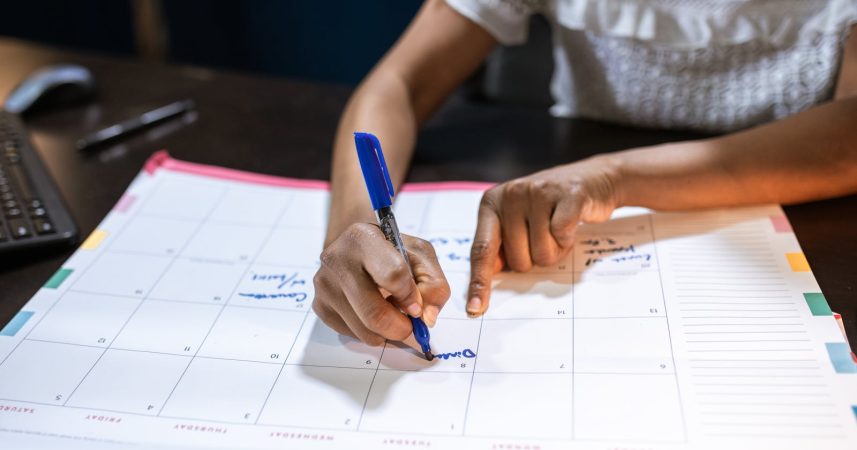
I get it all the time. Just last week, while waiting for my morning coffee, I watched three people around me frantically swiping through calendar apps, their faces lit by that familiar blue glow. Meanwhile, I sat there with my worn leather-bound planner, mapping out my week with an actual pen.
The barista, maybe twenty-something, noticed and said, "Wow, old school." But here's what she didn't see: the quiet revolution happening in my brain every time I write down an appointment instead of typing it.
The neuroscience nobody talks about
There's something profound happening when pen meets paper that we've collectively forgotten about.
Psychology Today puts it perfectly: "Handwriting stimulates complex brain connections essential in encoding new information and forming memories."
Think about that for a second. Every time you physically write down "Tuesday, 2 PM meeting," your brain is doing something fundamentally different than when you tap it into your phone. You're not just recording information; you're encoding it through multiple sensory pathways.
I noticed this myself when I switched back to paper planning three years ago. Suddenly, I stopped double-booking myself. I stopped forgetting important dates. Not because I set more reminders, but because the act of writing created a mental imprint that notifications never could.
The physical act of writing engages your motor cortex, your sensory cortex, and multiple areas involved in memory formation. When you type on a screen? You're basically just tapping glass. The cognitive engagement is minimal. Your brain treats it like any other repetitive digital task.
When planning becomes presence
Here's what I've discovered through my own journey with mindfulness and years of studying Buddhist philosophy: paper planning isn't about the calendar itself. It's about the relationship you develop with time.
When I open my planner each morning, usually right after my meditation practice, something shifts. There's no notifications competing for attention. No suggested events from AI. No color-coded chaos from five different shared calendars.
Just me, the page, and my intentions for the day.
In my book, Hidden Secrets of Buddhism: How To Live With Maximum Impact and Minimum Ego, I write about the Buddhist concept of "beginner's mind" - approaching each moment with fresh eyes. Paper planning embodies this perfectly. Each blank page is genuinely blank. It doesn't auto-populate with last week's meetings or suggest when you should schedule your workout based on your patterns.
You have to consciously choose what deserves space on that page. And that conscious choice? That's where presence lives.
The accountability no app can replicate
Digital calendars make it ridiculously easy to move things around. Drag and drop. Reschedule with a swipe. Delete without a trace.
But with paper? You have to cross things out. You see the evidence of your changes, your procrastination, your shifting priorities. Loriann Oberlin, MS, LCPC, a clinical counselor, nails it: "A tangible, tactile calendar helps prioritize, motivate, and hold people accountable for the goals they've set."
I learned this the hard way last year when I was trying to establish a consistent writing routine while juggling my daughter's schedule. In my phone, I kept moving my writing blocks around whenever something "urgent" came up. The app made it too easy to betray my own commitments.
But when I switched to paper and had to physically cross out "5 AM - Write" three days in a row? The visual guilt was real. Those crossed-out lines stared back at me, evidence of my priorities getting hijacked.
Now, when I write "5 AM - Write" in pen, I treat it like a promise to myself. The permanence creates commitment.
Why successful people are going analog
Here's something fascinating: A study by Columbia Business School found that individuals using paper calendars developed higher-quality plans and fulfilled them at higher rates compared to those using digital calendars.
Let that sink in. We're not talking about nostalgia or resistance to change. We're talking about measurable differences in planning quality and execution.
During my runs through Saigon, I often think about why this might be. And I keep coming back to friction. Good friction.
Digital planning removes all friction. Too much, actually. It's so frictionless that planning becomes thoughtless. We over-schedule because adding events costs nothing. We under-commit because changing plans costs nothing.
Paper brings back just enough friction to make planning intentional.
The cost we didn't calculate
When we traded paper for pixels, we thought we were gaining efficiency. And sure, we gained something. Shared calendars. Automatic reminders. The ability to schedule across time zones with a click.
But what did we lose?
We lost the meditative quality of Sunday planning sessions. The satisfaction of physically checking off completed tasks. The mental encoding that comes from handwriting. The forced focus of dealing with just one calendar, not seventeen synchronized ones.
We lost the boundaries between work and life (your paper planner doesn't send push notifications at dinner). We lost the ability to truly disconnect (your notebook doesn't need wifi). We lost the simple pleasure of choosing a calendar that reflects our personality, not just our productivity.
Most importantly, we lost a certain quality of presence with our own lives. When everything is digital, nothing feels quite real. Plans become abstract concepts floating in the cloud rather than concrete commitments written in ink.
Final words
I'm not suggesting you throw away your smartphone or delete your calendar app. I still use digital tools for certain things - coordinating with my team, setting recurring reminders, managing complex projects.
But I am suggesting you experiment with bringing paper back into your planning practice.
Start small. Get a simple weekly planner. Use it just for your personal priorities, the stuff that matters most. Write your three most important tasks each day. Schedule your self-care. Plan your family time.
Notice what happens when you have to write things down. Notice how differently you engage with your schedule when it's not fighting for attention with Instagram. Notice how your relationship with time shifts when planning becomes a ritual, not just another task.
The people still using paper calendars aren't behind the times. They've discovered something the rest of us are starting to remember: that sometimes, the most advanced technology for human planning is still pen and paper.
Because at the end of the day, presence isn't something you can download. It's something you practice. One handwritten day at a time.