These weren't just quirks of thrift or timing — they were the secret coordinates of a love so practical and fierce that only those who lived it could recognize its true value.

Add VegOut to your Google News feed. 
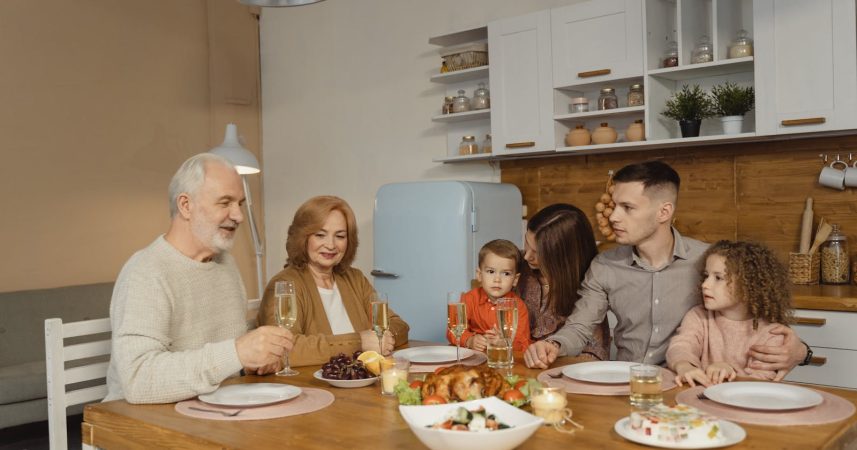
What mattered wasn't the time on the kitchen clock — it was that we all showed up. Growing up in Hamilton, the smell of lamb fat and oregano from my father's souvlaki shop mixed with whatever my mother had bubbling on the stovetop. We gathered at the table, forks in hand, because the evening rush at the restaurant started soon and Dad needed these forty-five minutes to exist as something other than the guy who made your gyros.
That's how it worked in our house. Dinner happened when it could because work happened always. The bread lived in the fridge because making a loaf last an extra four days saved thirty-seven cents. We called the living room "the front room" and kept plastic on the sofa that crinkled when you sat, which wasn't often, because real living happened at the kitchen table between shifts, homework, and the careful orchestration of making ends meet.
The economics of early dinners
I spent years in the restaurant business thinking I was running from those family dinners. Started washing dishes at sixteen in my uncle's diner, worked my way up to owning my own place by forty. The irony wasn't lost on me: I was feeding other families their 8 PM dinners while my own son ate with just his mother, my chair empty, the kitchen clock marking time I'd never get back.
But those early dinners weren't about convenience or even scheduling. They were about the mathematics of working-class love. My parents worked with their bodies — Dad at the grill, Mom keeping the books and holding everything together. The only overlap in their exhaustion was that narrow window between shifts. So that's when we gathered. That's when we existed as a family instead of ships passing in the hallway.
My mother could look at any refrigerator and see possibilities where others saw condiments and wilted vegetables. Three-day-old rice became arancini. Yesterday's chicken turned into today's soup, tomorrow's sandwich filling. The bread in the fridge wasn't just about saving money. It was about respect for resources, for the labor that paid for them, for the probability that lean times would come again.
Plastic covers and preserved dreams
The plastic covers on our front room furniture told a story nobody wanted to hear. They said: This is too good for everyday use. They said: We can't afford to replace this. They said: Some things are worth protecting even if it means never really enjoying them.
We peeled those covers off exactly twice a year — Easter and Christmas. The rest of the time, that room stood like a museum exhibit of middle-class aspirations, untouched by actual living. Meanwhile, real life exploded in the kitchen. Homework spread across the table between dinner prep. My grandmother, who spoke mostly Greek, taught me to roll dolmades while lecturing me about respecting my elders. My siblings and I fought over the last piece of spanakopita while my father dozed in his chair, still wearing his apron.
The front room versus living room distinction matters more than you'd think. Living rooms are for living. Front rooms are for proving something to someone who probably isn't paying attention anyway. We had a front room because working-class families know that appearances matter when you don't have credentials to fall back on. Keep the front presentable. Save the mess, the real, the raw for the kitchen where love doesn't need to wear its Sunday best.
When hunger taught you patience
My son once accused me of never being home for dinner during his childhood. He was right. I'd broken the chain of family gatherings in my rush to become something more than the son of a souvlaki shop owner. I thought success meant eating whenever you wanted, buying bread that could sit on the counter until it molded naturally, having furniture nice enough to actually sit on.
The divorce that followed taught me otherwise. Standing in my apartment above the restaurant, eating crackers for dinner, I finally understood what my parents knew: security isn't about having more than you need. It's about making what you have stretch far enough to share.
That kind of hunger — not dramatic starvation but the slow burn of never quite enough — teaches you things. It teaches you that dignity isn't about what you're eating but how you share it. That a table set with intention is a table set with love, whether the plates match or not. That showing up exhausted is still showing up.
The language only we understood
Working-class love has its own vocabulary. We said "supper" not dinner. Pop, not soda. The bathroom was "the can." These weren't just words but markers, invisible boundaries between us and them, between people who ate early and people who dined at 8.
But the real language was in the gestures. The way my mother could stretch a chicken across three meals without anyone feeling deprived. How my father's hands shook from exhaustion as he passed the plates but never dropped one. The specific silence of Saturday mornings when everyone slept in except whoever's turn it was to help with restaurant prep.
This vocabulary included the rotation of leftovers, each meal building on the last like a story told in ingredients. Monday's roast became Tuesday's sandwiches became Wednesday's soup. Nothing wasted, everything transformed, care measured in the creativity of making enough from not enough.
What saved me when everything fell apart
When my restaurant struggled and my marriage dissolved, what saved me wasn't my sophisticated palate or my knowledge of wine pairings. It was knowing how to make a meal from nothing. How to show up exhausted. How to find dignity in work others considered beneath them.
I lived above the restaurant for two years after the divorce. We ate dinner together sometimes, family visits carefully scheduled. She still kept bread in the fridge. Her furniture had no plastic covers, but certain patterns persist across generations.
Those months taught me that I'd been running from the wrong things. The early dinners, the careful economies, the front room we never used — these weren't symbols of limitation. They were evidence of my parents' determination to build something solid from uncertain materials.
Final words
These days, I cook dinner almost every night. Linda and I eat while the rest of the world rushes around, postponing their togetherness for some better moment that might not come. My granddaughter helps make pizza, calling basil "the pizza leaf," getting flour everywhere while learning that food is love and love is time and time is the only currency that matters.
She'll grow up different from how I did. No plastic covers, no bread in the fridge, no exhausted parents falling asleep mid-sentence. But I'm teaching her the grammar of care my parents taught me: Show up. Share what you have. Make sure everyone's fed before you worry about impressing anyone.
The vocabulary might change, but the message remains. Those early dinners, that refrigerated bread, that pristine front room — they all said the same thing: This family matters enough to protect, to feed, to gather. We may not have much, but what we have, we share.
The kitchen clock above my stove marks the time. Time to start dinner. Time to gather whoever's available. Time to practice the working-class art of making enough from not enough, of finding abundance in the act of sharing whatever's on hand. This is love in the only language I really know: practical, present, and always, always on time for dinner.
What’s Your Plant-Powered Archetype?
Ever wonder what your everyday habits say about your deeper purpose—and how they ripple out to impact the planet?
This 90-second quiz reveals the plant-powered role you’re here to play, and the tiny shift that makes it even more powerful.
12 fun questions. Instant results. Surprisingly accurate.