They loved you in overtime hours and winter coats, in perfect attendance at your worst performances and peanut butter dinners that paid for your dreams—teaching a generation that never learned to say the words out loud how to shout love through silence.
The smell of Old Spice and coffee grounds still takes me back to Sunday mornings in 1974, my father already dressed for his second job at the warehouse, reading the paper at our kitchen table with the wobbly leg he'd shimmed with folded cardboard. He'd look up when I entered, nod once, and go back to reading. That nod was everything. It meant he saw me, knew I'd made the honor roll again, remembered I had a debate tournament on Tuesday. He just didn't have the words to say any of it.
I spent years thinking my parents didn't know how to love properly. All my friends' mothers gushed over report cards, their fathers ruffled their hair and said "that's my girl." Mine just kept showing up, kept working, kept their praise locked somewhere I couldn't reach. It took me decades to understand they were shouting their love at the top of their lungs. I just hadn't learned to hear it yet.
The coat that changed everything
That winter of 1975, every girl at Harrison Middle School had the same coat. Navy wool, brass buttons that caught the hallway lights like tiny suns. They'd cluster at their lockers, a sea of matching wool, while I stood in my cousin's hand-me-down parka with the broken zipper I'd safety-pinned closed. I never said a word about wanting one. I knew better than to ask for things that cost more than my mother made in a week at the diner.
Then one February morning, there it was. Hanging in my closet like it had always belonged there, tags still attached, that navy coat with its perfect brass buttons. My mother had already left for her morning shift, my father was sorting mail in the dark at the post office. No note. No fanfare. Just the coat, and the slow realization that my parents had been eating peanut butter sandwiches for lunch for three months straight.
I wore that coat every day until May, long after the other girls had switched to spring jackets. I couldn't bear to take it off, this tangible proof that I had been seen, that my longing had been noticed even when I thought I'd hidden it so well.
Love in the language of overtime
My parents never said "I'm proud of you" when I graduated valedictorian. The words weren't there when I got into college with a partial scholarship, or when I stood terrified in front of my first classroom at twenty-three. But my father drove me to campus in his mail truck because they couldn't afford the gas for the car. My mother hemmed all my teaching skirts on the Singer sewing machine that had been her own mother's, staying up past midnight to make sure the stitches were invisible.
Their generation didn't traffic in verbal affirmations. They spoke in double shifts and delayed car repairs, in meals stretched with potatoes and love disguised as practicality. My father's love sounded like the furnace clicking on at 5 AM so the house would be warm when I woke up. My mother's love sounded like that sewing machine humming through the wall, turning clearance fabric into school clothes that almost looked store-bought.
Have you ever tried to translate silence into words? That's what it feels like now, trying to explain to my grandchildren how their great-grandparents loved. These kids who've been told they're special since they could crawl, who've never wondered if they're valued. I give them the words my parents couldn't, but I also learned from the best that love is a verb, not a declaration. So I show up to every soccer game, every school play, every graduation, just like my parents did.
When showing up speaks volumes
During my thirty-two years teaching high school English, I saw every kind of family. The helicopter parents who wrote their kids' essays. The absent ones who never came to conferences. But the ones who reminded me most of my own parents were the quiet ones in the back row of the auditorium, the ones who worked nights but still made it to the spring concert, who couldn't help with algebra but made sure there was a graphing calculator on the kitchen table when it was needed.
I remember one student, Maria, whose mother cleaned office buildings at night. She never made it to parent-teacher conferences, but Maria always had fresh notebooks, sharp pencils, and a winter coat that fit. When Maria won a writing contest, her mother didn't know how to praise the metaphors and imagery. Instead, she framed the certificate and hung it in their living room where everyone who entered would see it. That's love in a different dialect, but love nonetheless.
The inheritance that really matters
The coat hangs in my closet still, wrapped in plastic like a holy relic. Moths got to one sleeve years ago, and the style is hopelessly outdated, but I can't let it go. Sometimes I take it out just to run my fingers over those brass buttons, remembering what it felt like to be seen without being told, to be loved without hearing the words.
When my second husband was dying from Parkinson's, he couldn't say much at the end. But he'd squeeze my hand three times, our code for "I love you" from when we were too exhausted or overwhelmed to speak. I realized then that my parents had been squeezing my hand my whole childhood, just in different ways. Through packed lunches and patched jeans, through showing up and staying late, through sacrifice that never called itself sacrifice.
Last week, my oldest grandchild called from college, homesick and overwhelmed. She asked about her great-grandfather, my father. So I told her about the man who never missed a school event despite working six days a week, who taught himself to fix everything so he'd never have to pay for repairs, who showed love by shoveling everyone's driveways after a snowstorm without being asked.
"He never told me he loved me," I said. "But I never wondered if he did."
Final thoughts
I was fifty before I learned to say "I love you" easily, sixty before I could accept praise without deflection. But I always knew how to show up. The coat taught me that some parents love you so hard they forget to say it out loud. They're too busy making sure you have what you need, being where you need them, building a foundation solid enough to hold your dreams.
There's a language older than words, and my parents were fluent in it. Now when I volunteer at the women's shelter, teaching resume writing to women starting over, I help them recognize the love they might have missed because they were listening for words instead of watching for actions. Love doesn't always sound like anything. Sometimes it looks like wool and brass buttons. Sometimes it feels like warmth on the coldest morning of the year. Sometimes it's just knowing that someone saw you shivering and decided, without a single word, that you would never be cold again.
If You Were a Healing Herb, Which Would You Be?
Each herb holds a unique kind of magic — soothing, awakening, grounding, or clarifying.
This 9-question quiz reveals the healing plant that mirrors your energy right now and what it says about your natural rhythm.
✨ Instant results. Deeply insightful.
Marlene Martin
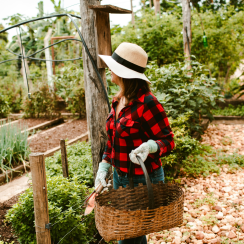
Marlene is a retired high school English teacher and longtime writer who draws on decades of lived experience to explore personal development, relationships, resilience, and finding purpose in life’s second act. When she’s not at her laptop, she’s usually in the garden at dawn, baking Sunday bread, taking watercolor classes, playing piano, or volunteering at a local women’s shelter teaching life skills.
More Articles by Marlene