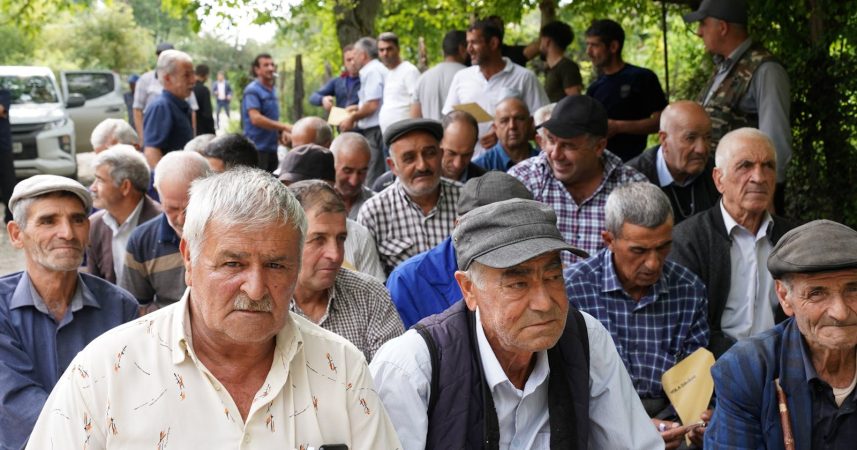
The hardware store parking lot at 7:45 AM became my confession booth, where I discovered that retired men don't mourn lost careers—they grieve the profound difference between being busy and being essential.
Last month, I was sitting in the hardware store parking lot at 7:45 AM, engine running, watching the locked doors. The store didn't open until 8. I knew that. But my body had woken up at 5:30, made coffee by 5:45, and gotten me dressed and out the door by 7:15, just like it had for decades when I ran my restaurant. The difference was, nobody was waiting for me at the hardware store. I just needed some wood screws.
That's when it hit me. I'd been having the same conversation with different men for months, and they were all saying the same thing without actually saying it. So I started paying closer attention, asking more directly. Twenty-five conversations later with men over 60, and not one of them said they missed their actual job. But every single one described the same loss: having somewhere to be where someone expected them to show up.
The weight of being needed
Frank spent 40 years as an electrician. "You know what I don't miss?" he told me at the community center. "Crawling through attics in August. Getting shocked because some idiot wired something wrong. My knees hurt every damn day." Then he paused. "But I miss pulling up to the job site and seeing the guys waiting for me to tell them what we're doing today."
That's the thing nobody tells you about retirement. You spend your working years fantasizing about sleeping in, about not having a boss, about doing whatever you want whenever you want. Then you get there and realize that "whenever you want" is a lot harder to navigate than "8 AM sharp."
My friend Robert ran a dental practice for 35 years. Hated the paperwork, hated dealing with insurance companies, really hated looking into people's mouths all day. But six months after retiring, he was showing up at his old office at 7 AM just to have coffee in the parking lot. His replacement found him there one morning and asked if everything was okay.
"I don't know where else to be at 7 AM," Robert told him.
The replacement didn't understand. How could he? He was still in the thick of it, still had patients waiting, staff depending on him, a schedule that dictated his days. He hadn't yet discovered that freedom from routine is also freedom from structure, and that structure, for all its constraints, tells you who you are.
When Tuesday feels exactly like Saturday
Before I retired, I used to joke that I couldn't wait for every day to be Saturday. Now I've got that, and you know what? When every day is Saturday, no day is Saturday. The specialness of the weekend came from its contrast to the weekday grind. Without the grind, it's just another day.
I tried explaining this to my son, who's 33 and counting down to his own eventual retirement. "But Dad," he said, "you're busy all the time. You've got your cycling group, your cooking classes, that consulting work."
He's right. My calendar is full. But there's a difference between busy and essential. If I don't show up to the cycling group, they ride without me. If I cancel a cooking class, people are disappointed but not stranded. The consulting clients would find another consultant. My absence would be noted but not felt.
When I ran my restaurant, if I didn't show up, thirty people didn't have jobs that day. The food didn't get ordered. The doors didn't open. My absence wasn't just noted, it was catastrophic.
I'm not saying I miss that pressure. The 3 AM anxiety about making payroll, the constant worry about health inspections, the customer who'd inevitably complain about something on my one day off. I don't miss any of that. But I miss mattering in a way that was measurable, concrete, undeniable.
The unexpected structure of obligation
James, a retired mechanic, put it perfectly: "For 45 years, I complained about having to be at the shop by 7. Now I can sleep until noon if I want. But I'm up at 5:30 anyway, dressed by 6:30, and then I sit at my kitchen table wondering what the hell to do with myself."
We were trained from childhood to respond to external demands. School bells told us when to move. Work schedules told us where to be. Family obligations told us how to spend our weekends. We got good at responding to these demands, at fitting our lives around them. What we never learned was how to create our own structure when the external demands disappeared.
Some of us try to recreate it. Mike, who retired from the post office, walks the exact same route every morning that he used to drive for deliveries. "People wave at me from their windows," he said. "Same time every day. If I'm five minutes late, Mrs. Chen comes out to check if I'm okay."
But it's artificial, and we know it. Mrs. Chen checks on him because she's kind, not because she needs her mail. His absence would be concerning but not consequential. There's a difference between being missed and being necessary.
The morning ritual that no longer matters
Every working morning for 35 years, I had the same routine. Up at 5:30. Coffee at 5:45. Shower, dress, out the door by 6:15. At the restaurant by 6:30 to receive deliveries. By 7, the prep cooks would arrive, and we'd go through the day's plan. By 8, the kitchen was humming. By 11, we were ready for lunch service.
Now I still wake up at 5:30. Still make coffee at 5:45. I still shower and dress. But then what? I often find myself fully dressed, standing in my kitchen, holding my car keys with nowhere to go. My body remembers the routine. My mind knows it's meaningless now. The disconnect is jarring every single morning.
"I used to hate my commute," Thomas told me. He'd been a financial advisor for 32 years. "Forty-five minutes each way, same boring highway. Now I drive that route sometimes just to feel like I'm going somewhere important."
The saddest part? He parks in his old office building's lot, sits there for ten minutes, then drives home. The security guard knows him, waves him through even though his parking pass expired two years ago. It's a kindness that feels like pity.
Why volunteering isn't the same
Everyone says the same thing to retirees: volunteer. Give back. Stay active. And we do. I teach cooking at the community center, work one Saturday a month at the food bank, help with the grandkids. My calendar looks full.
But here's what they don't tell you: voluntary obligations don't carry the same weight as necessary ones. If I don't show up to teach cooking, the class is cancelled but nobody goes hungry. If I skip the food bank, other volunteers cover. The grandkids have other grandparents, other options.
When you're working, your absence has consequences. Deals don't close. Students don't learn. Patients don't get treated. Products don't ship. Your specific presence is required for specific outcomes. That's not ego talking, that's just operational reality.
Paul, a retired surgeon, found one workaround. He volunteers at a free clinic where he's the only surgeon. "If I don't show up," he said, "procedures get cancelled. People stay in pain." It's the closest he's found to mattering the way he used to matter.
But most volunteer opportunities aren't like that. They're nice-to-haves, not need-to-haves. We know it. The organizations know it. Everyone's very polite about pretending otherwise, but the truth sits there between us.
The phone that never rings
"My phone used to ring constantly," said Richard, who'd run an accounting firm. "Clients, employees, vendors. I fantasized about throwing it in the lake. Now it's so quiet I check if it's still working."
The silence of retirement is something nobody prepares you for. Not just the literal silence, though that's part of it. The silence of not being needed. Of not having answers people require. Of not being the person who knows what happens next.
My phone rings maybe twice a day now. Telemarketer. Dentist appointment reminder. My wife asking me to pick up something from the store. Compare that to the restaurant days: dozens of calls before noon. Suppliers, staff calling in sick, customers wanting reservations, health inspector scheduling visits. Each ring meant someone needed something only I could provide.
I don't miss the stress of those calls. But I miss being the person with the answers.
Final words
Yesterday, I picked up my granddaughter from school. It's my regular Wednesday thing. She ran to my car, backpack bouncing, face bright with four-year-old enthusiasm about something that happened at recess. For those few minutes, I was exactly where I needed to be, expected by someone who genuinely needed me there.
"Grandpa, you're always exactly on time," she said.
"It's my job," I told her.
And for now, on Wednesdays at 3:15, it actually is.
If You Were a Healing Herb, Which Would You Be?
Each herb holds a unique kind of magic — soothing, awakening, grounding, or clarifying.
This 9-question quiz reveals the healing plant that mirrors your energy right now and what it says about your natural rhythm.
✨ Instant results. Deeply insightful.

Gerry Marcos
Gerry spent 35 years in the restaurant business before trading the kitchen for the keyboard. Now 62, he writes about relationships, personal growth, and what happens when you finally stop long enough to figure out who you are without the apron. He lives in Ontario with his wife Linda, a backyard full of hot peppers, and a vinyl collection that’s getting out of hand.
More Articles by Gerry