When does a collection cross the line into hoarding? These 9 boomer favorites might answer that.
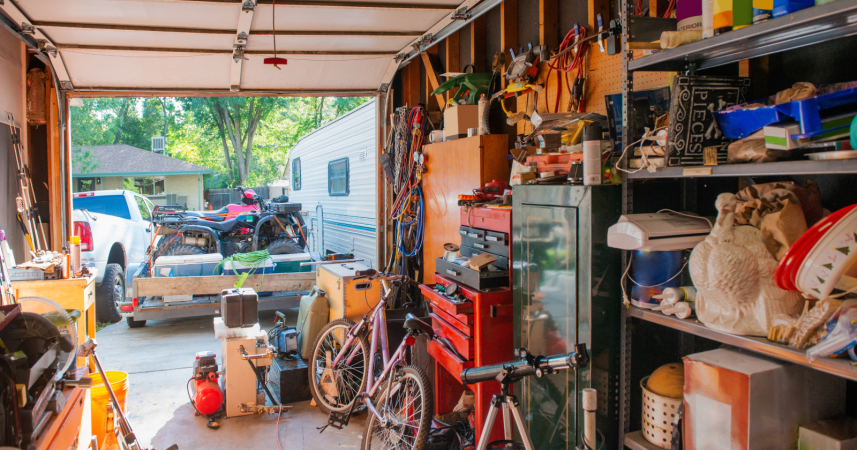
Visit any boomer's garage and you'll find a museum of optimistic speculation. Every box holds potential fortune, every dusty item a future windfall. They're not hoarding, they'll tell you—they're curating investments. It's a generational conviction born from watching Depression-era trinkets become antiques, from seeing Action Comics #1 sell for millions.
But somewhere between legitimate collecting and keeping every grocery receipt from 1987, the line got blurry. The difference between treasure and clutter isn't just about monetary value—it's about the stories we tell ourselves about stuff. And boomers have some really compelling stories.
1. National Geographic magazines from the dawn of time
Every boomer household has that yellow-spined wall, dating back to Kennedy. They can't throw them away because "they're historical documents." Never mind that the entire archive is digitized. Never mind that libraries won't take them as donations.
The magazines sit in boxes, pages slowly fusing together, their photos of "exotic" places now problematically dated. But throwing them away feels like destroying knowledge itself. So they stay, occupying half a closet, waiting for that mythical grandchild who'll want to learn about the world through a 1960s lens.
2. China sets that nobody has used since 1993
Twelve place settings, crystal for every possible beverage, silver requiring actual polishing. These aren't dishes—they're "heirlooms." Used exactly three times in forty years, but that's not the point. What matters is they could be used, if the Queen dropped by.
Millennials are killing the fine china industry because they eat off regular plates like barbarians. But boomers know better. Those dishes represent civilization, the proper way to live. That they're elaborate dust collectors is beside the point.
3. VHS tapes and DVDs of movies they can stream
"But what if Netflix removes it?" they ask, surrounded by towers of plastic cases. Every James Bond film on three different formats. The complete M*A*S*H series on discs unopened since the first Bush administration.
The fear that physical media might disappear makes perfect sense to them. They lived through format wars. They remember eight-tracks. So they keep everything, just in case society collapses and the only entertainment left is their DVD collection.
4. Instruction manuals for appliances they threw away in 2003
The filing cabinet bulges with folders labeled "Warranties" and "Manuals," documentation for every blender and toaster owned since Carter. The appliances are long dead, but their instruction manuals live on, because you never know when you'll need warranty terms for a microwave you donated fifteen years ago.
This isn't disorganization—it's risk management from people who remember when things lasted. When a washing machine was a twenty-year commitment. The manuals are proof of responsibility, paper trails for problems that will never arise.
5. Cables, chargers, and accessories from the digital stone age
Somewhere there's a box labeled simply "cables." Inside: a tangle that hasn't been compatible with anything since Clinton. Parallel printer cables. Phone cords for extinct landlines. Chargers for phones that couldn't even play Snake.
They keep them because technology might circle back. What if someone needs a VGA cable? What if obsolete becomes vintage? They're not wrong that old tech sometimes spikes in value. They're just wrong about these particular cables.
6. Every greeting card they've ever received
Birthday cards from 1975. Anniversary cards from people they haven't spoken to since Reagan. Christmas cards featuring photos of children who now have children. They're not just cards—they're proof that people once cared.
Throwing away a card feels like erasing the sentiment. So they accumulate in shoeboxes, these paper ghosts of relationships past. Nobody will ever look at them again, but somehow their existence matters.
7. Furniture they're saving for kids who don't want it
That oak entertainment center built for a tube TV. The dining set nobody has room for. The sectional sofa that weighs more than a car. They're saving it all for when the kids "get settled," ignoring explicit statements of "we don't want any of it."
But it's solid wood. Built to last. Not like the particleboard garbage millennials buy. So it sits in the basement, gathering dust and resentment, a monument to different definitions of quality.
8. Collections that were definitely going to appreciate
Beanie Babies. Hummel figurines. Franklin Mint commemorative plates. Bought as investments during that brief moment when everything collectible seemed destined for greatness. The collectibles bubble burst, but the collections remain.
They can't sell for pennies on the dollar—that's admitting defeat. So they wait for the market to recover, for tastes to circle back, for grandchildren to suddenly appreciate porcelain angels.
9. Photos that exist nowhere else but are viewed never
Boxes of photographs. Negatives in sleeves. Slides requiring projectors nobody owns. Thousands of images: forgotten names, unidentified places, moments that mattered once but now just occupy space.
They mean to organize them. Digitize them. Make albums. But the task feels insurmountable, and throwing them away feels like erasing history. So they remain boxed, these visual records of lives lived, waiting for someone to care enough to look.
Final thoughts
Here's what boomer hoarding is really about: mortality, memory, and the fear that nothing will outlast them. Every saved item is a small rebellion against irrelevance, a bet that something will matter after they're gone.
They watched their parents save string and straighten nails, learned that everything could have value if you waited long enough. They came of age when things were built to last, when ownership meant something, when stuff was harder to get and easier to fix.
Now they're surrounded by a disposable world that doesn't want their china or their collections. Their kids prefer experiences to possessions, digital to physical, minimal to maximal. The real divide isn't about the value of things—it's about what deserves preserving.
The tragedy isn't that they're wrong about their treasures' worth. It's that they're right about something harder to admit: most of what we save doesn't matter to anyone but us. Those National Geographics aren't the question. The question is whether we can live with that truth. Whether meaning exists even when nobody else sees it. Whether keeping something nobody wants is foolish or deeply human.
Maybe both. Probably both.
If You Were a Healing Herb, Which Would You Be?
Each herb holds a unique kind of magic — soothing, awakening, grounding, or clarifying.
This 9-question quiz reveals the healing plant that mirrors your energy right now and what it says about your natural rhythm.
✨ Instant results. Deeply insightful.

Avery White
Formerly a financial analyst, Avery translates complex research into clear, informative narratives. Her evidence-based approach provides readers with reliable insights, presented with clarity and warmth. Outside of work, Avery enjoys trail running, gardening, and volunteering at local farmers’ markets.
More Articles by Avery