From rats that boggle their eyes with happiness to skunks that do welcome-home dances, these unconventional companions might just convert you from Team Cat-or-Dog forever.

Add VegOut to your Google News feed. 
The rat on my friend Jennifer's shoulder nuzzled into her neck, making a sound I can only describe as the rodent equivalent of purring. "This is Professor Whiskers," she said, as if introducing a distinguished colleague. "He's basically a tiny dog who happens to be a rat." The Professor then proceeded to groom Jennifer's hair with the dedication of a concerned hairstylist, occasionally pausing to boggle his eyes—a rat expression of pure contentment that involves rapid eye vibration and looks mildly concerning until you know it means "I love you" in rat.
Americans keep roughly 393 million pets, and while most are dogs and cats, a growing subset of animal lovers are discovering that affection comes in packages we never expected. These aren't exotic status symbols or Instagram props—they're genuine companions that challenge our assumptions about which animals deserve our emotional investment. Like any meaningful relationship, they require serious commitment and care—maybe even more.
Research on human-animal bonds shows that affectionate behavior in animals isn't limited to traditional pets. Many species we've dismissed as "weird" or unsuitable are capable of forming deep attachments to their human caregivers—we just haven't been paying attention.
1. Rats: The pocket-sized emotional support mammals
Forget everything you think you know about rats. Pet rats—which are about as related to sewer rats as golden retrievers are to wolves—are essentially tiny dogs with hands. They learn their names, come when called, and will literally brux (grind their teeth) with happiness when they see you.
They'll ride on your shoulder while you do housework, learn elaborate tricks, and develop distinct preferences for which Netflix shows you watch together. Many rat owners report their pets actively seek out cuddles and will groom their humans as a sign of affection.
The downside? They live only 2-3 years, which means you're signing up for heartbreak on an accelerated schedule. But rat enthusiasts insist those years are packed with more personality per ounce than any other pet. Legal everywhere in the U.S. except Alberta, Canada (where they've achieved the impossible dream of being rat-free).
2. Skunks: The misunderstood cuddle machines
Domesticated skunks—de-scented and descended from generations of breeding—are what happens when you combine a cat's independence with a dog's enthusiasm and a toddler's mischief. They'll steal your socks, rearrange your furniture, and then curl up in your lap for a two-hour nap.
Skunk owners describe them as aggressively affectionate. They play games, respond to their names, and develop elaborate morning greeting rituals. One owner told me her skunk, Pepé (yes, really), waits by the door every day at 5 PM and does a "happy dance" when she comes home from work.
Currently legal in 17 states with proper permits. The main challenge isn't their infamous spray (removed in infancy) but finding a vet who won't immediately back away when you say "skunk."
3. Sugar gliders: The flying marsupials who bond for life
Sugar gliders are what you get when you ask nature to design a pet that's part flying squirrel, part Pokemon, and entirely too cute to be real. These Australian marsupials form intense bonds with their owners, often refusing to engage with anyone else.
They'll sleep in a pouch against your chest during the day, emerge at night to play, and make a variety of sounds from happy chirping to the infamous "crabbing" when annoyed. Once bonded, they recognize your scent from rooms away and will launch themselves at you like tiny, furry missiles of affection.
The commitment is real: they live 12-15 years, need companions (usually another glider), and require a diet that involves meal prep Sunday for insects. Legal in most states except California, Alaska, and Hawaii. Check specific state laws as regulations vary.
4. Hedgehogs: The grumpy-looking softies
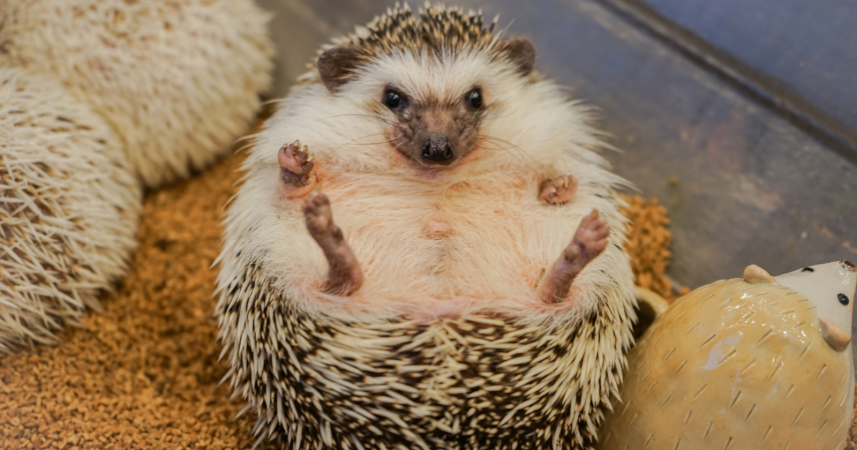
Despite looking like disgruntled pincushions, hedgehogs can become remarkably affectionate pets. Once they trust you—a process involving patience and probably some minor puncture wounds—they'll relax their quills and reveal their soft bellies, the ultimate hedgehog sign of trust.
They learn routines, recognize voices, and some even enjoy belly rubs. The huffing and puffing that initially sounds like anger is often just their way of exploring the world through scent. Many hedgehog owners report their pets will sleep spread-eagle on their laps, completely relaxed, looking like tiny, spiky starfish.
Legal in most states except Georgia, California, Hawaii, Pennsylvania, and the five boroughs of New York City. They're also illegal in some cities that otherwise allow them, so check local ordinances.
5. Chinchillas: The velvet clouds with attitude
Chinchillas are essentially what would happen if a rabbit and a squirrel had a baby and wrapped it in the world's softest fur. They're known for their "popcorning"—explosive jumps of pure joy—and their ability to hold grudges that would impress a medieval monarch.
Once they bond with you, chinchillas will perch on your shoulder, "groom" your hair, and perform elaborate greeting dances. They have distinct personalities; some are cuddly lap-sitters while others prefer to show affection through parallel play, just happy to be in your presence.
The catch: they need dust baths (yes, they clean themselves with dust), temperatures below 75°F, and their fur is so dense that if it gets wet, it can develop fungus. Legal nationwide, though some states require permits. They also live 15-20 years, so this is a legitimate long-term relationship.
6. Wallabies: The pocket-sized kangaroos
Bennett's wallabies—essentially miniature kangaroos—are legal in several states and bond intensely with their human families. Hand-raised joeys (baby wallabies) will literally follow you around like puppies, seeking constant contact and affection.
They communicate through soft clicking sounds, gentle pawing, and by grooming their favorite humans. Wallaby owners describe them as dog-like in their loyalty but with the added bonus of being able to hop six feet straight up when excited.
The logistics are intense: they need significant outdoor space, specialized diets, and exotic veterinary care. Legal with permits in states including Colorado, Idaho, Illinois, Maine, Michigan, Nevada, New Hampshire, North Dakota, Ohio, Oklahoma, and Wisconsin. Not exactly apartment pets, but for those with space and dedication, they're remarkably rewarding companions.
7. Fennec foxes: The big-eared heart thieves
Fennec foxes are what happens when nature decides to max out the "cute" stats on a fox. With ears that look borrowed from a much larger animal and the energy of a espresso-fueled toddler, they're both exhausting and enchanting.
They chirp, purr (yes, purr), and scream (less charming at 3 AM). But they also bond intensely with their owners, play elaborate games, and can be harness-trained for walks that will stop traffic. Their affection is cat-like—on their terms—but when they choose to cuddle, they're all in.
Legal in several states including Arkansas, Indiana, Michigan, Nebraska, Ohio, Oklahoma, and Tennessee, though many require permits. The main challenge: they're escape artists who can dig under fences and squeeze through impossibly small spaces.
8. Argentine tegus: The dog-trapped-in-a-lizard's body
The Argentine black and white tegu destroys every stereotype about reptilian coldness. These large lizards (4-5 feet) actively seek out human interaction, enjoy being petted, and can even be house-trained.
Tegu owners report their lizards recognize them individually, come when called, and will literally climb into laps for warmth and companionship. They're intelligent enough to learn routines and some can even be harness-trained for outdoor adventures.
They require serious commitment: UVB lighting, specific temperature gradients, and a diet that ranges from eggs to fruit. Legal in most states except California and Georgia, though specific regulations vary by location. They live 15-20 years and need space equivalent to a small bedroom.
Rethinking affection (and responsibility)
The truth about these "weird" pets is that they're only weird because we've drawn arbitrary lines around which animals deserve emotional recognition. Professor Whiskers, Jennifer's rat, knows dozens of tricks, comes when called, and shows genuine excitement when she comes home. How is that fundamentally different from a dog's greeting?
Studies on animal cognition increasingly suggest that many species experience emotions and form attachments in ways we're only beginning to understand. The surprise isn't that a skunk can be affectionate—it's that we ever assumed they couldn't be.
But here's the crucial part: these animals deserve more than our fascination—they deserve committed, prepared caregivers. Every pet on this list requires specialized knowledge, specific veterinary care (good luck finding a skunk-savvy vet at 2 AM), and long-term commitment. A sugar glider lives 15 years. A tegu needs a bedroom-sized enclosure. Chinchillas can literally die from overheating. These aren't Instagram props or conversation starters—they're complex beings with complex needs.
Before you decide that a fennec fox is exactly what your life is missing, spend months researching. Join online communities of current owners. Calculate the true costs—financial, temporal, and emotional. Understand that "exotic" often means "no boarding facilities will take them" and "your vacation plans just got complicated." These relationships can be incredibly rewarding, but only if you're prepared for the reality, not just enchanted by the idea.
Sometimes love comes with quills, or scales, or the ability to glide across your living room. And honestly, in a world where we've agreed that hairless cats and dogs that fit in purses are normal, maybe it's time to expand our definition of what makes a loving companion. Just make sure you're ready for what that expansion actually means. Professor Whiskers certainly hopes you are.
What’s Your Plant-Powered Archetype?
Ever wonder what your everyday habits say about your deeper purpose—and how they ripple out to impact the planet?
This 90-second quiz reveals the plant-powered role you’re here to play, and the tiny shift that makes it even more powerful.
12 fun questions. Instant results. Surprisingly accurate.