
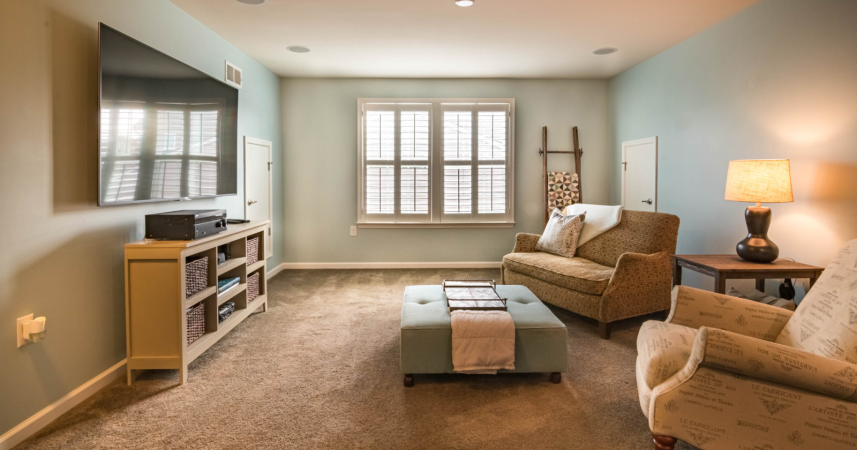
Between paycheck and prosperity, the living room tells all.

Add VegOut to your Google News feed. 
Living rooms are America's most honest spaces. They're where we perform our best version of home, where private life meets public presentation. And nowhere is this performance more revealing than in lower-middle-class households, where every object carries weight—emotional, aspirational, defensive.
These aren't design failures or taste crimes. They're cultural artifacts, each one encoding messages about security, belonging, and the peculiar anxiety of being neither poor nor comfortable. The things we display when money is tight but not desperate tell stories we might not even realize we're telling.
1. The good china that never gets used
Behind glass cabinet doors sits the wedding china, the crystal glasses, the silver that requires polishing. Twelve complete place settings for a dining table that seats six. These objects aren't for eating—they're for having, for proving something about permanence and possibility.
This is aspiration made tangible. The good dishes represent a life where formal dinners happen, where occasions merit special plates. They're an inheritance to leave, a tradition to maintain, even if that tradition mostly involves looking at them through glass. They whisper: we're the kind of people who own nice things, who save them for special occasions that never quite arrive.
2. Every grandchild's school photo from kindergarten through now
The mantel, side tables, and entertainment center form a chronological shrine. Not just current photos—every year, every grandchild, even the awkward middle school ones. The frames don't match. Some are dollar store, some were gifts, some are magnetic and technically meant for refrigerators.
This isn't just love; it's documentation as devotion. Each photo proves presence, involvement, continuity. In households where college funds aren't guaranteed, where inheritance might be memories rather than money, these photos insist: we were here, we mattered to each other, we're a family. The quantity matters more than the quality.
3. The television that dominates everything
It's not just big—it's the room's organizing principle. Furniture angles toward it like plants toward sun. It might be the newest thing in the room, bought on payment plans that outlast the warranty. The TV isn't trying to blend in; it's trying to be seen.
This is democracy through technology—the one luxury that levels the playing field. Everyone watches the same shows, has access to the same entertainment. The oversized TV says: we might not vacation in Europe, but we can watch the same Netflix you do. In this one way, at least, we're equal.
4. Decorative objects bought specifically to fill shelves
Ceramic angels, wooden words spelling "FAMILY," glass orbs that serve no purpose except existing. These aren't inherited or gifted—they're purchased deliberately from HomeGoods or Walmart to fill empty spaces that feel like accusations.
Empty shelves suggest absence, lack, insufficiency. So they're filled with objects that have no story except "I bought this because the shelf looked bare." It's decoration as defense against the anxiety of empty space, the fear that visitors might think you have nothing worth displaying.
5. The diploma in the most expensive frame
Whether it's high school, community college, or technical certification, it's framed like a Monet. Not tucked in an office or bedroom, but prominently displayed where guests can't miss it. Sometimes multiple generations of diplomas create a wall of achievement.
This is mobility made visible. In families where education was hard-won, where someone was the first to graduate, these documents are proof of progress. They're not just personal achievements but family victories, generational improvements. The expensive frame isn't excessive—it's proportional to what that piece of paper cost in effort, sacrifice, and hope.
6. At least one piece of furniture covered in protective plastic
The couch cushions under clear covers, the dining table under glass, the carpet runners over carpet. It's not that guests are expected—it's that replacement isn't an option. These items must last indefinitely, protected from life itself.
This is scarcity mindset made material. When you can't easily replace things, you preserve them desperately. The plastic says: we've worked too hard for these things to let them get ruined. It's the physical manifestation of living carefully, of knowing that one spilled glass could mean months of saving.
7. Multiple religious items from different traditions
A cross, a Buddha statue, one of those Live Laugh Love signs that's quasi-spiritual, maybe some crystals. It's not confusion—it's covering bases, keeping options open, acknowledging that when you're economically vulnerable, you need all the help you can get.
This spiritual hedging reflects pragmatic faith. It's not about theological consistency but about comfort, about surrounding yourself with whatever might help. These objects say: we're believers in something bigger, even if we're not sure exactly what. We're hoping someone up there is watching.
8. The collection that got out of hand
Precious Moments figurines, commemorative plates, miniature lighthouses. What started as one thoughtful gift became a theme, and now everyone knows what to buy them. The collection has taken over surfaces, become an identity, an obligation to continue.
Collections offer control in a chaotic world. When you can't control much, you can at least complete a set. There's satisfaction in accumulation, in having all of something, even if that something is mass-produced. The collection says: we have enough excess to dedicate space to joy, to things that aren't strictly necessary.
Final thoughts
These living rooms aren't trying to trick anyone. The families who arrange them know exactly what they're doing—creating spaces that insist on dignity, that claim belonging, that assert worth beyond bank balances. Every protected surface, every displayed diploma, every carefully arranged photo is a small act of resistance against invisibility.
The tragedy isn't in what's displayed but in the judgment it attracts. These objects carry the weight of striving, of making do, of finding beauty and meaning within constraints. They're monuments to persistence, shrines to families holding themselves together through force of will and retail therapy.
The next time you're in one of these living rooms, look closer. See the love in the mismatched frames, the hope in the protected furniture, the faith in the good china waiting for its moment. These aren't design mistakes—they're declarations. They say: we're here, we matter, we're making it work. And honestly, what living room says anything more important than that?












