The small changes that signal you've left the plastic-covered couches behind
Growing up, our living room had plastic on the "good" couch, a 50-inch TV that dominated the entire wall, and a glass coffee table my mom cleaned with Windex every single day. The TV was always on, even when no one was watching. There were doilies on every surface and a basket of remotes that controlled various things, half of which no longer worked.
I thought this was just how living rooms looked until I started visiting college friends' childhood homes. Their living rooms had things I'd never considered: lamps instead of overhead lights, couches you could actually sit on, coffee tables with books that people actually read. It wasn't about money—many of their families had less than mine. It was about choices that signaled different values, different priorities, different relationships with space.
Now, fifteen years and several apartments later, I've learned to recognize the subtle upgrades that signal a class transition—not because they're expensive, but because they represent a fundamental shift in how you think about your living space. These aren't better ways to live, just different ones. But they're differences that people notice.
1. Lamps everywhere, overhead light never on
Working-class living rooms are lit like operating theaters—one bright overhead fixture blazing from above. The switch by the door controls everything. You're either in full brightness or darkness. It's practical: you can see what you're doing, find what you dropped, clean properly.
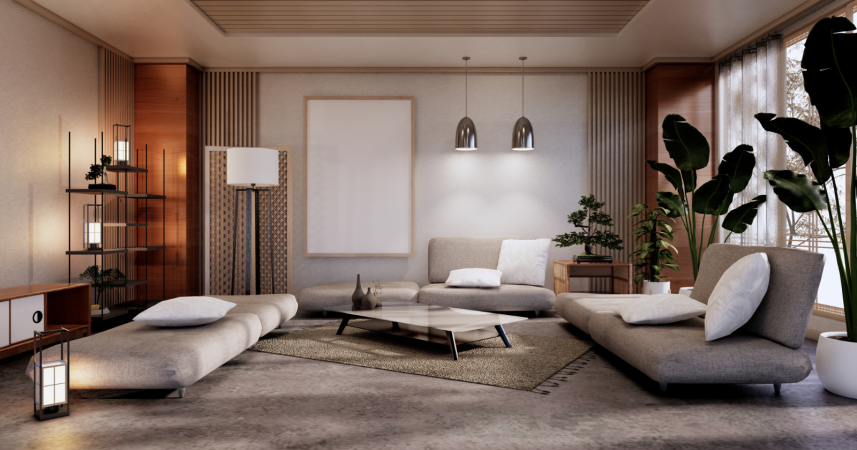
The middle-class and above discovered something else: multiple light sources at eye level create ambiance. Table lamps, floor lamps, sconces—anything but that ceiling dome light. My living room now has four lamps and zero overhead lighting use. Visitors always comment on how "cozy" it feels. What they're really noticing is that I've chosen atmosphere over visibility, form over function.
2. The TV is not the focal point
Every furniture piece in my childhood home faced the TV like it was commanding attention. It was the largest thing in the room, probably bought on Black Friday, definitely mentioned in terms of inches whenever guests visited. "That's the 50-inch we got last year." And why not? It was entertainment, babysitter, and background noise all in one.
Once you've shifted classes, the TV might still be there, but it's deliberately diminished. Maybe it's mounted on a side wall, or hidden in a cabinet, or simply smaller than what you could afford. The room faces itself—chairs angled toward each other, suggesting conversation is the entertainment. Of course, we still watch just as much Netflix. We just pretend we don't.
3. No visible storage containers
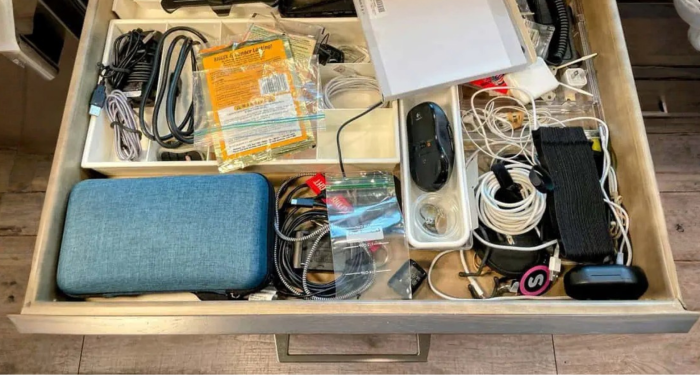
Clear plastic bins, visible storage cubes, those over-the-door shoe organizers repurposed for everything—working-class organization is transparent because you need to see what you have. When every purchase matters, you keep track of everything.
The class shift isn't having less stuff. It's hiding your organizational systems. Closed cabinets, drawers, baskets with lids. The room looks like everything has an invisible place rather than being actively contained. You've moved from "organized chaos" to "hidden systems." The irony? Those hidden systems usually cost more than the clear bins that actually work better.
4. Books as decoration, not information
My parents' books lived in the basement or bedroom—reference manuals, Reader's Digest condensed novels, yearbooks. Books were tools for looking things up or entertainment for bed, not living room decoration. Made sense—why display something you're actually using?
The class transition shows in coffee table books no one reads, novels arranged by spine color, hardcovers with the dust jackets removed for aesthetic uniformity. Books become props that signal intelligence and taste rather than actual reading material. It's performative, but that's the point—you've learned that living rooms can be stages for who you want to be.
5. Throws and pillows that aren't "sets"
Working-class throw pillows come in matching sets from Walmart—two, four, or six identical pillows, often still in the original packaging arrangement. The throw blanket matches exactly. Everything coordinates because it came together. It's efficient, economical, and looks intentionally put together.
Studied casualness is the upgrade—pillows that "happen" to work together without matching, throws draped artfully rather than folded precisely. This calculated mismatching requires confidence that working-class decorating, with its matchy-matchy safety, doesn't risk. You have to believe your eye is good enough to mix patterns and textures without a store display to guide you.
6. Plants that require actual care
Working-class plants are either plastic or indestructible—spider plants that refuse to die, a jade plant from 1987, silk flowers that get dusted twice a year. Plants shouldn't require attention when your attention is needed elsewhere.
Fiddle leaf figs, orchids, plants with specific light requirements and watering schedules—these aren't just plants; they're hobbies. They signal you have the time, stability, and mental bandwidth for something that needs regular tending without providing food or obvious benefit. You're not just surviving; you're cultivating. When a $40 plant dies, you buy another one instead of switching back to silk.
7. Neutral walls with "accent colors"
Working-class walls make statements—one red "accent wall," purple bedroom, kitchen in sunflower yellow. Color is enthusiasm, personality, proof you care about your space. It's also often because you're stuck with what the landlord painted or what was on sale.
The transcended palette is fifty shades of beige—"greige," "mushroom," "linen." The excitement comes from throw pillows or art, things that can change with trends. This restraint reads as sophisticated rather than boring, but it takes years to understand why. You've learned that quiet is a luxury, not a default. Beige means you can afford to be bored.
8. Empty space as a feature
In working-class homes, empty space is wasted space, and waste is something you can't afford. If there's a corner, there's a plant stand. If there's wall space, there's a shelf. Every inch serves a purpose because every inch costs money.
The ultimate class signal is space that serves no purpose. A corner with nothing in it. A wall with one piece of art and vast blankness around it. This intentional emptiness says you have so much room, you don't need to use it all. It's the spatial equivalent of leaving food on your plate—a tiny rebellion against scarcity mindset that only makes sense when scarcity isn't a threat.
Final thoughts
Here's what I've learned about signaling a class transition through decor: it's not really about having more money. It's about unlearning the habits that working-class life creates—the bright lights that help you see what you're doing, the TV that provides reliable entertainment, the visible storage that keeps you organized when chaos is always one paycheck away.
These "upgrades" are really about adopting a different relationship with your space—one where rooms exist for ambiance, not just utility. Where you can afford to hide things, to leave space empty, to let plants die if they don't work out. It's aesthetic code-switching, pure and simple.
I've made all these changes in my own living room, and yes, it looks more "sophisticated." But sometimes I miss the honesty of my parents' space—the overhead light that actually let you find things, the couch that announced it was too good for everyday use, the genuine enthusiasm of a purple accent wall.
The truth is, changing your decor to signal class transition is just another kind of performance. You learn the visual language of a different class and speak it, hoping no one notices your accent. But we always know our own tells. I still keep Windex under my sink, even though I no longer have a glass coffee table. Old habits die hard, even when you've hidden them behind throw pillows you carefully arranged to look uncareful.
Just launched: Laughing in the Face of Chaos by Rudá Iandê
Exhausted from trying to hold it all together?
You show up. You smile. You say the right things. But under the surface, something’s tightening. Maybe you don’t want to “stay positive” anymore. Maybe you’re done pretending everything’s fine.
This book is your permission slip to stop performing. To understand chaos at its root and all of your emotional layers.
In Laughing in the Face of Chaos, Brazilian shaman Rudá Iandê brings over 30 years of deep, one-on-one work helping people untangle from the roles they’ve been stuck in—so they can return to something real. He exposes the quiet pressure to be good, be successful, be spiritual—and shows how freedom often lives on the other side of that pressure.
This isn’t a book about becoming your best self. It’s about becoming your real self.